
A place of peace – Boavista
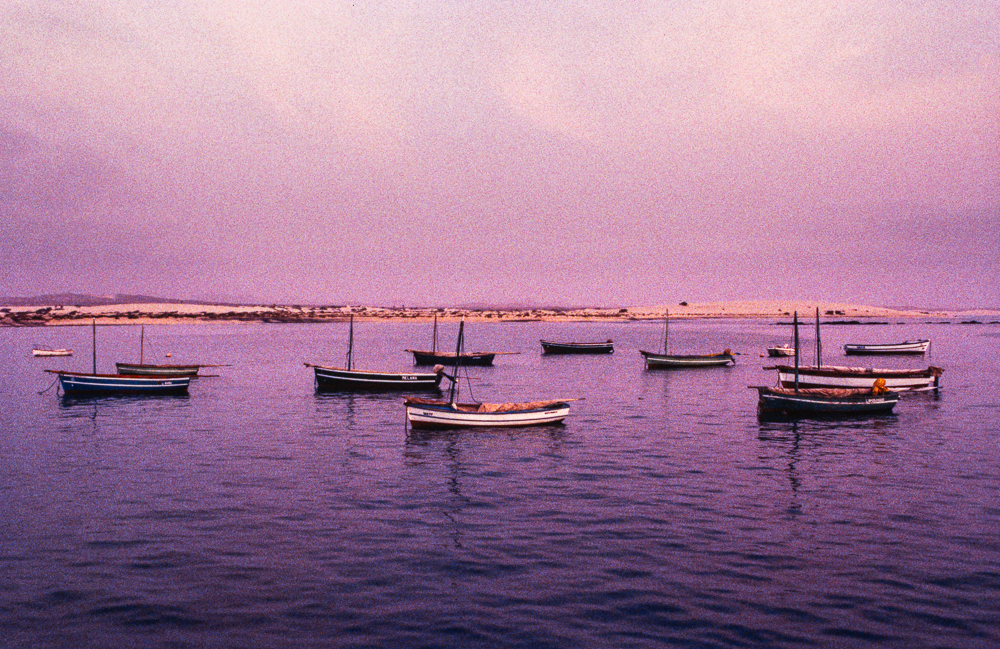
After leaving Praia, we watch the pilot from the front row as he touches down the twenty-seater Twin Otter on Boavista after a 40-minute flight and rolls in front of the few buildings by the runway. Compared to the breathtaking approach to Fogo, where the short gravel runway runs alongside the cliffs, the landing on Boavista is unspectacular, though not without its scenic charm.
Truly dreamlike beaches stretch along the coasts around Boavista. Dazzling white, they emerge from the turquoise sea. Deserts and rugged rock formations in the island’s interior, where palms and scrub grow scattered about, make Boa Vista one of the most beautiful desert islands and an attraction for holidaymakers. For the residents, however, the land allows for little farming and livestock breeding on the barren stretch of land.

The arrival is warm, as a hand-painted sign greets newcomers internationally. We walk over to the stone building, which is already filled with waiting flight passengers. At the second door of the tiny room, almost all the aluguer drivers of this largest eastern island are crowding, because the few arriving planes mean a profitable trip.
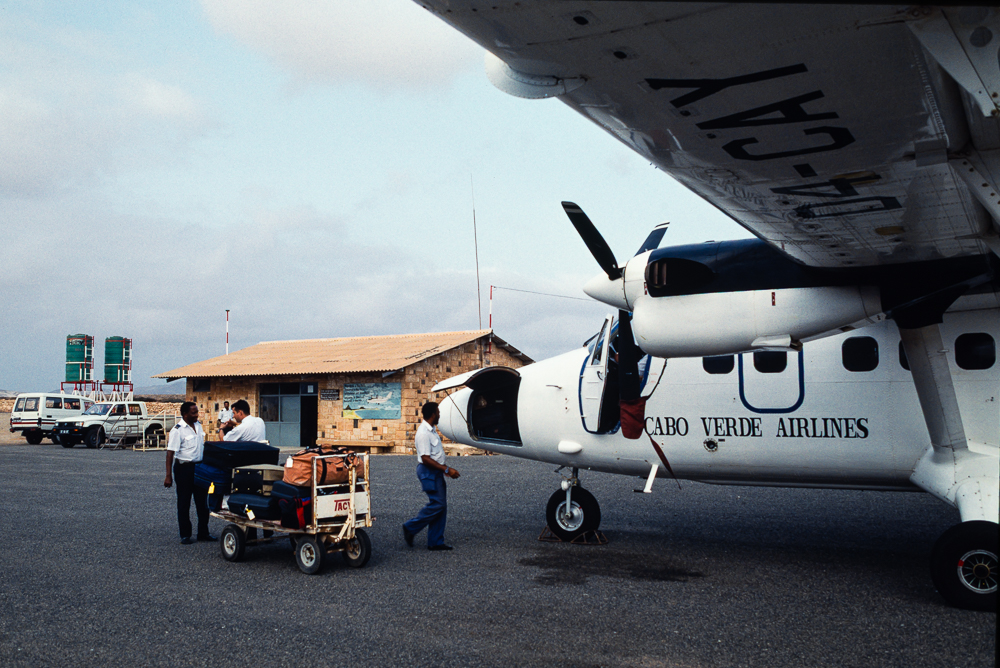
The yellow heat of the day builds up under the corrugated iron roof, and we quickly pack our things to get through the gauntlet of people to better air. We snag a spot on the back of a pickup truck between bags and suitcases. The bumpy ride goes over dusty cobblestone roads, past long wandering dunes and small groups of palm trees to Sal Rei, the island’s main town. Here we find a nice guesthouse and the most important facilities such as the police and medical station, post office, bank, and small shops with an extremely modest range of food.
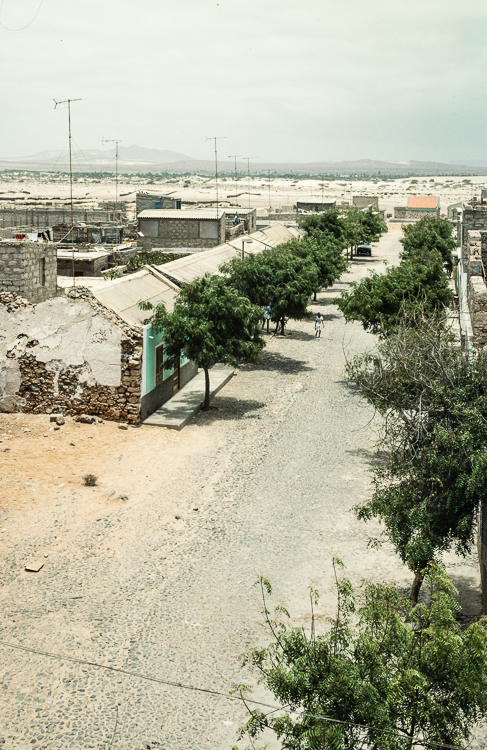
In contrast, barchan dunes are present in abundance, migrating westwards driven by the wind. The trade wind also brings a further supply of sand from the Sahara, where it is whipped up into the atmosphere by storms. Then the journey westwards to Cape Verde and even as far as the South American rainforests begins, to which it supplies vital minerals. On Boavista, the masses of sand threaten roads, settlements, and plants as they migrate. In the last century, Sal Rei was even covered metres deep in sand and had to be laboriously shovelled free. Attempts are made to halt the sand with fences made of palm fronds along the main road, but their advance is barely visibly delayed; the forces of nature are once again that powerful here.

However, the island also owes its beautiful beaches to the sand. This includes the kilometre-long Praia de Chave, which we walk along directly from Sal Rei without meeting a soul. The white sand here slopes gently into the bay, which is protected from the surf by an offshore island, making it an excellent spot for swimming. In the island’s interior, barren basalt hills rise above the shimmering layers of air of the dune landscapes and scree deserts. The sun stings more aggressively from the zenith, and no shade provides protection, so you have to defend yourself with a hat, long clothing, and sunscreen. An azure sky never arches over the island, because on the one hand, veils of dust cover the land, and on the other, the air shines with a glaring transparency. Later, clouds even move in, but they bring no hope of rain; their grey veil is too thin.
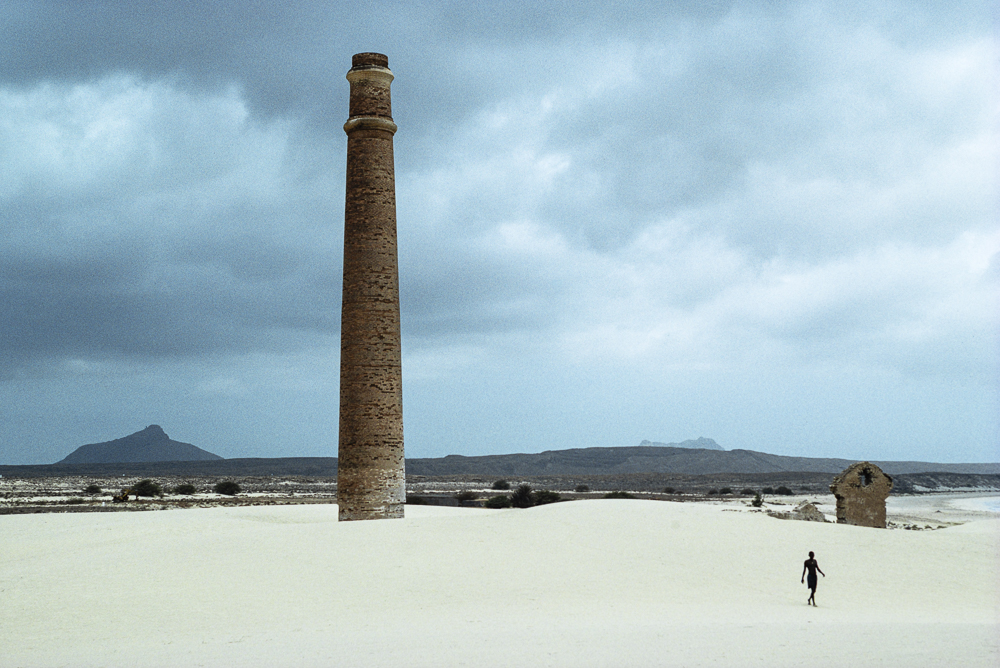
From afar, we recognise the towering chimney of an old ceramics factory that has been closed for decades. The march there, however, drags on. Up close, we see the few remains of the walls almost completely buried in the sand and only topped by the high chimney. The ceramic kiln was operated by the Jewish merchant family O’Liel, who also owned the salt works near Sal Rei. But at the beginning of our century, the economic end came. The tradition of pottery and firing is continued, however, in the nearby town of Rabil. Incidentally, the clay obtained on Boa Vista enjoys a good reputation not only among local artists.
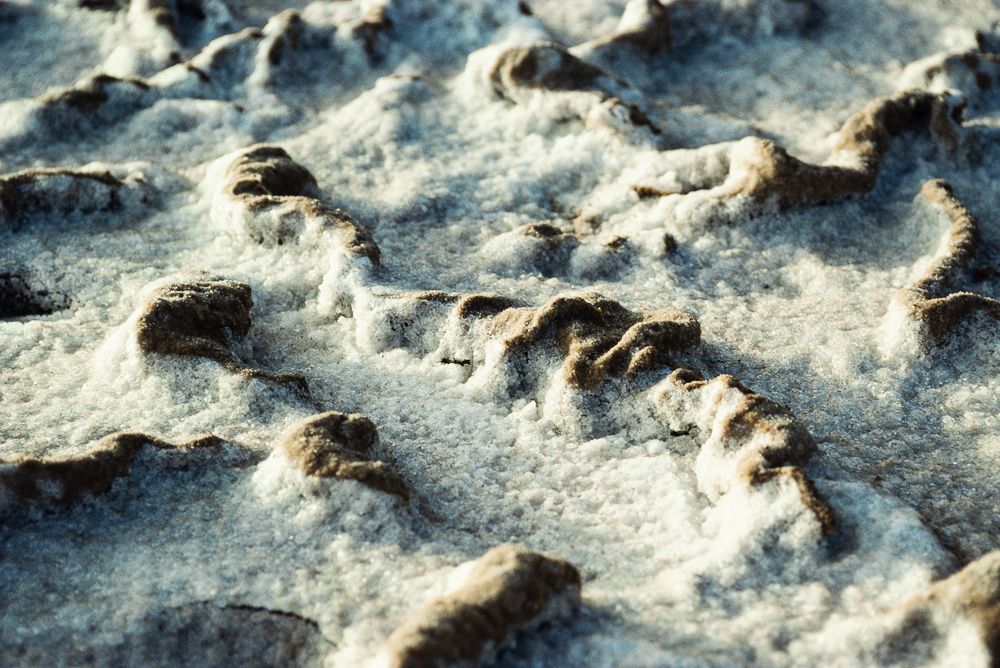
Our own footprints are the only legacy on the beach until they too are washed away by the tide. But as we approach the town again, the picture changes: carelessly discarded rubbish disfigures the surroundings everywhere. Next to the landing pier lie the colourful boats, which are only equipped with a Latin triangular sail on Boa Vista, though this is gradually being abandoned in favour of the outboard motor. On a bench in the oversized central square, around which former colonial buildings with shops, the fortress-like church, and brightly coloured houses are grouped, we watch the many families on their evening stroll.
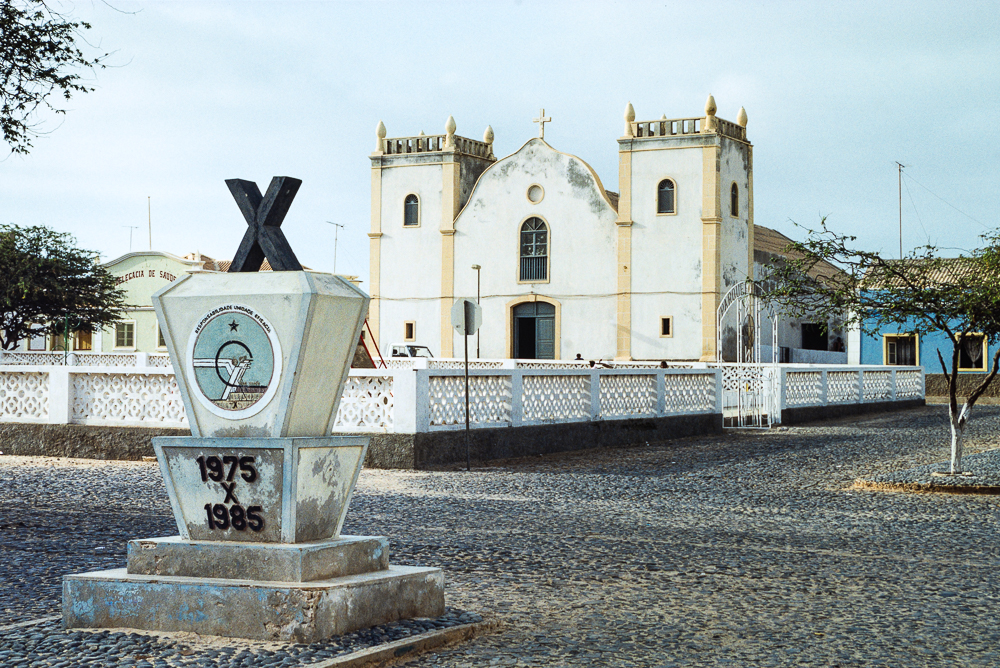
The children romp around on the playground until well after 10.00 pm. For children on the Cape Verde Islands, there is also a “Sandmännchen” on TV, which tells its bedtime story at 9.00 pm and incidentally teaches dental care. But the people on all the islands take the pleasant temperatures as an opportunity to stroll and chat in the streets. And in Cape Verde too, the little ones would rather romp around than go to bed early!

A second hike takes us along the road into the island’s interior. After more than an hour’s march in the sweltering heat, we decide to hitchhike, even though we’ve only encountered one local on his donkey since we set off. But we don’t let that discourage us and are pampered by luck. After five minutes, a car actually comes along and stops immediately! Furthermore, the driver introduces himself as the island doctor, who is making his daily rounds through the villages. He is, as it turns out, an excellent example of the country’s young, intelligent generation: “Parlez vous, francais?” he asks us “or do you speak English?” “or do you want to talk to me in Chinese?”.
I am amazed at his linguistic abilities and he tells his story: “I was lucky enough to receive a medical scholarship from the Chinese government. You might know that we maintained close relations with socialist brother countries and enjoyed support. Our parliament was built by the Chinese, the best real-socialist architecture! Alongside my studies, I also learned other languages on short trips.” Our conversation is particularly funny, because when we can’t think of the right vocabulary, we switch fluently to another language. On the drive to Povoação Velha, the oldest village on the island, he tells us a lot about the people and their problems, also touching on medical care: “It is carried out with simple means, but through human contact and a lot of understanding, it is more of a model for the technical medicine of wealthy countries.”
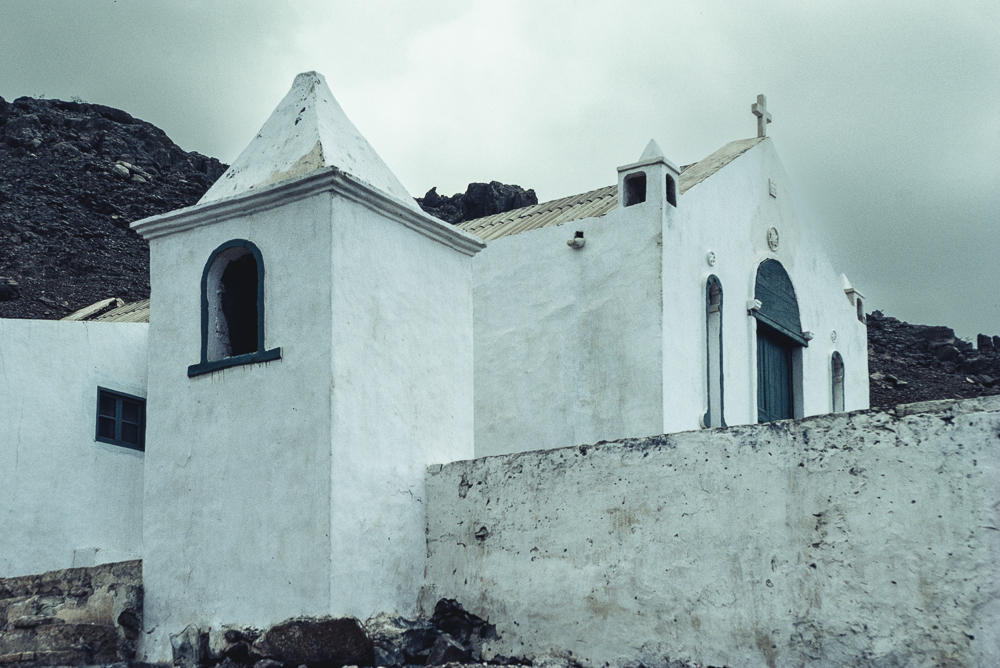
Through a narrow valley, we reach the village situated on the slopes of Rocha Estância. The off-road vehicle is greeted joyfully and surrounded by the villagers, who size us up with interest. While our doctor has a chat about how everyone is feeling and then carries out house calls, we use the time to visit the pretty church. From there, we look over the cemetery situated in a valley hollow and the village, from which the wind carries up the cries of children, chickens, goats, and donkeys. The scree desert with its rubble and rocks always makes an extremely untidy, dirty impression on me. But here, the surroundings radiate a peaceful calm. To find safety and security, the residents settled in this place far from the coast, where they were constantly threatened by pirates. I cannot understand, however, why Captain Alvise Cadamosto called this island “Beautiful View” after a storm had driven him from the African mainland to the island and he discovered Cape Verde through this stroke of fate.
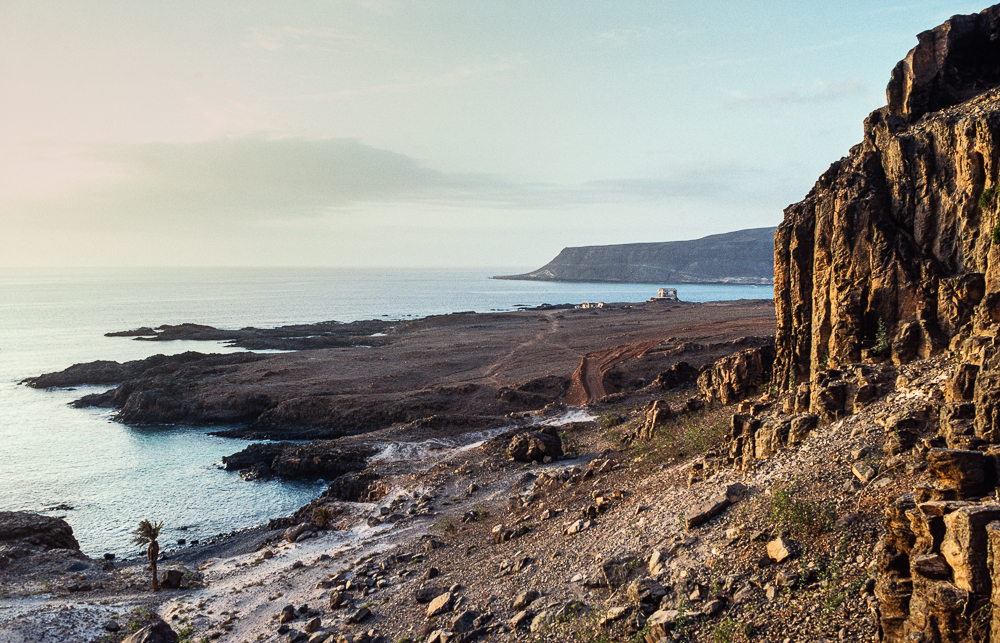
The doctor’s honking rouses me from my dreams. We continue our tour. We are granted impressive insights into village and family life. At my request, we visit a village school, where I can finally put my package of pens, drawing equipment, and calculators to a meaningful further use. The teacher thanks us effusively, as schools everywhere lack teaching materials. Through our companion, I feel integrated into the community, and we are allowed to share in the people’s lives as far as our language skills permit. But a look or a smile speaks a clearer language. We are grateful for the friendly gestures that make us forget every effort and hardship in such moments. To end the tour, we go for a swim together at one of the beautiful beaches to forget the leaden heat and to work up a hearty appetite for an extensive dinner in Sal Rei.

After restless days of travel, I have with Boavista found a place where I want to and can linger. The impressions must settle, and I take the time to write down thoughts and experiences. After a while, I will feel it again, that restlessness that has already driven me through many regions. Then I am caught in the desire to be on the move. I can hardly name specific reasons, because this unrest is controlled by feelings and not by reason. Is it the wish to break out of everyday life, to escape? Is it the goal to study foreign people and countries? Is it not above all a journey to myself, on which every kilometre covered in reality increases the distance, but brings me closer to my innermost self-understanding? Many writers have dealt intensively with the phenomenon of travel in travel literature. Bruce Chatwin, an English travel writer, particularly investigated this “wanderlust” in a wide variety of peoples who move around as nomads. His studies extended from the movement of the Bedouins to the “walkabouts” of the Australian Aborigines, based on which he proposed theories about the migratory instinct.
There are moments when I wish I would never arrive at the destination and, for example, the ship or the bus would travel on forever. Then suddenly the urge follows to finally see the familiar surroundings again. So I try to maintain flexibility between poles on my travels, in order to determine the pace according to my inner clock as much as possible. Thus we spend relaxing days on Boavista before the return flight date forces us to continue our journey. So the circle of our island tour closes as we land on Sal after a short hop by plane.
Reluctantly, our thoughts turn to the impending departure, while the remaining time passes faster and faster. In a few hours, we will be sitting in the rushing darkness high above the African northwest coast, but our hearts will still be on the islands. “Come with me,” Anja says suddenly and grabs my hand. She pulls me into the small bar from which we had heard the beautiful music at the beginning of the trip. We order the local Ceris beer, of course, and two grogues, and the music begins to play that wailing sound once more. One voice becomes a choir, one guitar a small band, and everything starts all over again: vibrant Mindelo, the jagged peaks of Santo Antão, the volcano…


Leave a Reply
Want to join the discussion?Feel free to contribute!