
Living History – Praia
The wooden planks of the caravels groan under the weight of newly loaded cargo. The heavy ropes creak under the pull of the anchor. The skeletons of the ships’ superstructures dance a deathly dance for many of the poor Africans being herded below deck to the sound of cracking whips. Suddenly, the cry rings out: ‘Pirates in sight!’. The orderly scene descends into chaos. Merchants hastily gather their precious belongings; entire families can be seen rushing away, sheer terror etched on their faces. Once again, there will be looting, pillaging, and murder.
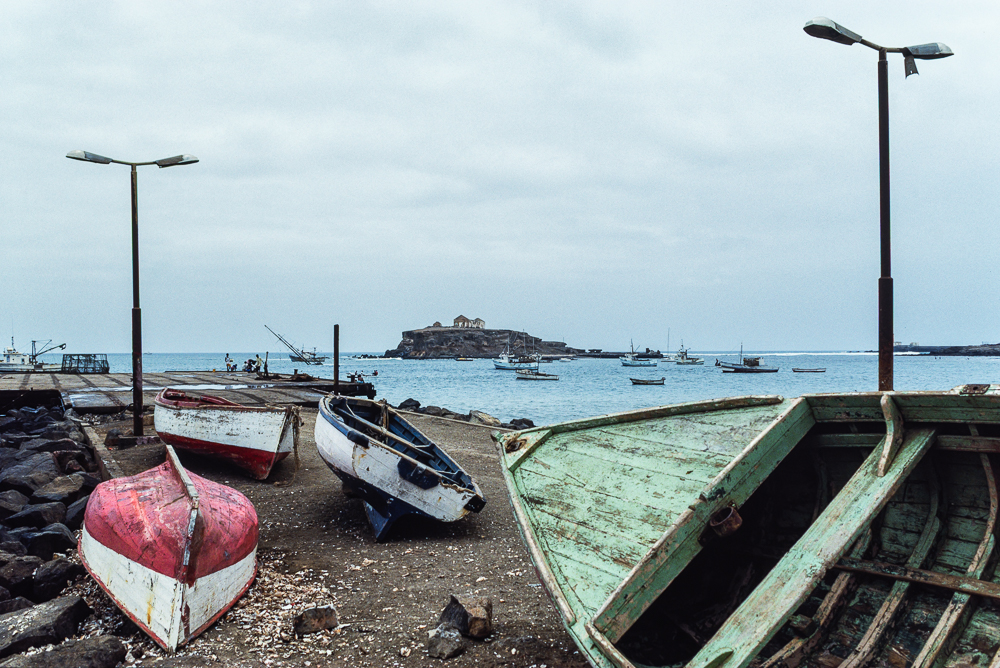
While we are travelling from the last stage of the journey from Fogo to Santiago, a scene plays out in my mind’s eye as it might have happened 400 years ago. I take a walk through the history of the island of Santiago and see the ships of the privateers John Hawkins, Lovelle, Drake, and Jack Cassart. I encounter the navigators Bartolomeu Dias, I spot Christopher Columbus and Vasco da Gama deep in conversation, and I tip my hat to James Cook. I even seem to have recognised Alexander von Humboldt’s busy head in the tangle of people across space and time. This condensation of history shows the importance of the ports of Santiago, the old capital Cidade Velha and Cape Verde’s new political centre, Praia. From the new harbour, the simple structure of the city becomes apparent. Between the city districts in broad dry valleys, the upper town rises on a rocky plateau 30 m above sea level. The administration of Cape Verde is concentrated in an area of 500 x 300 m, with the exception of the National Assembly. This is located slightly further out in the more affluent Prainha district, which extends along a headland to the Ponte Emerosa lighthouse.
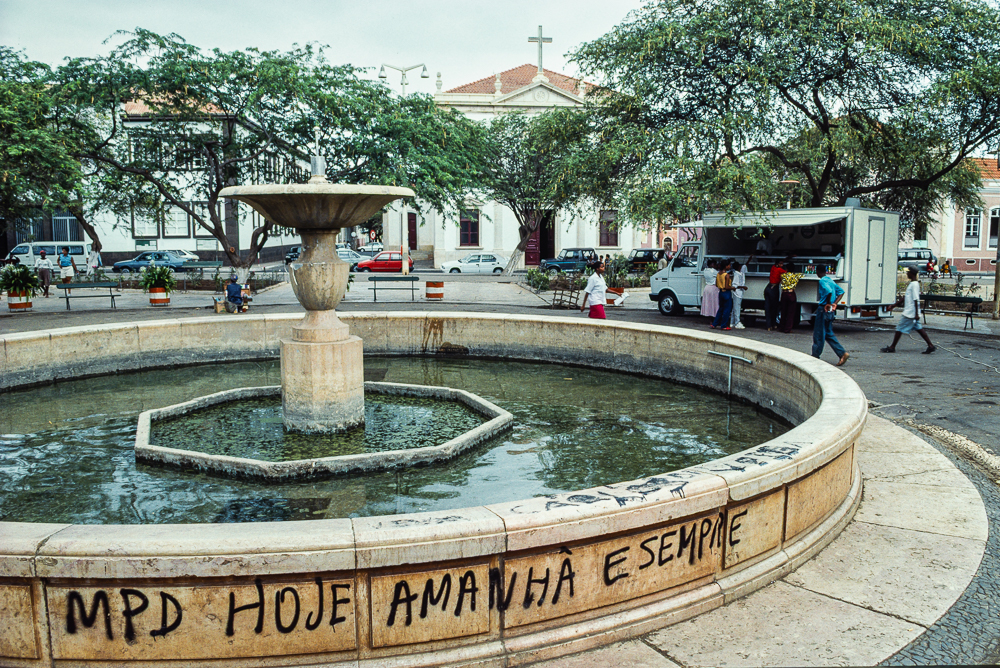
We take up quarters on the table mountain, right by the large ’12 September Square’. Surrounding us are the National Bank, the town hall, the headquarters of the national airline, and other important institutions. The surrounding alleys are peppered with corporate headquarters, diplomatic missions, and international political and economic associations. We notice the many people in dark suits and even darker sunglasses, constantly getting in and out of large taxis. By Cape Verdean standards, there is big-city traffic. Behind the National Bank lies the Presidential Palace, from whose walls the view sweeps over the new and old harbour facilities down to the posh Prainha district. In between, the diesel turbines of the power company hammer away day and night. In the bay lies a small island with the ruins of the quarantine station; a relic from the days when many diseases and plagues were transported around the world.
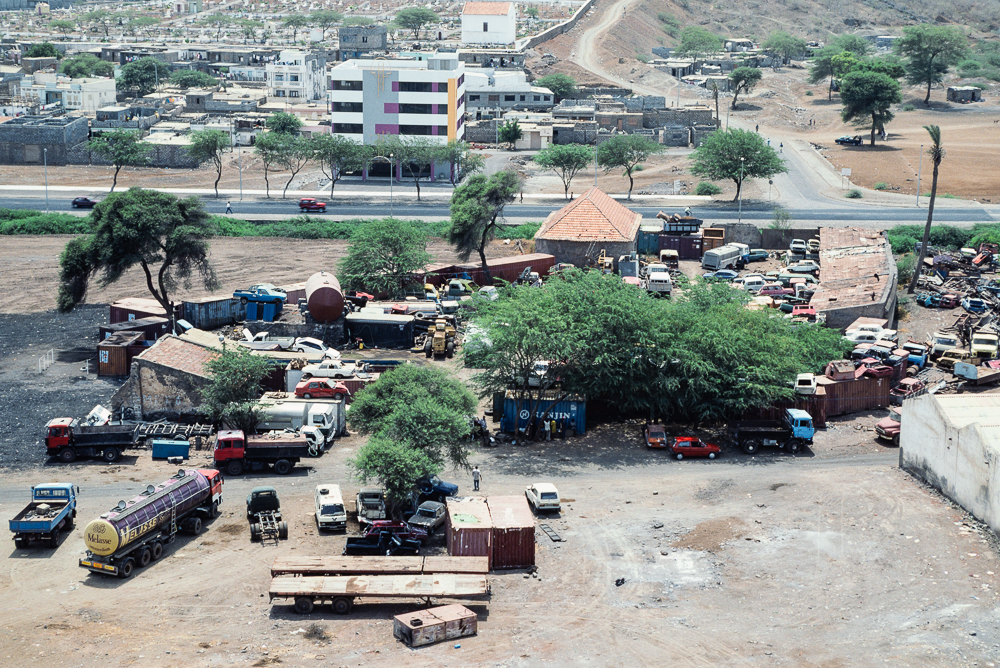
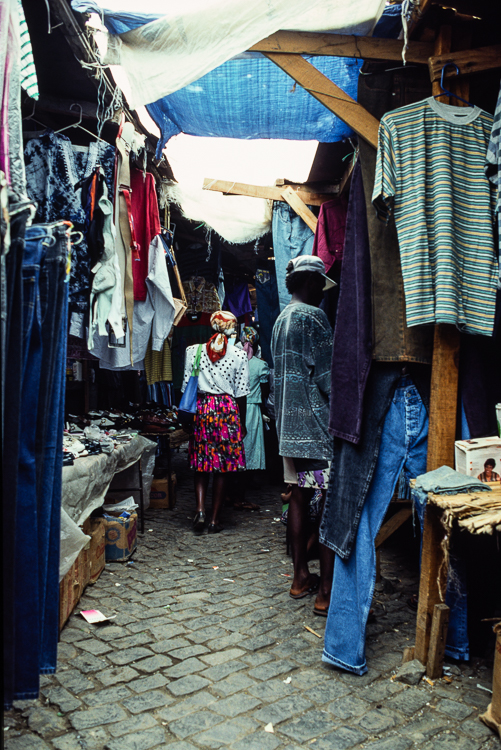
To the west, below the plateau, lies the central taxi rank, from which cars head to every part of the island. Every morning, the city absorbs the large number of shared taxis from the island as workers, traders, and market women flock into town. The Sucurpira market is located by the assembly point. Along narrow paths, similar to a bazaar, the routes wind through stalls full of clothing, shoes, household items, handicrafts, and kitsch. There seems to be everything for daily needs here. As in a small town, the aisles narrow due to the goods hung high, squares open up that resemble auction houses, and the individual product groups are divided into districts.
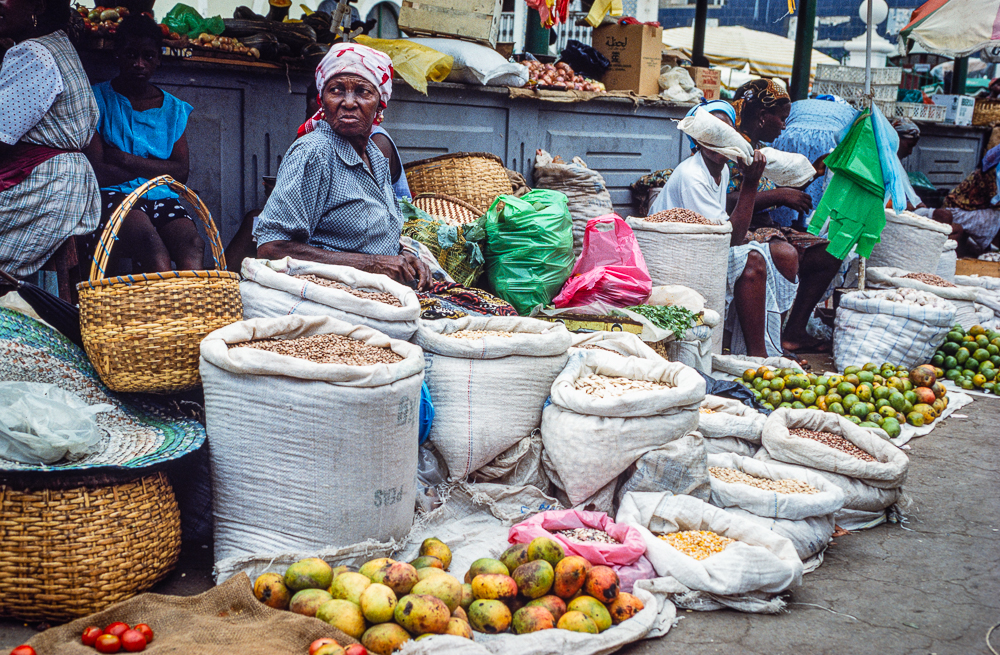
We escape the web of enterprising traders and climb the stairs up to the upper town. Sooner or later, you come across the large food market that feeds the city’s hungry stomach. Sitting amidst sacks full of maize and beans, the women shoo away those guests who don’t buy and only taste: the inevitable flies. The selection is vast; in one row there is the whole range of tropical fruits, in another sweet potatoes, cassava, aubergines, cucumbers, and other vegetables. Nevertheless, the image is deceptive, as we know that 85% of all food is imported, mainly from the USA and the European Union.
The rectangular square with its small halls in the middle is surrounded by a fence and four small buildings. Each of these houses the fish or meat department. In the small, stuffy rooms, the air is filled with stench and flies. Everywhere we see women with tubs and buckets on their heads, laden with bags and baskets. In contrast, the job of taxi driver is a male domain. This makes me realise that I have only seen one woman behind the wheel of a vehicle so far.
Continuing with the next stage of our journey in Cape Verde to Boavista.

Leave a Reply
Want to join the discussion?Feel free to contribute!