
The Fiery Giant – on Fogo
After wonderful days on Santo Antão, on our departure day, we travel early in the morning with the honking convoy of taxis to the ferry port of Porto Novo, from where the ship takes us to Mindelo. We only intended to stay there one night, to catch the large ferry to Fogo the next evening. But we wouldn’t be in the Cape Verde Islands if the ferry company hadn’t postponed the departure day by three days at short notice. On the day in question, the departure time was set for 6:00 PM, and we boarded the ship long before. However, given the sight of a large quantity of grain sacks and other cargo, we hardly believed the “Sotavento” would depart on time.
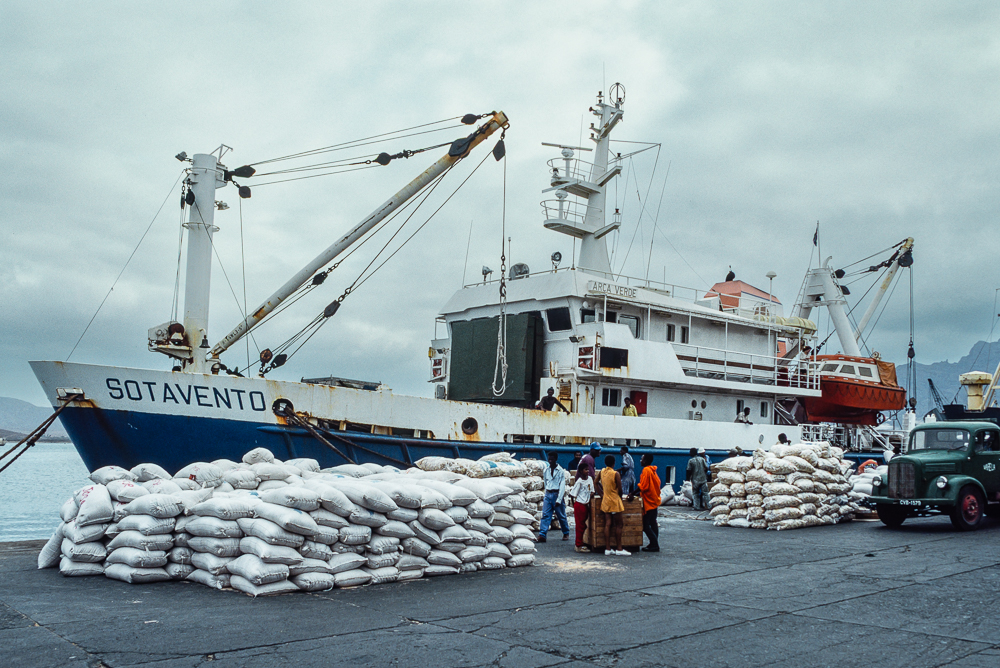
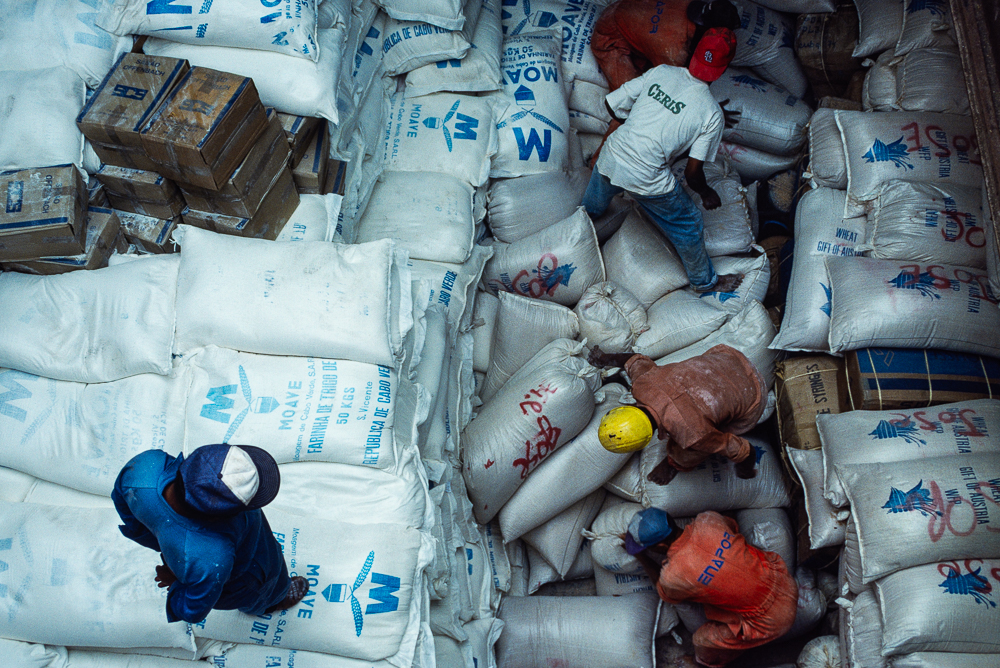
Incidentally, the ship, along with its sister ship “Barlavento”, was built in Emden in 1987 as part of development aid and handed over to the Republic as an important contribution to improving inter-island transport. The two ships were the most important and cheapest freight and passenger connection for the inhabitants, for whom comfortable air travel usually remains unaffordable. And yet there are many Cape Verdeans who have never left their island. The waiting passengers stand on the quay with children and small livestock, crates and suitcases, practising patience, as a load of sacks slowly disappears into the ship’s belly, interrupted by lengthy, heated discussions about the order of the cargo. Lorries from the nearby mill continuously bring flour sacks, which are manually stored on the quay and then hoisted onto the ship with a crane. At this leisurely pace of work, it eventually becomes midnight before the steel hatch in the bow closes over the cargo hold.
With two scheduled trips a month, a six-hour delay is meaningless. Besides, people here still have time. Meanwhile, passengers push their way across the gangway into the cramped and stuffy passenger compartment. The air isn’t any better in the few cabins. We escape the crowds to the deck, where we set up our camp on benches. “Oh dear, I wouldn’t want to swap with you,” a taxi driver calls out, “when I think of the swell in the open Atlantic, I feel quite sick.” We also see this sentiment in the eyes of many sympathetic relatives as the ship finally departs. The black silhouette of the island stands out clearly against the starry sky. But soon the lights on the horizon merge with the stars. The flying fish, fleeing into the darkness of the sea before the bow wave, look like flashes of lightning. The thud of the diesel and the slap of the waves against the boat quickly lull us to sleep. We are extraordinarily lucky, as the sea is almost calm, a very rare occurrence. All the more rested, we await the morning view of the geographical highlight of Cape Verde and also of our journey: the Pico de Fogo volcano, with its 2,829 m height.
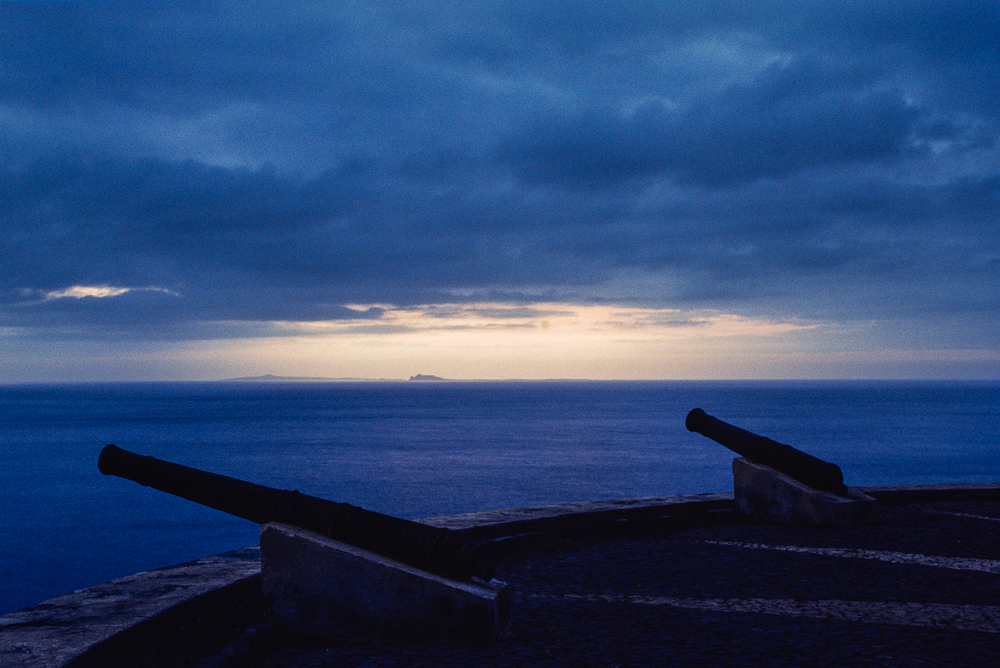
First, the uninhabited Ilhas Secas ou do Rombo appear, as Pico is still shrouded in a morning cloak of haze and clouds. But gradually, the black cliffs of the volcanic island become clearer. Fogo, like the neighbouring island Brava, can offer far fewer safe harbours, even if landfill and a now half-destroyed pier are supposed to facilitate landing. After a twelve-hour journey, our ship moors off the rocky coast.
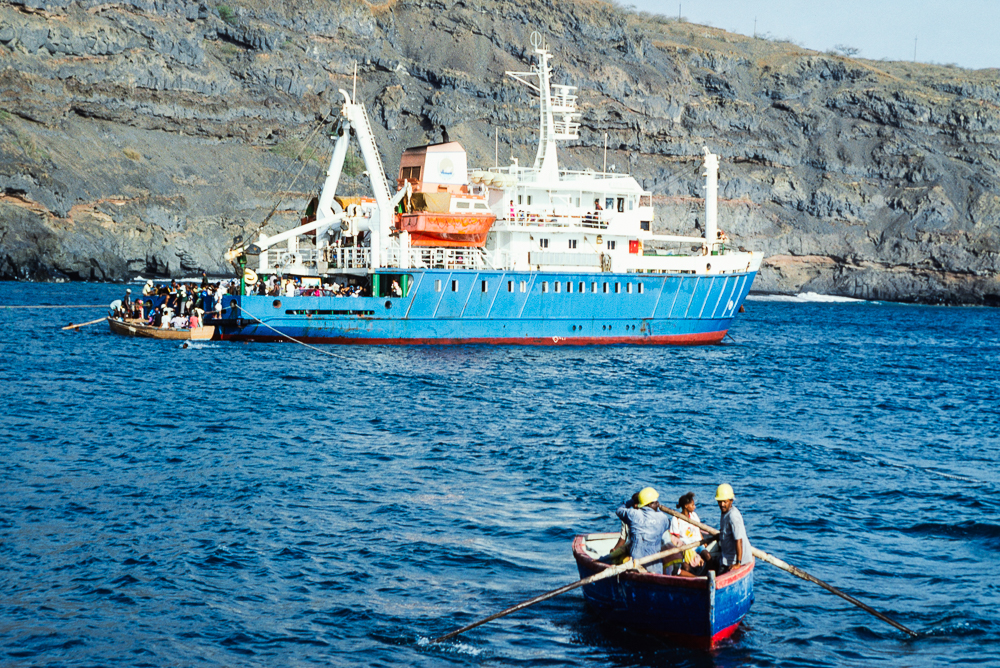
Passengers bound for Fogo must now cover the last stretch to the harbour in a rowing boat. The short distance becomes a rocking dance on the waves, especially in the harbour area. Children, chickens, and luggage are handed down by helpful hands when boarding, and sometimes even thrown. The scene repeats itself when disembarking. Via a small ladder, which must be grasped as the boat bucks, we reach glowing earth: Fogo. São Filipe, our destination, is perched on the edge of the cliffs. Below it, a strip of black sand beach stretches seemingly into the infinite distance. By car, it’s no problem to cover the short, steep ascent to the village.
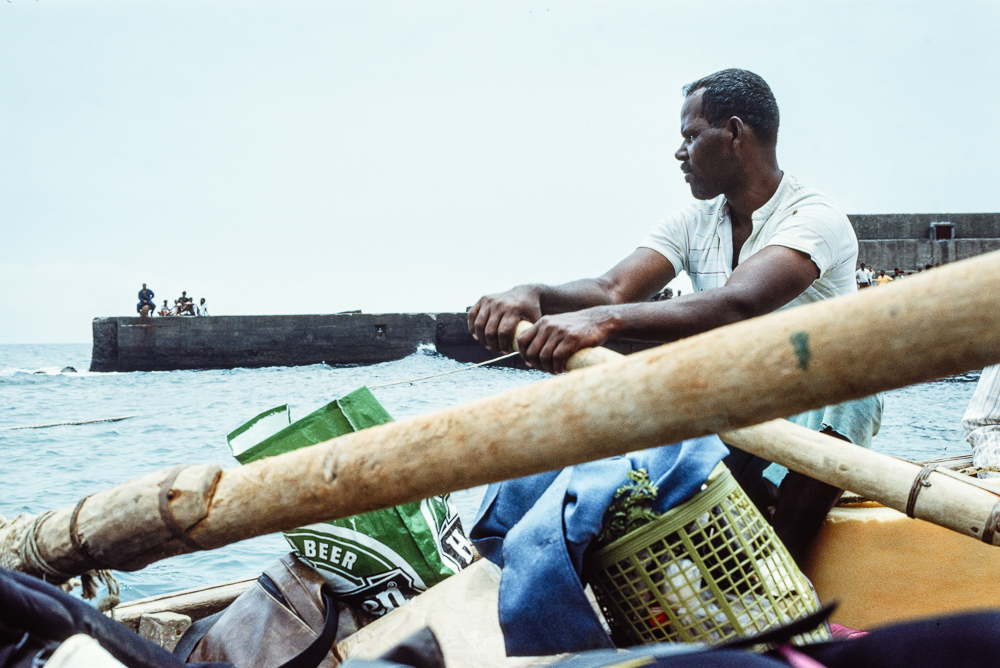
The Portuguese galleons certainly had their difficulties finding a calm anchorage. They crossed over in rowing boats and stood in awe before the seemingly insurmountable lava walls. But they were ambitious, for they already knew from their possessions in the Azores and the Canaries about the fertility of volcanic soil. They brought seeds and seedlings for maize, beans, cotton, and wine to the island. The huge mountain seemed promising for agriculture. The higher north-western regions lie in the moist cloud cover. But the price for this advantageous location was and is high. The inhabitants live with the constant threat of the fiery giant.
With a massive eruption in 1500, the mountain drove away many of the first settlers, but soon people grew accustomed to the plume of smoke above the island. Even today, the danger is highly present. As recently as April 1995, Pico erupted after over 40 years of deceptive calm, rendering the inhabitants of a nearby settlement homeless. But they have learned to live with the latent danger. Like the people on Etna, Pinatubo, and the other active, dormant volcanoes of the Earth.
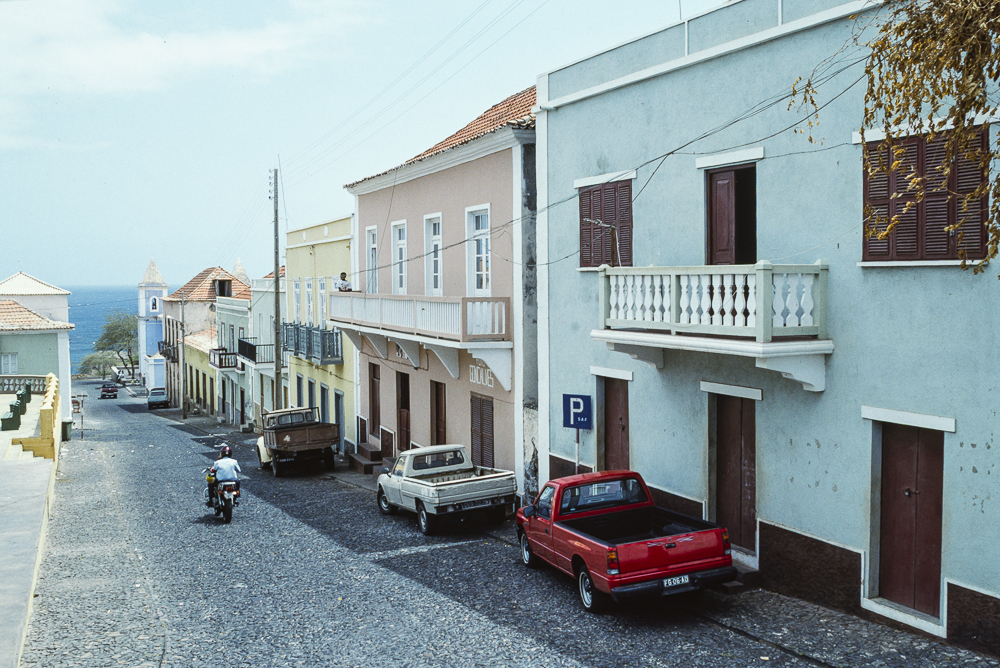
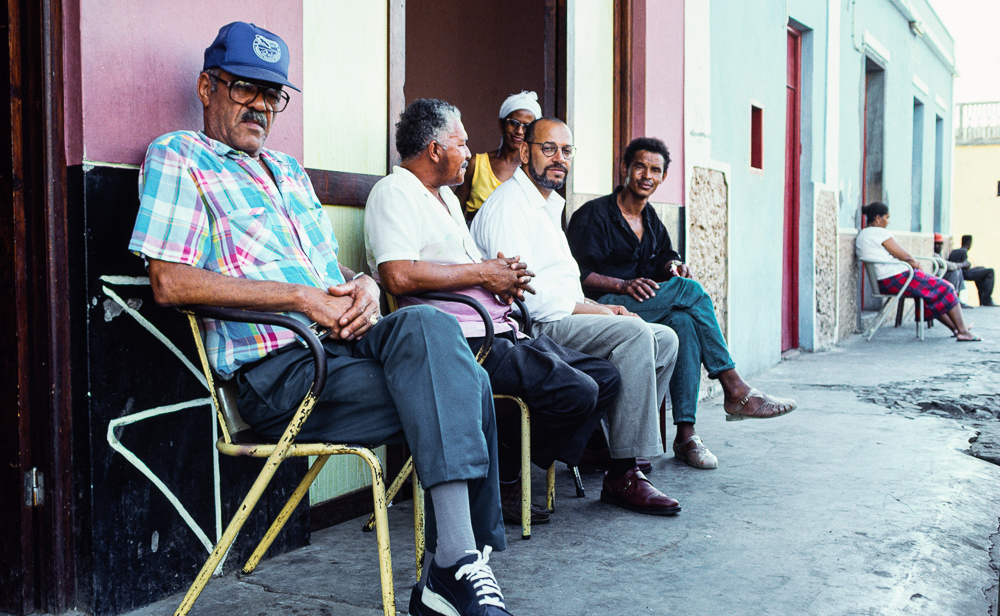
From the Pensão Vulcão, we look out over gently sloping, brick-red roofs towards the sea, from which the blue twin towers of the small village church rise. At a glance, the place appears very generously laid out. A first walk confirms this impression. The atmosphere is determined by the interplay of colourful colonial buildings surrounding the wide squares, and narrow alleys and elegant staircases, which lead one time after another to a new level, always offering an unforgettable panoramic view over the Atlantic and to the neighbouring island of Brava. The dimensions of some squares actually seem excessively large, but they constitute the fascination of this place and are also excellent stages for the spectacle of public life. Especially in the evenings, when the harsh sunlight is softened to a reddish glow, the most atmospheric view presents itself. Furthermore, one should quickly secure good seats, for now the performances begin, of young and old love, joy and sorrow, whose dramatist is the harshness of life.
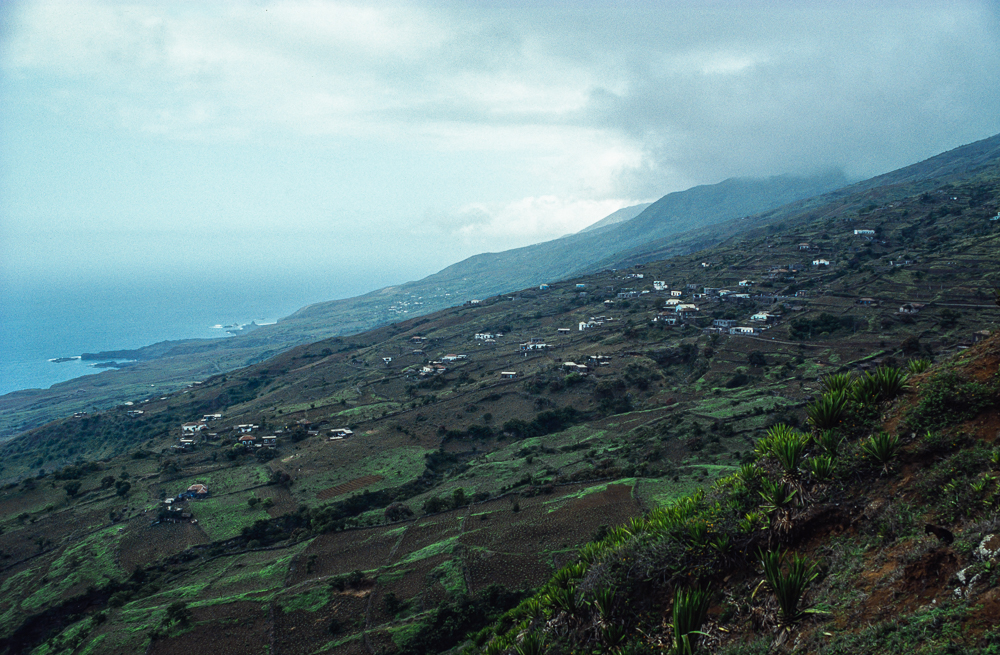
Fogo’s scarred landscape has many faces. In the north-west, steep slopes rise 2,000 m to the rim of the caldera, the old collapse crater from the eruption almost 500 years ago. The rocks are often shrouded in moisture-laden trade wind clouds. Every patch of black earth is used for agriculture; widely scattered villages and farmhouses twinkle from the ridges. Lush green plants cover the black earth, which emits a heavy scent. The view has a soothing and calming effect on the eye. In the obligatory shared taxi, we drive past thatched huts. On the main road, which has taken us almost halfway around the island, children herd groups of donkeys to the cisterns and wells to hang car inner tubes filled with water over them. We get off at Ponta das Salinas. Here, a former lava flow has left bizarre rock formations in the sea.
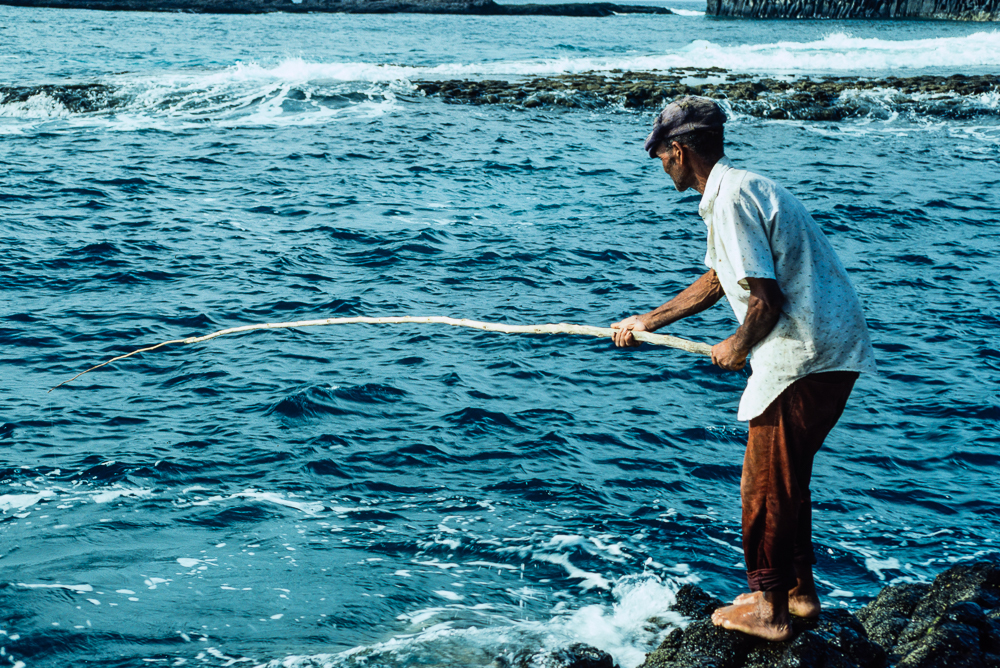
We set up camp in this rugged coastal region. Fishermen with simple wooden rods come down from the villages high above to supplement their diet with a catch from the abundant sea. A rowing boat following a diver also piques our interest. As they head towards our small bay, we walk over to the small natural harbour, where other boats rest in “garages” made of banana leaves. They proudly present their catch: lobsters.
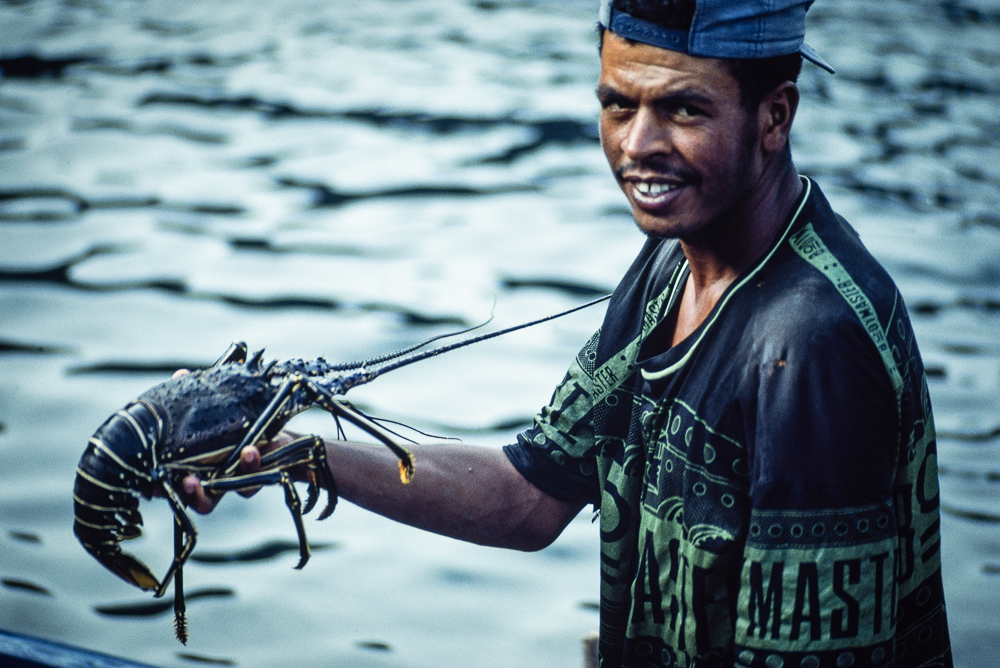
Manuel, from the nearby village of São Jorge, tells us: “We don’t actually eat the lobsters ourselves; my sons, for example, don’t even like them. It would also be a luxury, because we get a lot of money for these animals at the market in São Filipe; in Europe, they are highly sought after as delicacies.” He immediately presents us with a massive specimen, which must weigh between 1-2 kg. So far, we have refrained from eating lobster, but here we ask if they would sell us some. “Do you even have any idea how to properly prepare and dismantle them, what’s edible and what’s not?” Manuel immediately adds. At our headshake, he laughs heartily and offers his help.
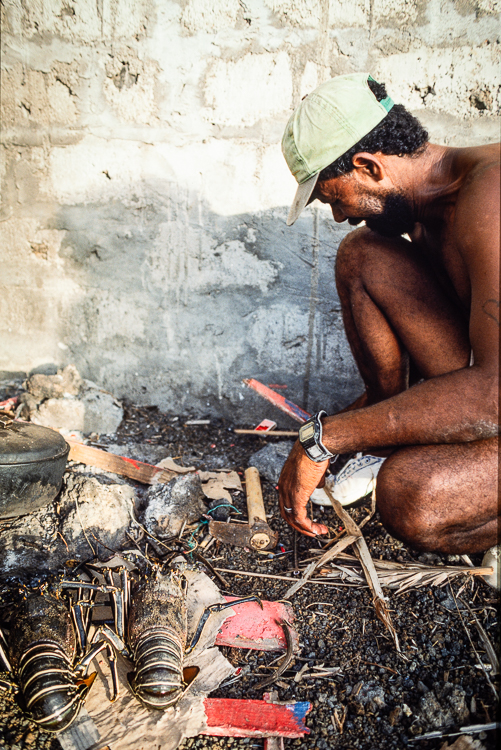
Half an hour later, the water is boiling in his small pot, his skilled hands expertly crack the red shell and reveal the white meat. The taste is very distinctive, but I find the huge fuss about this delicacy to be exaggerated. At the same time, we showed our travel guide to some boys, who found it highly amusing. The reason for this was the pictures of this area, in which some children could be seen, and since everyone here knows everyone…
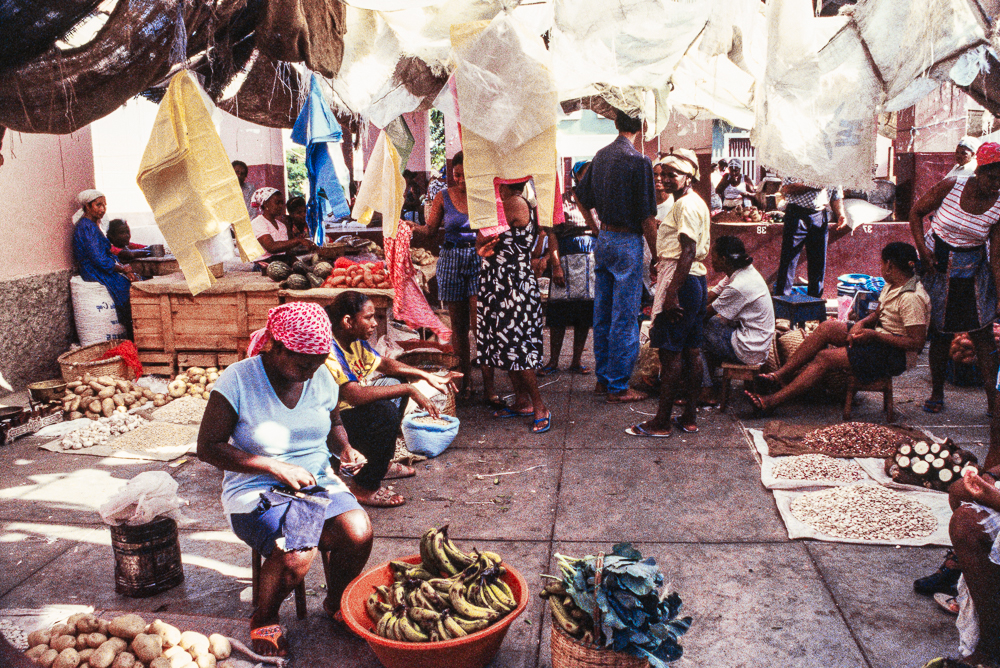
A few days later, in São Filipe, we are woken by kitchen smells of boiled egg and fish. In the breakfast room, which is also the family’s restaurant and lounge, some Cape Verdeans are sitting over steaming plates. We think they are members of the host family and joke whether we will now also be served such a mountain of food. No sooner said than done, two overflowing plates appear before us. We hadn’t expected to be served the Cape Verdean national dish, Cachupa, for breakfast. This meal consists of mashed maize and beans, first boiled and then fried with fish or meat. We received the variation served with fish, a very hearty breakfast.
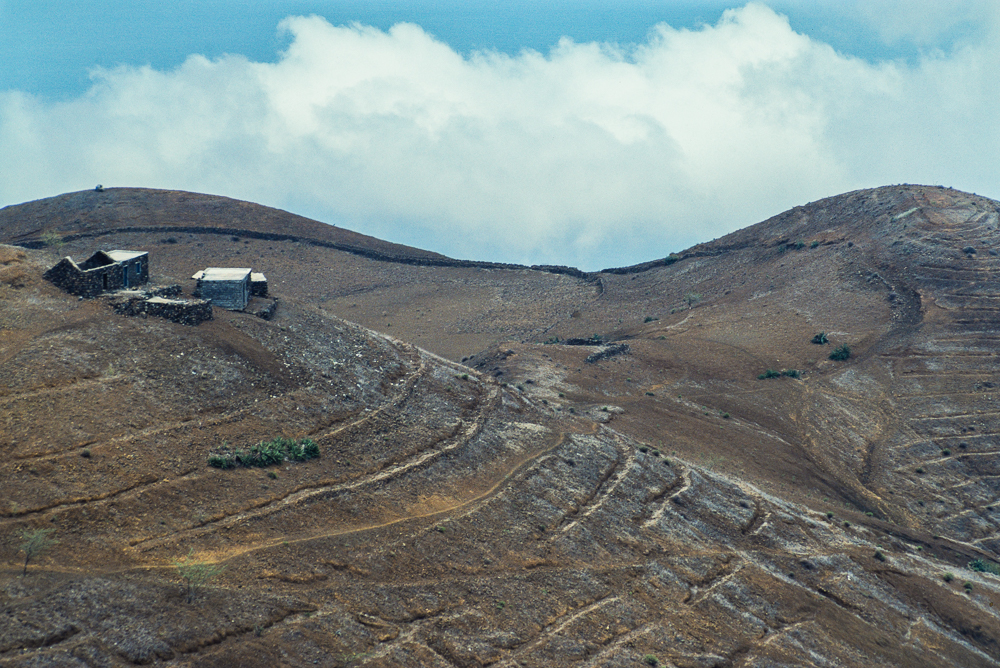
Thus fortified, we set off to finally see Pico. We have to take a rental car, as no shared taxis have driven to the old crater since the volcanic eruption and the displacement of the villagers. The off-road vehicle is old and the suspension hard, but the main thing is that it runs. What a contrast to the fertile north-western region is the dusty landscape along the road. Up and down we go over cold lava flows and eroded valleys.
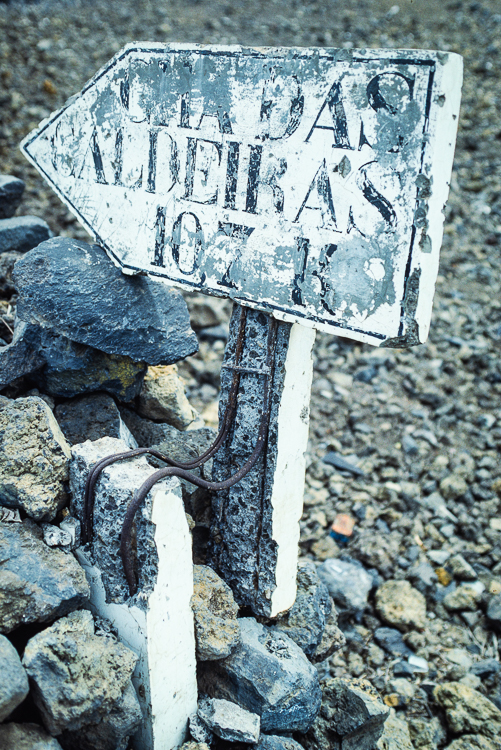
In the abstract volcanic regions, we pass small villages amidst the scree deserts, traverse deep black tuff fields, and wind our way on the boldly constructed cobblestone road through ash mountains and reforestation areas. As we gain altitude, the parasitic cones appear like pimples on the island’s face. Soon we plunge into clouds, seeing only a few bends in the road ahead. But the drama is reaching its climax.
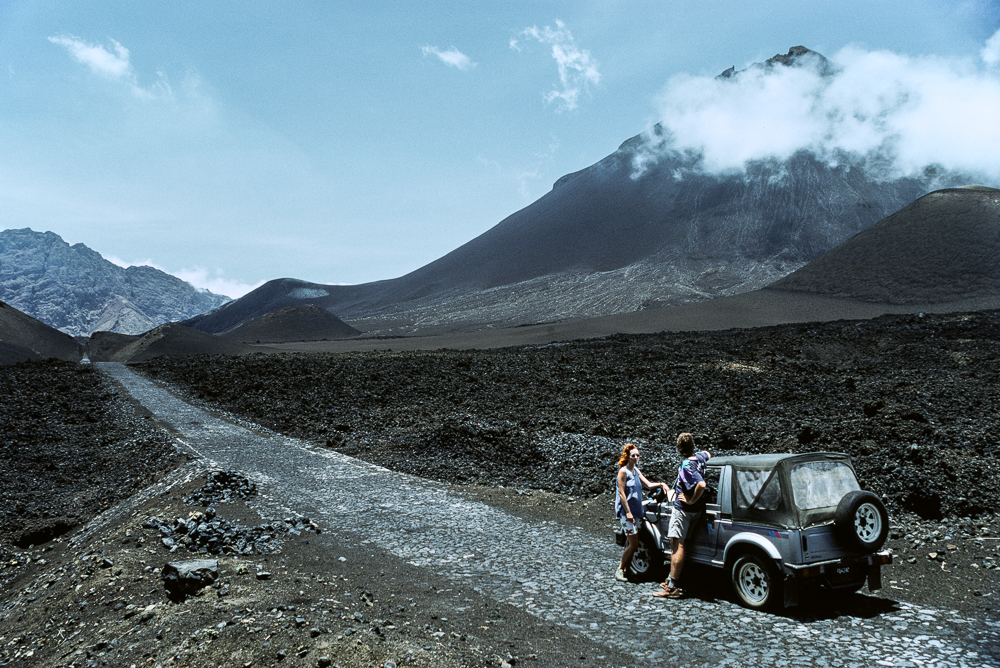
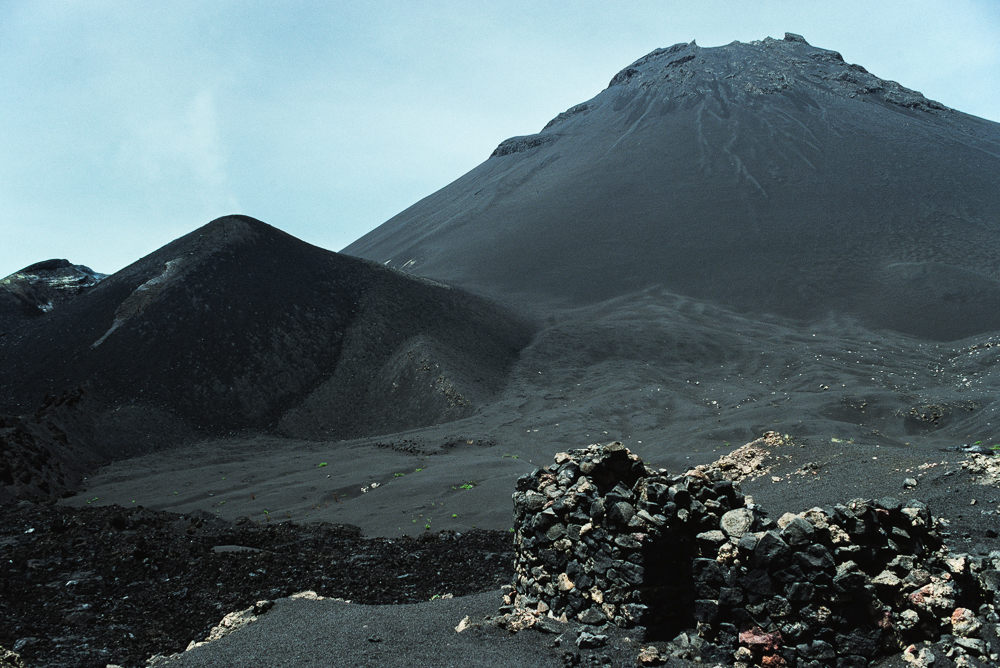
Suddenly, the veil lifts the moment we turn into the black chaos of tuff, block, and rope lava of the old collapse crater. To our left, the semicircular wall of the old crater rises up to 800 m, but to our right, the summit triangle of Pico de Fogo rises majestically against a deep blue sky. Shreds of cloud flow over the sharply defined edges of the ash slopes. This mountain has truly earned such an imposing appearance. With what self-assessment does man dare to measure himself against the forces of the Earth in this surreal atmosphere? After a few minutes of driving, we witness the defeat of the road builders. Mounds of rubble, metres high, have buried the road beneath them.
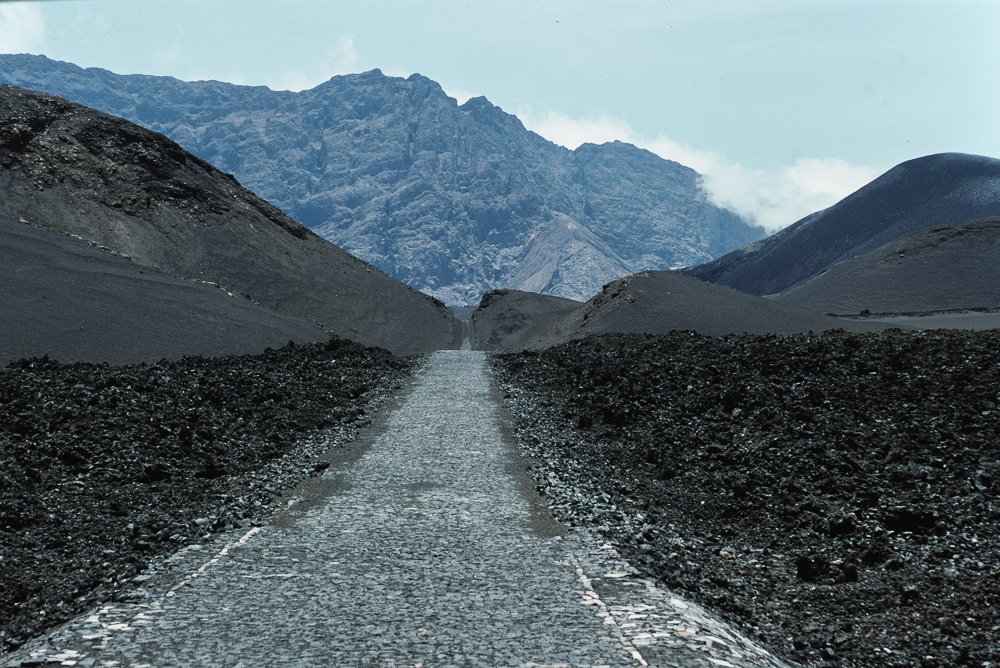
We get out and climb the hills beside the road. A great disorder prevails far and wide. Alongside ash centimetres deep, tiny and huge boulders are scattered, signs of the last eruption. On the flank of Pico de Fogo, two ash cones are smoking: the site of the last eruption. Slightly elevated, the flow of destructive lava can be traced from our hill.
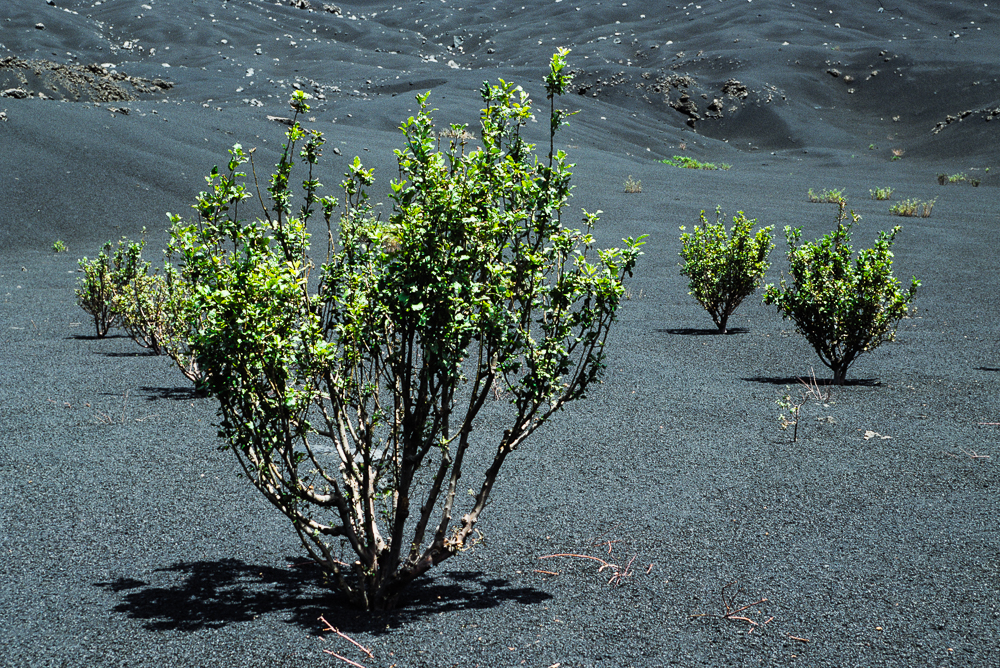
I cannot imagine life being possible in this apparent wilderness, but green patches in a valley bottom prove me wrong: extremely tough castor bushes grow here. Moreover, the wine cooperative, where the famous Fogo wine is cultivated, is nearby. I sit on the warm ash ground and let the scene sink in. The summit shimmers invitingly in the midday light; the heat becomes almost unbearable despite the 1,700 m altitude: “Another time,” I think, “but one day I want to climb you!” I absolutely had to see this place after the news of the volcano’s eruption broke during our travel preparations.
At this point, we have also reached a turning point in our journey. So far, we have seen a variety of landscapes that can be roughly compared to the Canary Islands. We have met people whose hard lot was etched into their skin, but whose laughter radiated an infectious cheerfulness. We look forward to the remaining time! The images of this journey have clearly left their mark. Each of us was now busy processing the strong impressions, so we sat silently next to each other for the first part of the return journey.
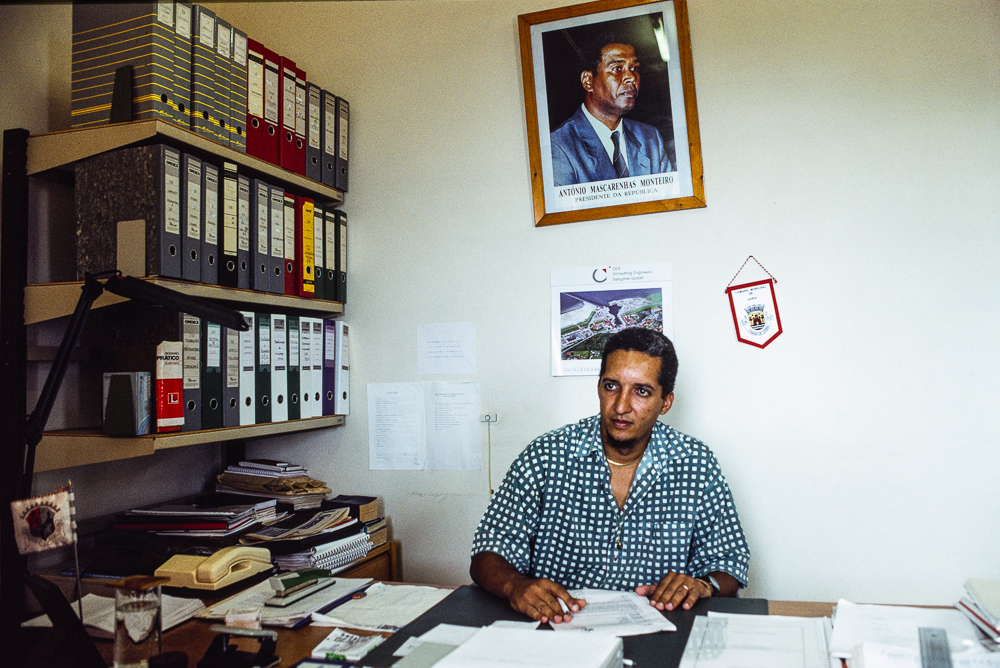
Another, but unexpected, highlight occurred the next day when I visited the office for Cape Verdean Coordination with the German Society for Technical Cooperation The impetus for this visit was a school film I had seen shortly before our departure. This film was the only source of information about Fogo I could obtain and showed reforestation, construction, and irrigation projects, commented on by a German-speaking Cape Verdean project manager. A second reason was perhaps also to find out something about the whereabouts of German taxpayers’ money. I was pleasantly surprised to see a familiar face after I had requested a meeting with the director. Rui Evora, the project manager, had since become head of the Fogo / Brava regional office. “Good day, how can I help you?” I am greeted in perfect German. I explain my intention to learn about development aid on Fogo and mention the film, whereupon he smiles and briefly sinks into memory: “That was a long time ago, 10 years have passed since then and a lot has changed, as you can see!” He immediately tells me about himself and his work. He acquired his excellent German language skills while studying water engineering in Magdeburg during GDR times. Now he is initiating the 6th three-year period of cooperation with the Federal Republic of Germany, in which the nature of the aid would change.
While previously, under the motto “Food for work”, many workers were employed and everyone was assured a minimum livelihood, now private companies are also employed, for example in road construction or in the new construction of São Filipe airport, where work has been suspended for five years and over 2 million DM are still planned for the runway. The aim of technical cooperation is to create training places and facilities for young people.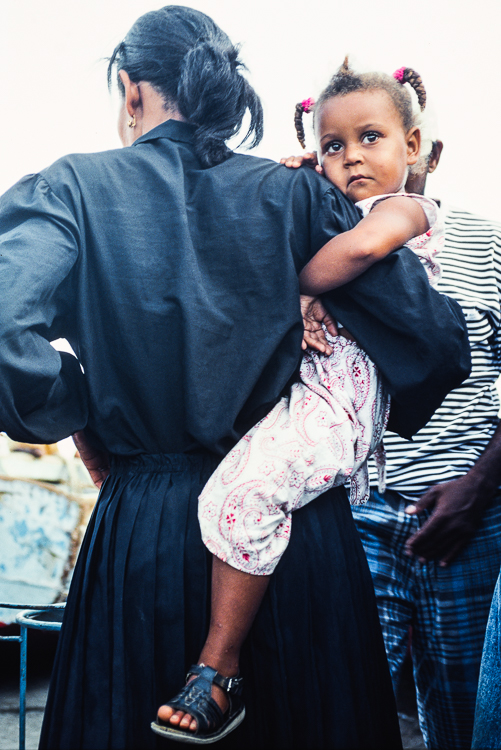
Another goal is to support individual communities in establishing water management administration, energy supply, and independent structures for further development. While reforestation and road construction were primary goals in the past, this was followed by the construction of cisterns to ensure an adequate water supply for people, even in higher regions of the island. With all rainwater cisterns, 10 litres of water per person per day are available; however, the World Health Organisation recommends between 30-50 litres, to his knowledge. In the new budget, which now needs to be approved, 10 million DM are planned for water drilling, which will be brought down to a contour line of 150-200 m above sea level. Geological difficulties and technically inadequate equipment, however, significantly complicate the work. Although some initial drillings were more successful than expected, there have also been setbacks.
The most successful example of these efforts is Brava, the only island in Cape Verde where every village is equipped with its own water supply. New projects vary greatly in size, with local and regional characteristics. In Brava, the harbour will first be expanded. Due to its quicker and simpler implementation, this project is being prioritised over the necessary renovation of Fogo’s harbour. For both projects, 20 million DM have been provided by Germany. Another 5 million DM flowed as emergency aid for the refugees from the volcanic eruption, who are currently living in a tent city near São Filipe.
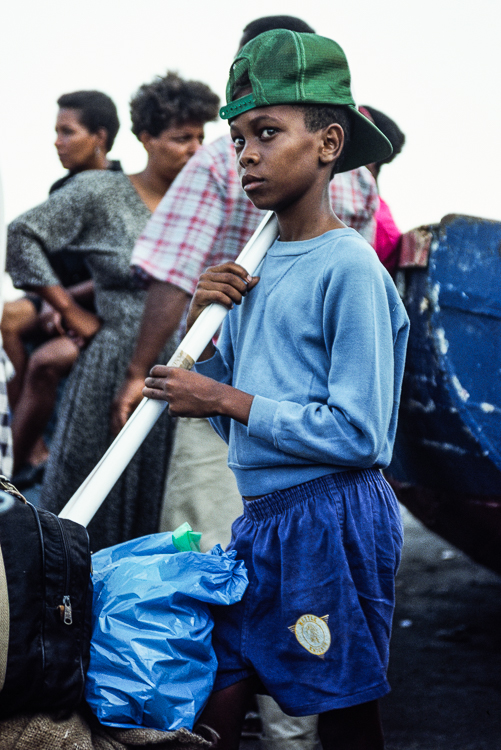
Here, a dilemma of such financial aid simultaneously becomes apparent: there is heated debate about the use of the funds, concerning the question of resettlement or relocation to other parts of the island. By the time agreement is reached on perhaps the most sensible aid, all efficiency is lost, and the money may even have disappeared into dubious channels. “Finally, a tip. Buy our local coffee at the market; it’s excellent,” he hinted to me, “and tell people in Germany about our island!” – which is what is happening here. I immediately went to the market and bought 1.5 kg of green coffee, which I later roasted at home, as my grandmother recommended: in a pot over a flame. The result was truly a unique, strong flavour that I can only recommend.
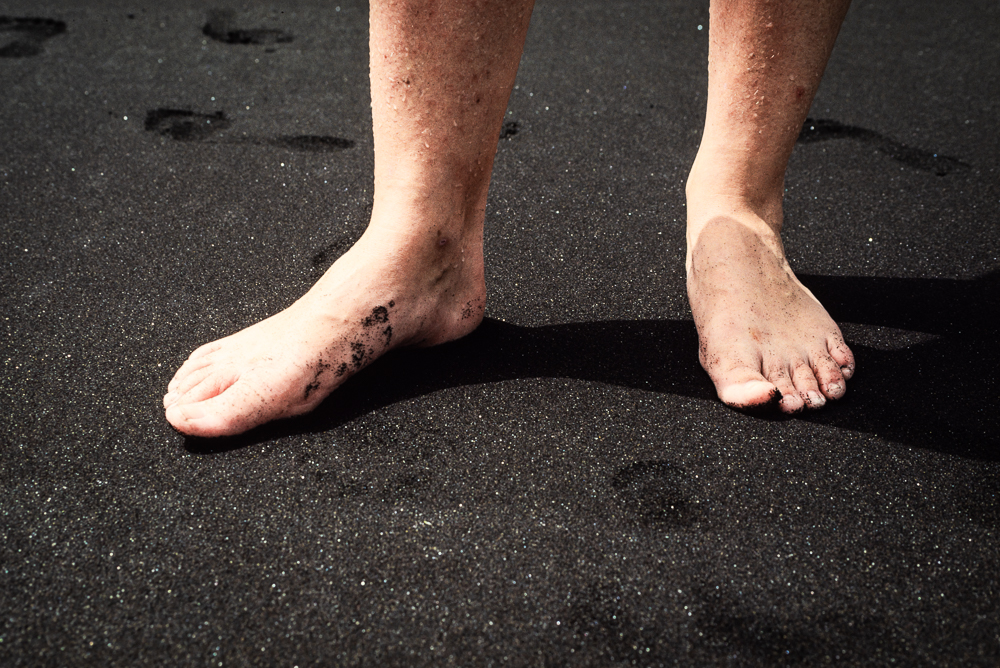
We spent several more beautiful days with extended walks on the black beach, where we could swim at our leisure, and further hikes through the desolate wilderness of the mountain slopes. We leave the island the same way we arrived, by water; even the ship is the same. Taxi drivers, port workers, and seemingly half the population of São Filipe are present at the harbour, both out of business acumen and pure curiosity. In the pale twilight, we board. The black shadows of the island quickly merge with the veils of night. We are on our way to Praia.


Leave a Reply
Want to join the discussion?Feel free to contribute!