
The Death of a Chick or the Grief of Birds
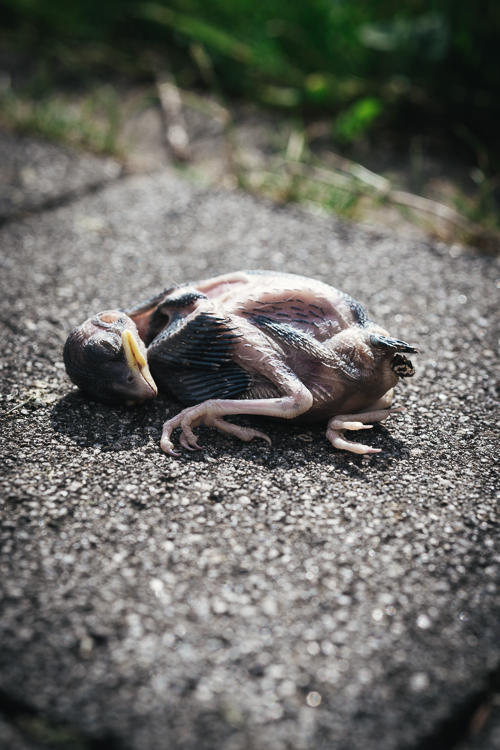
One afternoon, I find a dead house sparrow chick (“sparrow”) that has fallen from its nest onto the stone floor in the garden. The corresponding nest is located above it in a ventilation shaft on the house wall. Despite precautions and monitoring, they managed to set up a nest there. Occupied nests must not be removed during the breeding season. For humans, a chick falling from the nest is a symbol: for failure before the first flight, for the harshness of nature, for the fragility of beginnings. But what happens within the bird parents themselves? Do they grieve? Do they recognise loss?
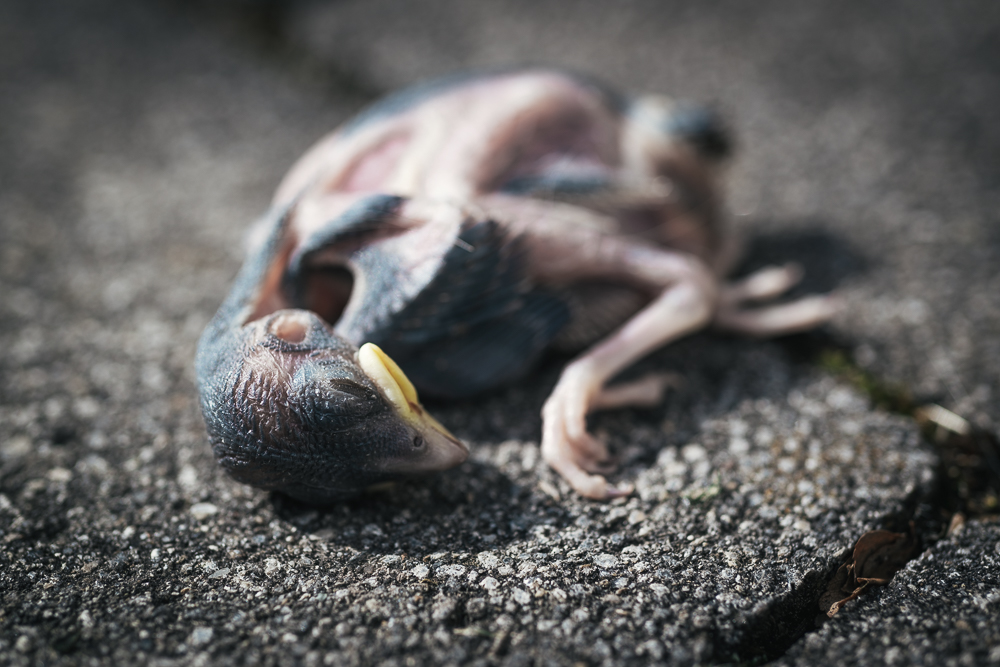
Their existence follows a different law than ours. It doesn’t seem to be ‘grief’ in the human sense — no remembrance of a shared future, no language of loss. Nature knows no sentimentality, but it knows attachment. Parental care is not merely instinct, like clockwork; it is a form of existential alignment. For weeks, the animals’ entire being is focused on warmth, protection, and food. The chick is the centre of a biological universe. If it falls out of this context, a void remains for a moment — a disruption in the rhythm of life.
Perhaps the difference between humans and birds lies less in the feeling itself than in its duration. Humans preserve pain in memory and narrative. The bird returns sooner to the wind, foraging, and the seasons. Its life hardly allows for a long dwelling in loss.
The death of a chick is therefore not just a small event in nature. Perhaps grief is nothing more than this: the world’s brief refusal to immediately accept a loss.

Leave a Reply
Want to join the discussion?Feel free to contribute!