
Mountains, Music & more – Sao Vicente and Santo Antao
After our arrival on Sal, we continued our tour and left the island by plane, heading west. Whether you approach the north-western islands by ship or plane, the jagged silhouettes announce a more varied landscape from afar. On Sao Nicolau, Sao Vicente and Santo Antao, mountain peaks rise to over 1,000 m. Such a fascinating sight immediately makes my legs tingle with the great anticipation of climbing some of the peaks. The mountains push into the regions of the lower cloud layer and form a barrier that forces down the necessary rain or benefits from the moisture of the clouds. As a result, fertile valleys stretch down from isolated peak regions, e.g. in the interior of Santo Antao, into the lower arid areas. 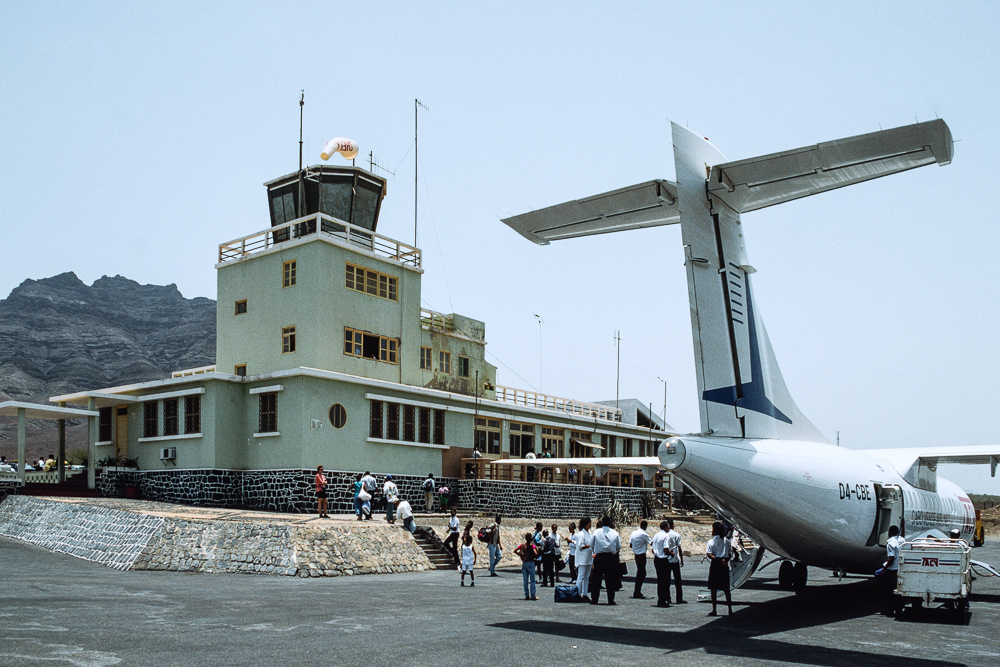
In such a fertile valley on Sao Nicolau, not visible from the sea and therefore relatively protected from pirates, the town of Ribeira Brava was established, which even held great importance as a bishop’s seat. As a result, a priest and lay seminary was founded here in the second half of the last century, which initiated the first Cape Verdean literature and theatre culture. At the same time, there was a brisk trade in local food and goods until economic decline set in here too, caused by drought and changes in world trade, from which the island has still not recovered today.
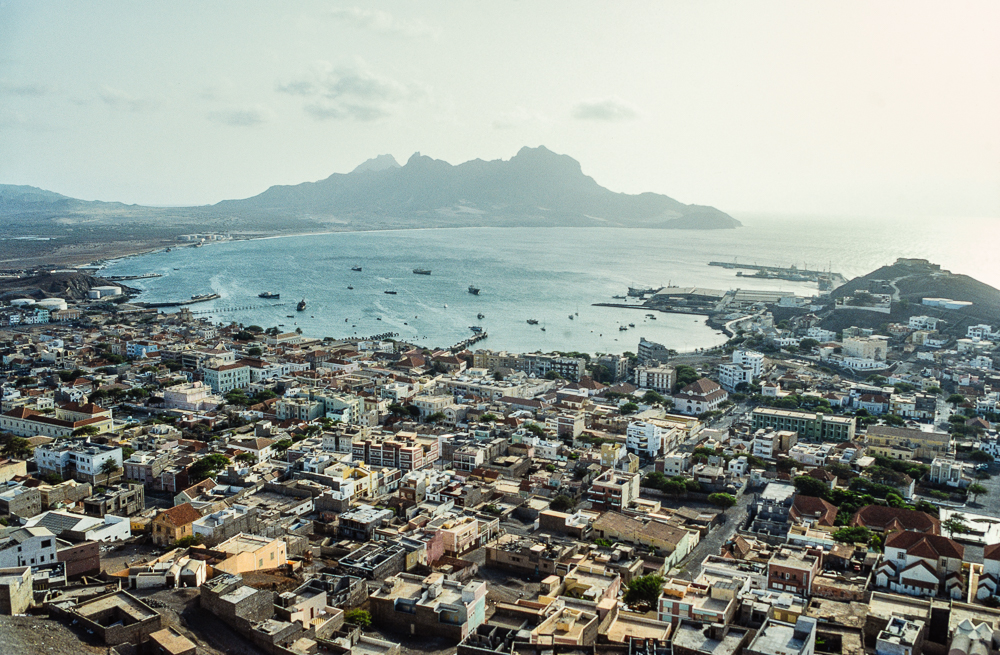
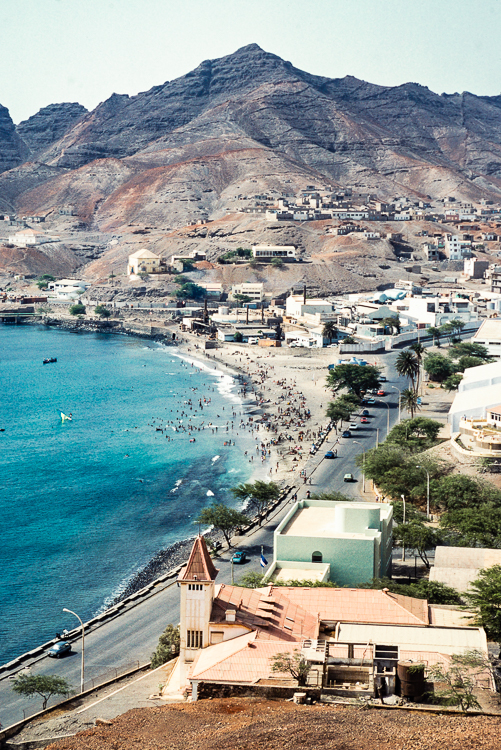
This constant ebb and flow of history is also illustrated by the most important port city in Cape Verde, Mindelo, on Sao Vicente, which with its harbour Porto Grande represents the second gateway to the world for the islands. We reach the city after a breathtaking landing in a wide desert valley and a dusty ride on the back of a rusty aluguer past acacia bushes and rows of wind turbines down into the large bay of Mindelo. The location is truly perfectly chosen, as the city lies on a magnificent semi-circular bay that offers a safe harbour. From the water, a sea of houses spreads up onto the bare mountain slopes surrounding them in brilliant shades of yellow and red, which begin to glow all the more intensely in the evening light. From up there, you have a fantastic view that reveals the circular shape of the former volcanic crater.
Its floor has now sunk below sea level; the circular line of the mountain range meets a sharp rocky tooth in the sea in its imaginary extension. There, the lighthouse shows ships the safe way into the harbour. Behind the long pier of the new harbour, a rock rises up with a fortification that the Portuguese built in the 18th century to ward off pirates. The buccaneers also appreciated the protection of the natural harbour as a hideout. My gaze could linger for a long time over the nested houses and the rusty port facilities, had I not been followed by a few children who, for once, are obtrusively making fun of me, trying to force my attention by making a noise or darting into the camera’s field of vision. I firmly resolve to climb this beautiful lookout unseen one day.
A major eye-catcher are the lined-up wind turbines to the south towards the airport, where the wind is channelled through the narrowing of the valley. Electricity from wind power could cover an important part of the increasing energy demand in the near future, as both the consistency and the wind strength suggest high profitability. Hopefully, enough investors will be found for this clean energy to make the state independent of the large oil companies. In the north-east of the island rises Monte Verde, whose peak at 750 m is often shrouded in clouds. It doesn’t live up to its name, as only a meagre growth remains of the former vegetation today. The rest of the island consists of a barren landscape; from the rocky mountain top, fields of sand and scree stretch down the slopes into desert valleys, where occasional young acacia groves from reforestation projects stand.

Given the infertile areas, it is initially inexplicable to me how the sprawling city is supposed to feed the ever-increasing number of city dwellers. The most important factor here is probably the large port. A look back at history shows that after the pirates were driven out and the first sparse settlement began, the British recognised the value of this base for their steam fleet.
They built coal bunkers and ensured a massive economic boom, in the wake of which goods and food flowed into Mindelo because the city held a favourable position between the continents. Trading houses and agencies provided international contacts. It is also telling that the first transatlantic cable to South America had a relay station in Mindelo, linking Cape Verde with the world. While the world wars caused interruptions, the end of steam shipping also brought economic decline for the port city.
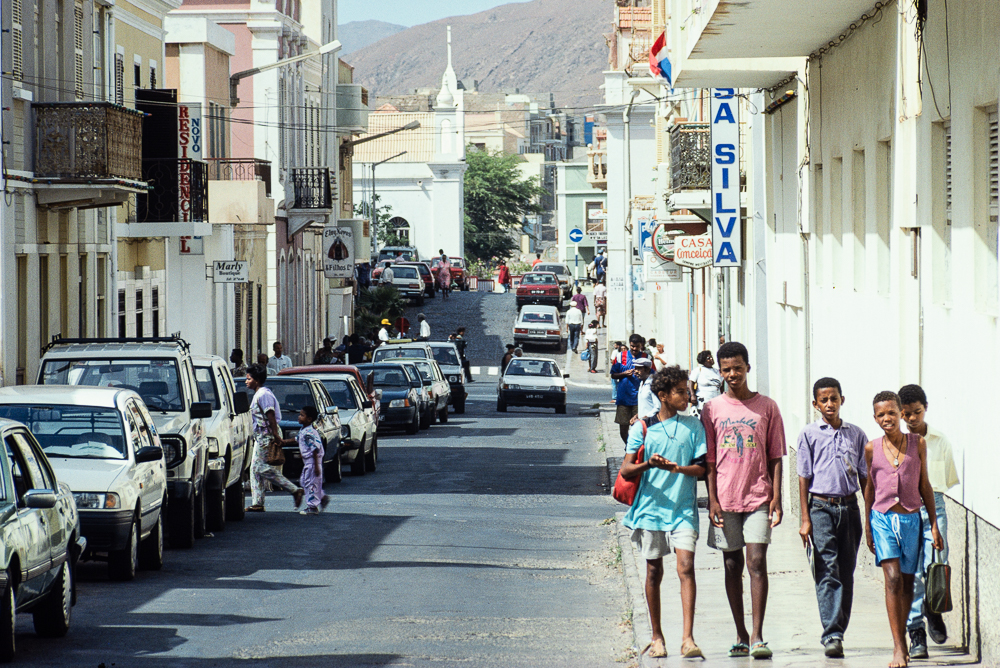
History has left many traces in the cityscape. On the back of our aluguer, we race through the narrow alleys of the old port district. Startled by the driver’s wild honking, pedestrians squeeze against the walls of the houses. On the road, the law of the strongest applies. Our destination is the Pensão Atalantida, an old colonial two-storey building. In our neighbourhood, we visit the gloomy bars and local restaurants that evoke a rough image of times gone by, when sailors populated the shops and well over a hundred taverns. To my ears, the clinking of glasses and the drunken songs of the old sailors echo from the faded walls. Mindelo is a city of strong expression. It is a colourful city, with bold, bright colours on doors, shutters, fences… Mindelo is, above all, a loud city.
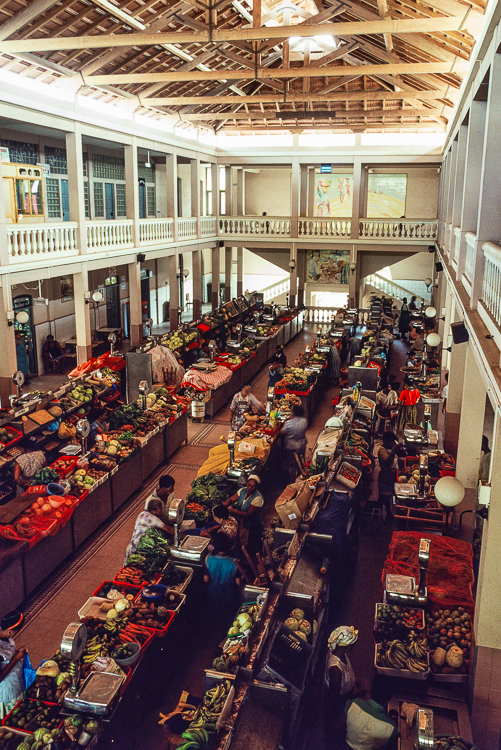
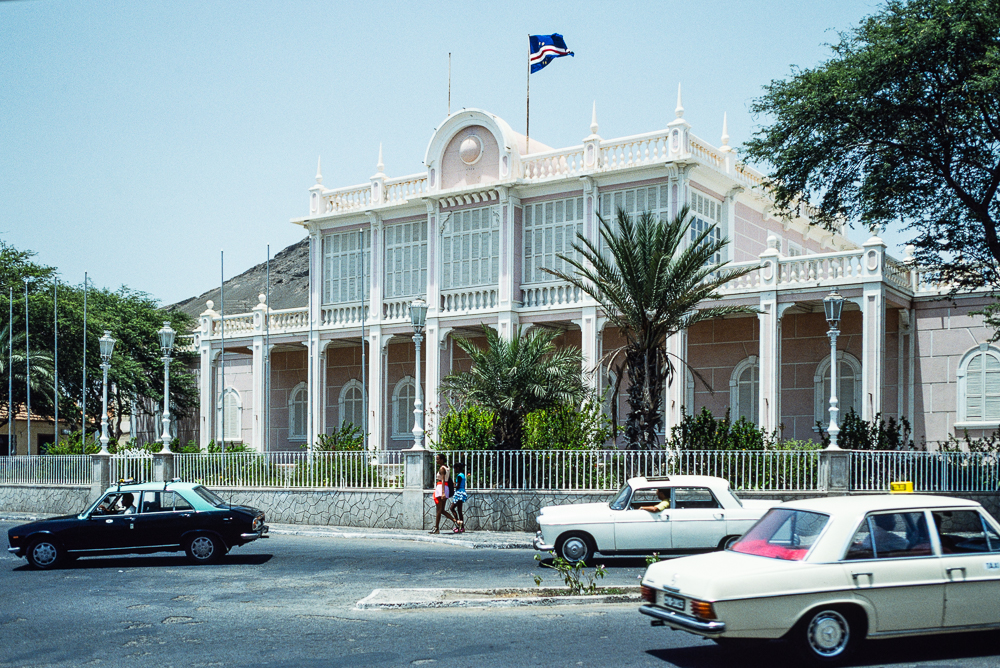
Even before sunrise, the honking and roaring of the aluguers penetrates through the open windows. Closing them would make the heat in the room even more unbearable and wouldn’t promise any noise reduction anyway. So, having been woken early, we take our daily breakfast at Cafe Lisboa, where we watch the busy hustle and bustle in the city centre. We particularly look forward to the strong taste of the coffee grown on the island of Fogo, which really wakes us up. At the top end of the street sits the old Governor’s Palace, and right next door is the municipal market hall, freshly renovated, where we stock up on fruit and vegetables.
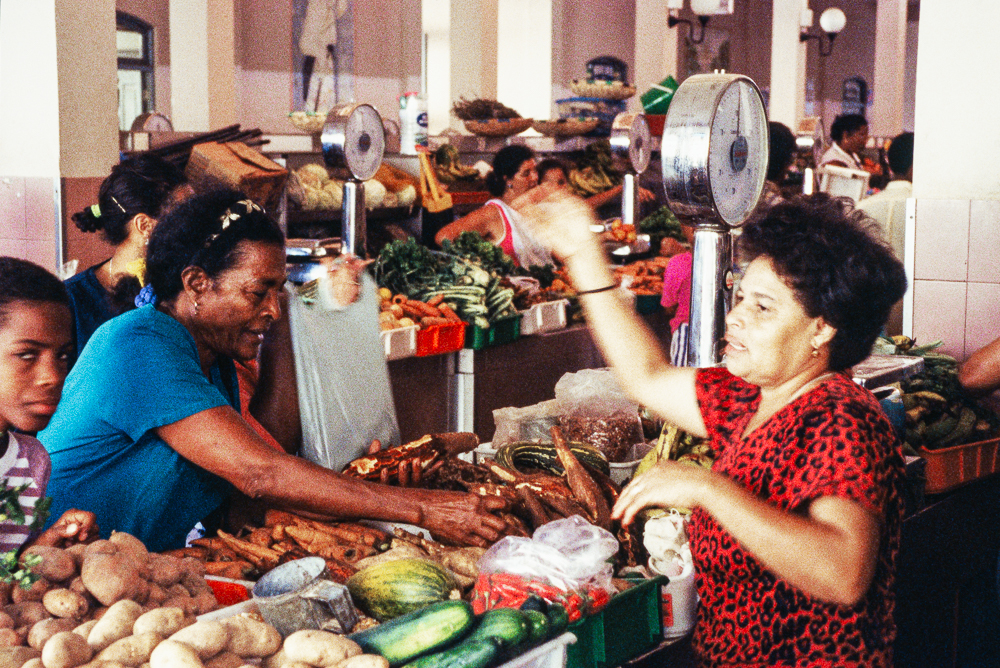
The wide range of products is surprising, but bananas, mangoes, passion fruit, sweet potatoes and all the other tropical fruits and vegetables come over daily from the fertile regions of the neighbouring island of Santo Antao. The strong demand attracts both local produce and large deliveries of food aid, consisting of grain, maize and beans. From the upper floor of the market hall, we look out over the lined-up stalls, which contrast in their cleanliness with the dusty and dirty surroundings. In neat rows, the new scales glint between the fruity colours of the goods on offer. Just a few steps further and we are on the coastal road at the old harbour.
The district ends at the beach at Torre de Belém, which is modelled on a watchtower on the Tagus in Lisbon. From over there, the fish market announces itself with its pungent smell.
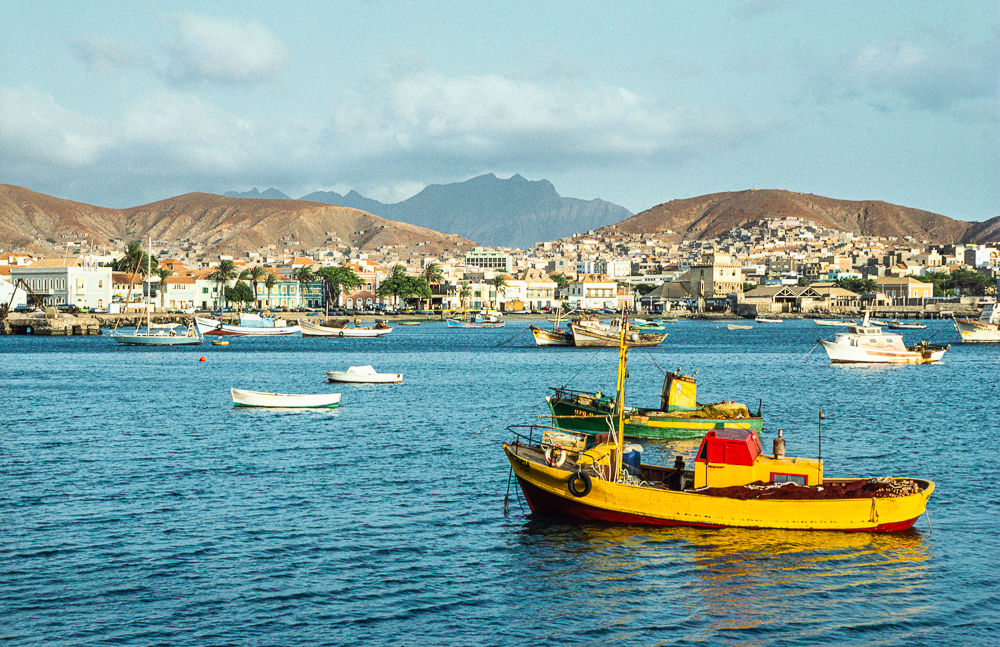
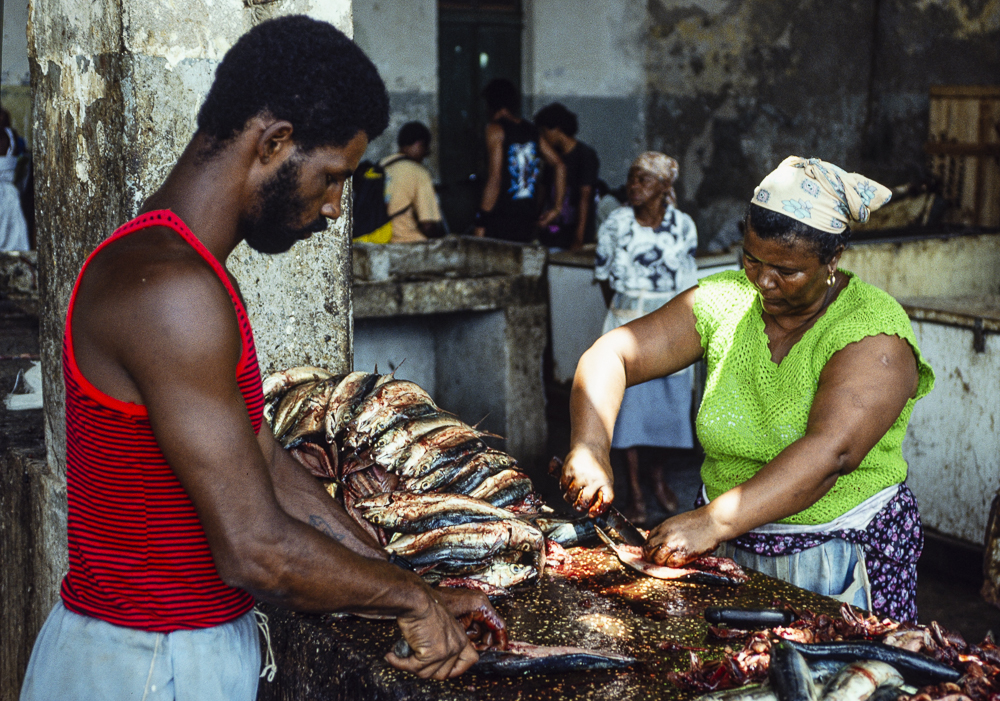
We pass a row of boats resting next to the palm trees on the beach and pay a visit to a colonial house where Manuel Figueira, whose painting hangs in our café, and Luisa Queiros have set up their studio. Next to the small shop, there is a narrow and steep staircase up to the upper floor. Unfortunately, the door is locked, so we can only catch a fleeting glimpse into the room through the gap in the door. Another time, we think, and now visit the fish market by the tower; fish are laid out in the sun to dry, and the fresh catch is gutted by skilled hands at long stone tables. With loud shouts, the goods are offered for sale by the many women.
We escape the noise and stench into the basic craft museum, where a friendly employee guides us through the exhibition rooms. He explains the depictions on woven carpets, carvings and the use of everyday objects from days gone by. Life was too hard for people to think about art, which is why there is little of it to be found on the islands. We end the tour with a cold beer at the kiosk in the adjacent 5th of July Square.
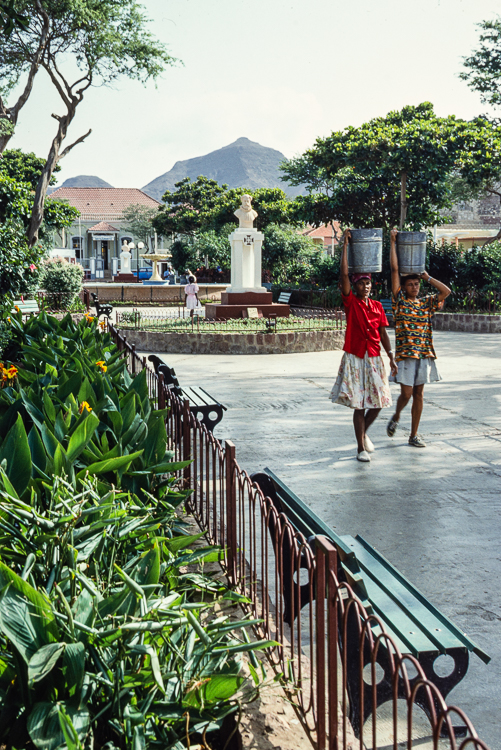
This kiosk is a magnet for young and old, not just because of its curious architectural style, especially in the evening and night hours when entire families stroll across the streets and squares to enjoy the pleasant evening hours.
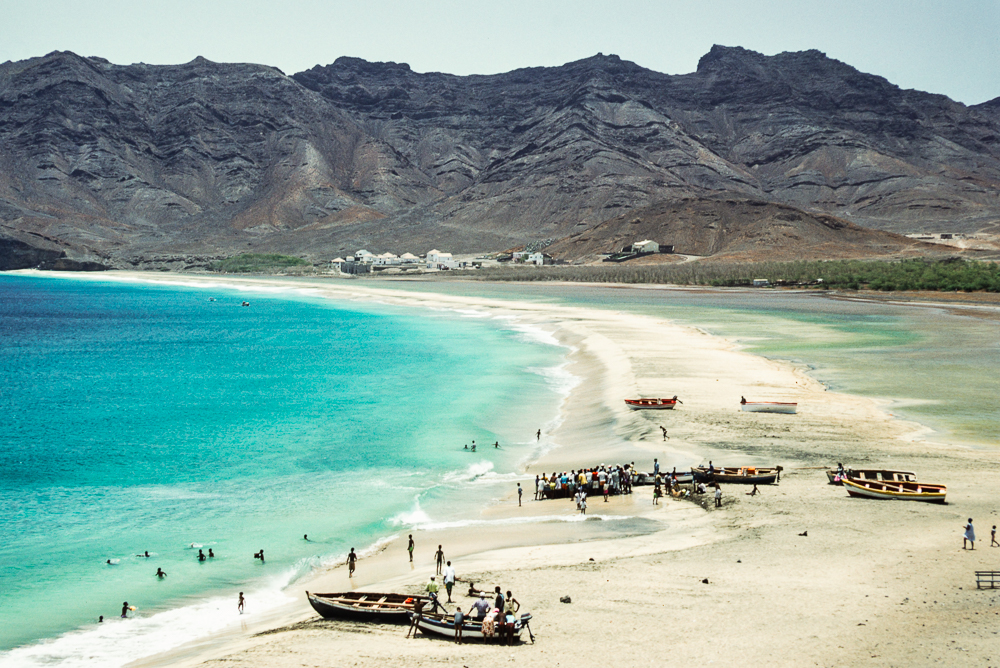
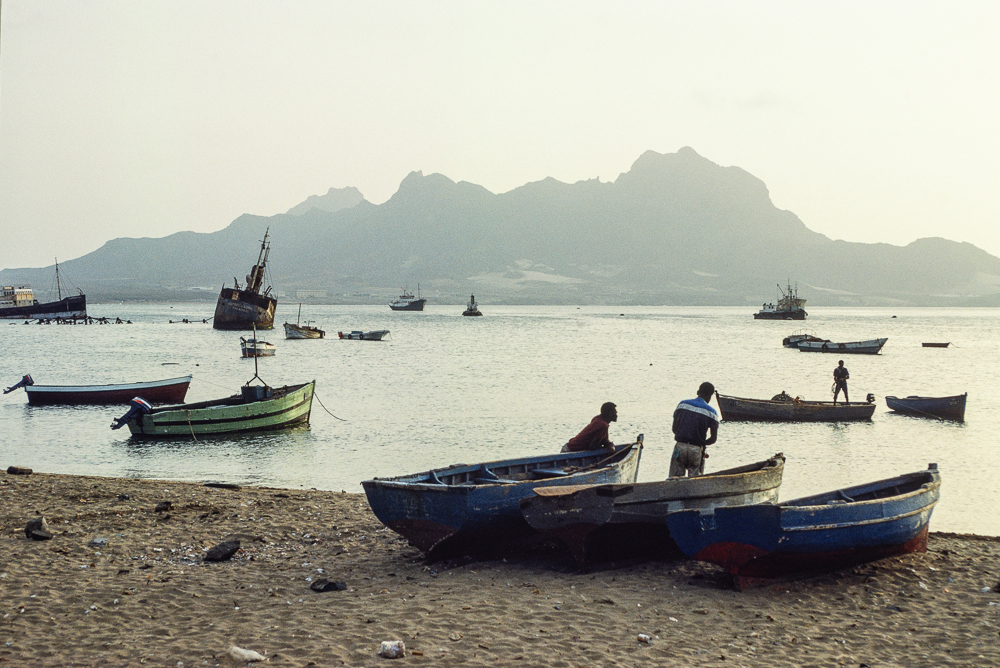
When flying into Sao Vicente, I was thrilled by a wide, sweeping sandy beach in the south of the island. To explore it further, we took an aluguer to the village of Sao Pedro located there. On the way there, we pass two dilapidated shipwrecks whose story the harbour master was able to tell.
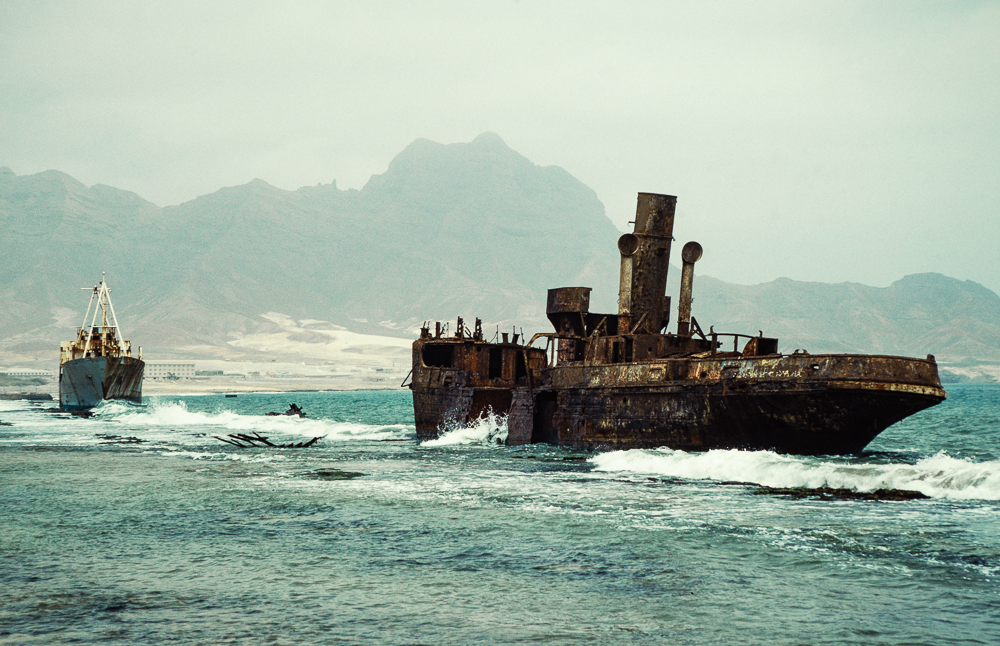
The oldest wreck is said to be a steamship from Brazil that was torpedoed by the German Navy during the blockade of the port in WWI. Next to it rests a tanker that once came from Fogo to the shipyard in Mindelo and was overhauled. After the work was completed, the ship broke free from its anchor during a storm and ran aground. Because of the extensive damage, another repair was unaffordable and the ship was left to its fate. A third ship sticks out of the water with a list in the middle of the old harbour. It caught fire and sank a year ago. The remains don’t seem to bother anyone anymore.
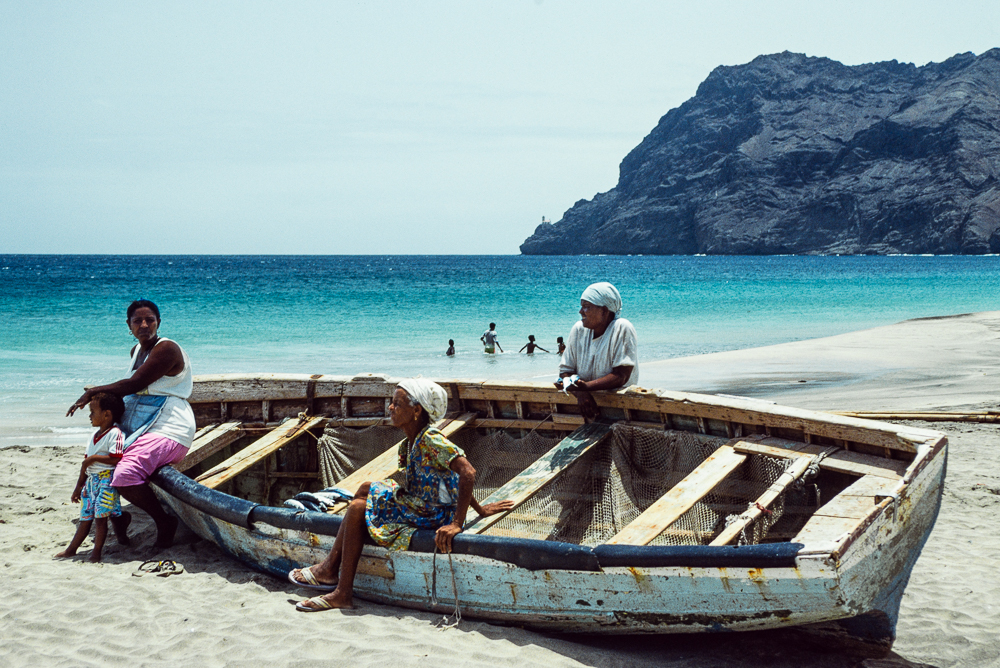
Finally arrived in Sao Pedro, we have no chance to really enjoy the beach, as a sandstorm makes staying outdoors a painful experience. The narrow valley is like a sandblaster, so we decide to come back later. During our second visit, we arrive just in time to witness the return of the local fishermen, which for us, as for the residents, is a new spectacle every time. The rolling sea makes landing a rocking dance on the waves and requires all the skill of the sailors.
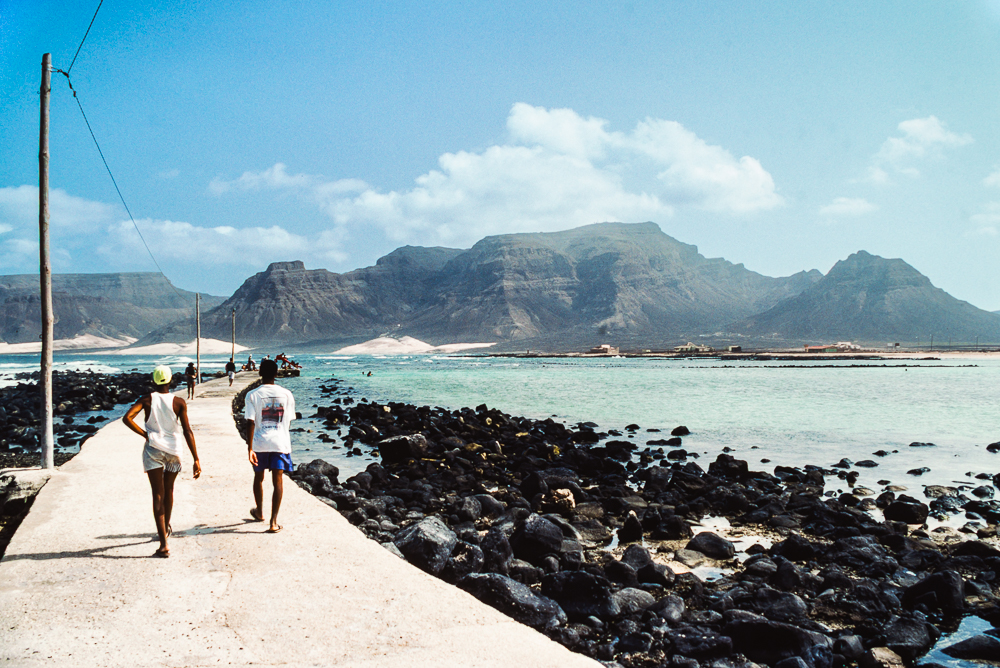
Another of the roads converging on Mindelo in a star shape leads us north to the charming fishing villages of Salamansa and Baia das Gatas. In the latter village, a built-up stone dam forms a protected swimming bay and the backdrop for the annual music festival, which is the centre of Cape Verdean music every August. Behind the lagoon, the mountain range with Monte Verde and the uninhabited Razo Islands forms an imposing frame. On the nearby shingle coast, workers are collecting stones for road construction onto a lorry.
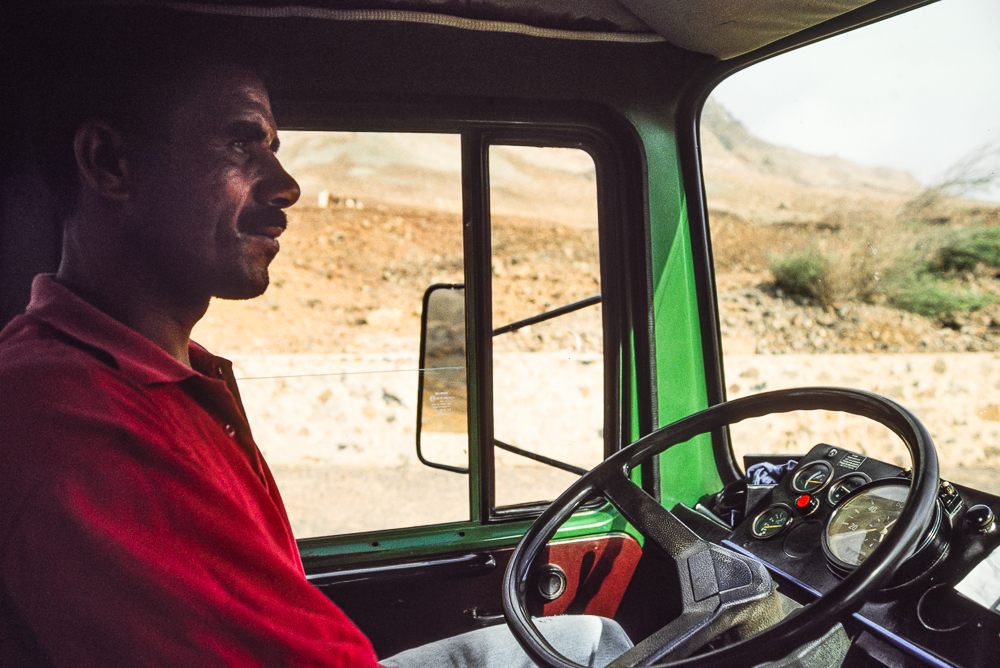
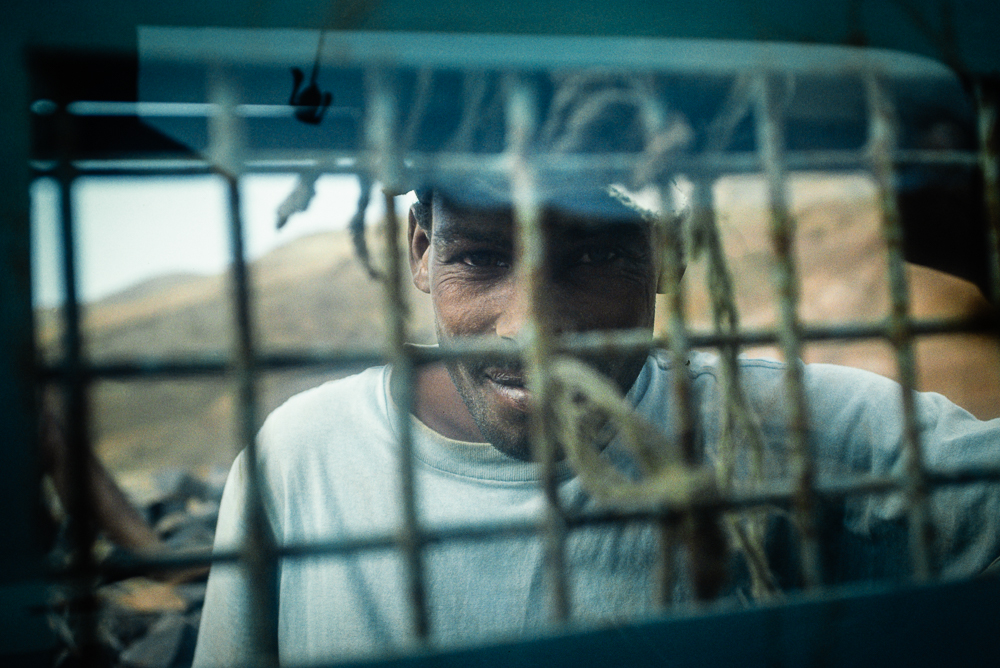
When we reach them, they have already finished their work and want to drive back to the city. The driver asks if we want to come along and we gratefully accept the offer. While we climb into the cab, his comrades take their seats on the loading area. At a walking pace, the scorched landscape passes us by. Soon we reach the first outlying huts of the city, which are built illegally. Mindelo also has to struggle with uncontrolled influx. The heavily laden vehicle now winds its way slowly back down the winding pass road into the Mindelo basin.
The beating of drums echoes through the streets. From minute to minute, the din swells, seemingly lingering for minutes and audibly approaching. Suddenly, an infernal procession turns the corner: four drummers, accompanied by a man inside a model ship dancing wildly in the street. They stop in front of a house entrance and increase the intensity of the pounding noise with every second until a resident, more or less voluntarily, hands a sum of money out of the window. Of course, there’s more to it than just wanting his peace and quiet, as this spectacle commemorates the achievements of the early sailors and the money raised goes to social causes. The group slowly moves on, but the drums can be heard from different parts of the city all day long.
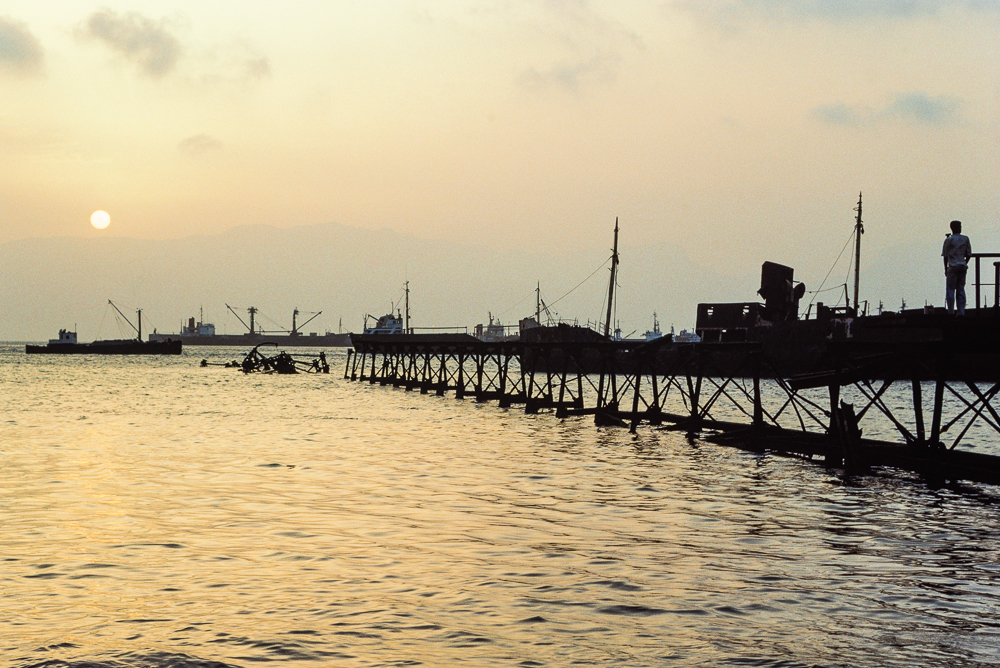
Throughout our stay in Mindelo, the shadowy features of the mountain ranges on Santo Antao have been beckoning. Soon we will be standing on the mountain peaks there, as we are already sitting on the rusty tub that will manage the short crossing and will reach Porto Novo in 1 ½ hours. Passengers with suitcases, boxes, children and small livestock crowd across the narrow gangway onto the dilapidated ferry. The stench of diesel and rancid grease from the galley is in the air. In no time at all, all the seats on deck are taken and our ship leaves this unique city. We have barely passed the lighthouse when the first bags are already being handed around. Now we also understand the crowding, as the islanders don’t seem to have very good sea legs. With every minute, the chatter of the people falls more and more silent and nausea takes over. This is, of course, a major disadvantage, as the irregular connections are the main means of transport for the general population. Therefore, there is great relief when the ship docks at the pier in Porto Novo under the eyes of an armada of taxi drivers.
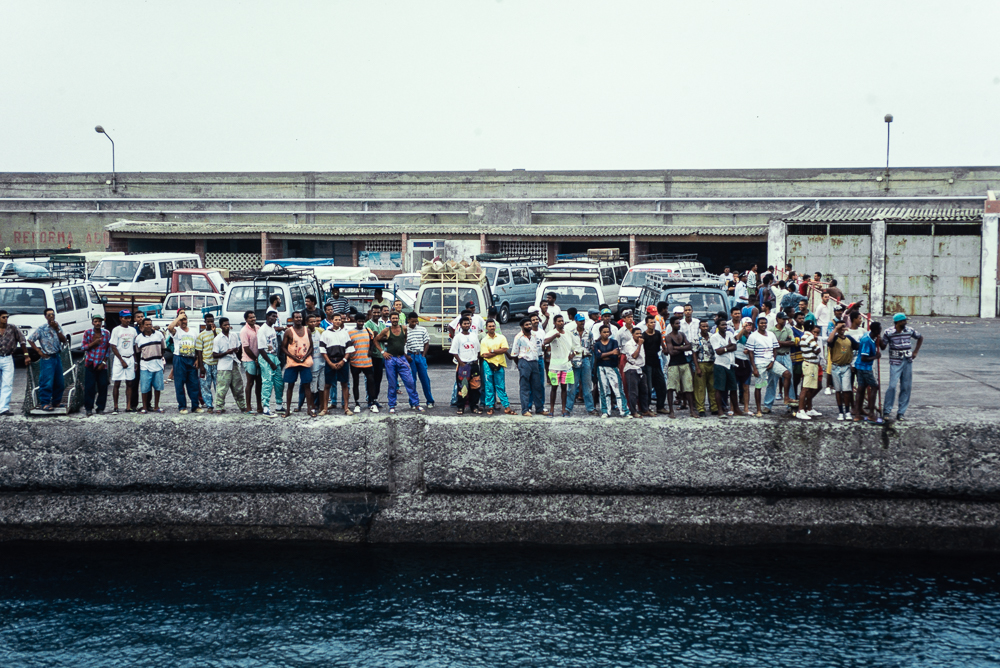
Already on the ferry, the drivers’ contacts had recruited passengers and, full of concern, they guide their customers between the lurking eyes of the competition to their minibus, which is filled to the very last seat. The luggage is strapped onto the roof. With loud honking, the individual taxis say their goodbyes and now disperse across the whole island. We now face the two-hour drive to the island’s main town, Ribeira Grande. To do this, we only have to cover 36 km, but they take us from sea level over the pass at the Cova crater at an altitude of 1,100 m and back down to the coast in the north-west of the island.
Santo Antao thrills me immediately, as I appreciate the combination of sea and mountains. The sculptural three-dimensionality of a mountainous landscape seems to me richer in viewpoints than a flat area, also from a photographer’s perspective. The steep and winding road initially leads through desert scree landscapes, but with every metre of altitude gained, stronger vegetation emerges. Far off on the mountain peaks, seasoned warriors seem to be waiting for the convoy of vehicles crawling upwards with groaning engines. On approach, the shadowy figures turn into trees, and the pine forests in the mountain regions become increasingly clear. Was it the heat or simply exhaustion that deceived my senses so?
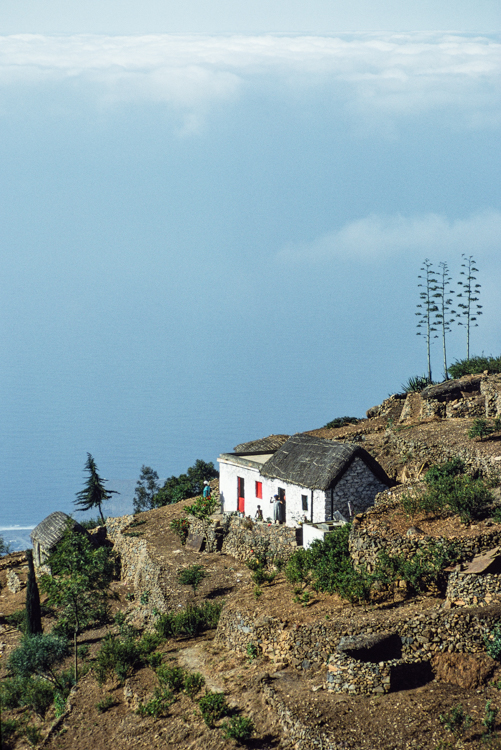
Small farmhouses stand scattered everywhere, in whose shade goats and donkeys seek protection from the scorching sun. Suddenly, the large circle of the Cova crater, a former volcano, opens up next to the road. At its edges, fertile valleys stretch in all directions down to the sea. Joao also lives in these high areas, which benefit from the moisture of the clouds and rare rain. He lives with his family in a house next to the main road and tells me about his life up here in the mountains. He describes very impressively the effort of travelling the 18 km to Ribeira Grande every day to attend school there. There is no public transport, but fortunately, there are occasional lifts. On foot, the way seems endless to me, because you walk curve after curve over the cobblestone roads, always having the destination in sight and yet hardly making any progress. We are used to giving distances in car travel times, but it’s only when you hike the routes that you get a true impression of the real distance. Joao also hopes to get away from Santo Antao one day and find work in Mindelo. Since he speaks good English, he might be able to work for the growing tourism industry and thus have a secure income with which he could support his family. Further down, more and more terraced slopes surround the many mountain farming villages, which balance on narrow mountain ridges above the sea of clouds. From the distant valley floors, serpentine paths wind up the steep mountain slopes. We cover the last few kilometres at a rapid pace, and the arrival is announced with a loud honk before the last bend.
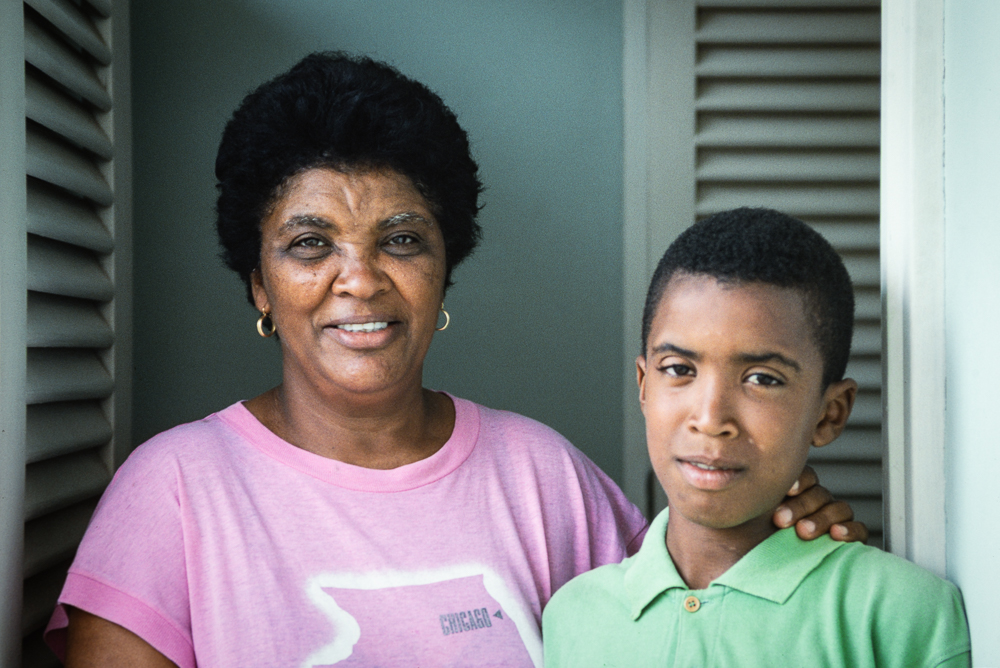
Ribeira Grande lies at the junction of two valley exits by the sea. We move into a room in the small town centre, which is clustered around the church. The aura of the streets and alleys could be described as picturesque and romantic, but these terms are too superficial and do not testify to the hard life and obvious poverty. The newly built houses further up are still without running water and sanitary facilities. Early in the morning, the first women and girls flock to the wells. A lack of sanitary facilities means that the surrounding area is used as a toilet, here as on all the islands. While the traveller is annoyed by the stench, this unpleasant condition is also responsible for many diseases. Shoes are also a luxury, and people walk on thick leather soles over bumpy roads, carelessly discarded rubbish and even broken glass. Ribeira Grande is our base from which we undertake our hikes. Santo Antao, with its mountains, is an enticing area that can be explored on many paths. The first tour takes us along the coastal road to Paul, to one of the most fertile valleys, which has water all year round.
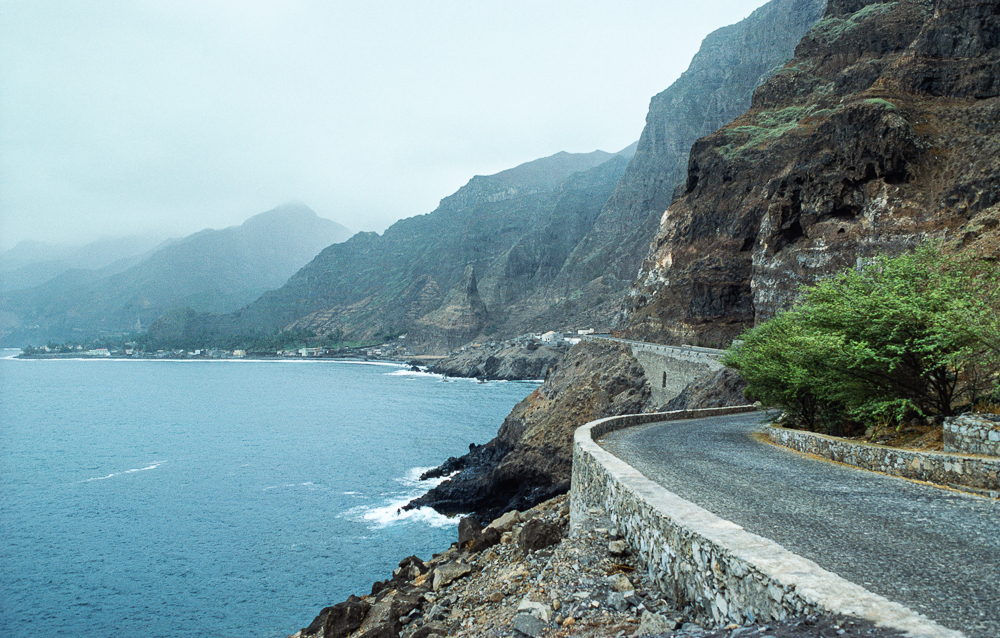
Accordingly, the variety of tropical plant life is great. The entrance to the village is flanked by what are probably the poorest huts, with roofs covered in banana and palm leaves. Here, too, a large crowd of children immediately appears, curiously inspecting us strangers from a distance, but never becoming obtrusive. In the centre of the village, with the buildings of the former colonial administration, a Mr Rocheteau Pires introduces himself and offers a tour of his gardens. He now proudly explains the richness of the plantations. Mangoes, papayas, bananas, grapefruit grow here just as much as sugar cane, squash and manioc.
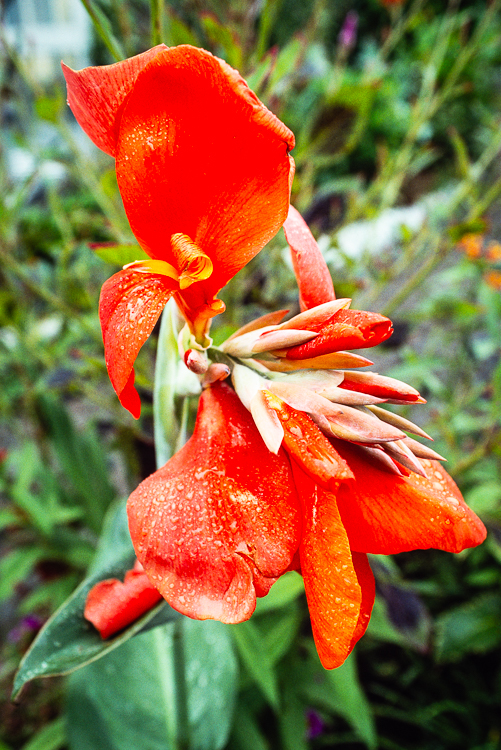
Magnificent blossoms form colourful fountains amidst the lush green. Under the spreading branches of two hundred-year-old almond trees, he reports how the young residents do not appreciate the value of the fertile soil, the local plants and specialties, or the culture. This great capital for the future is less important to them than the consumer goods of the industrialised countries, especially stereos and cars. So the same tragedy is taking place all over the world, and no one seems to learn from it. But who has the right to forbid them from doing the same as us?
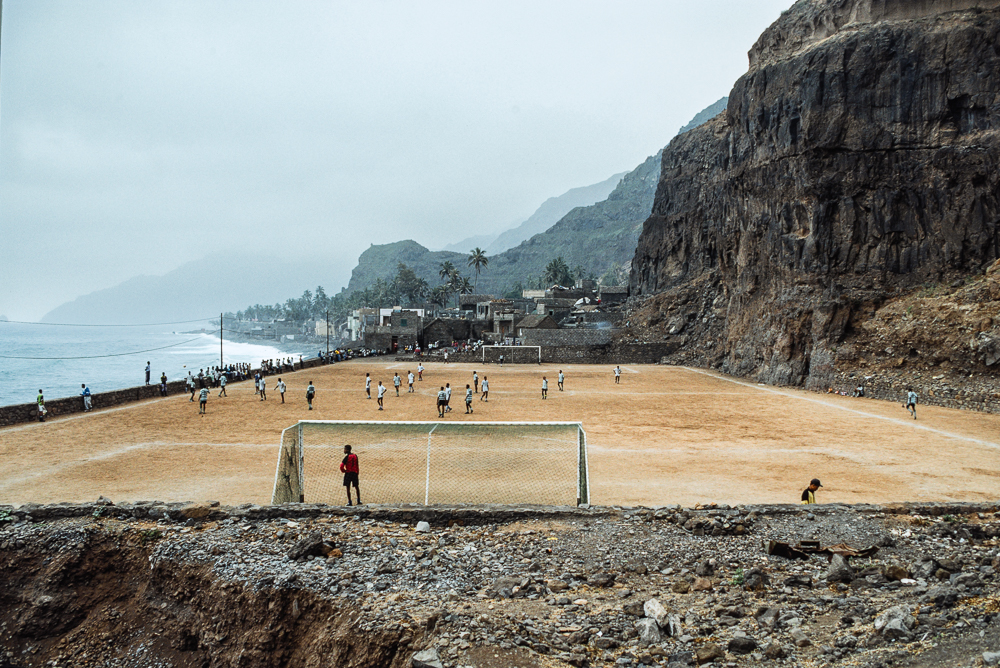
With sufficient provisions in the form of freshly harvested juicy mangoes, we start our journey home. The path leads past the football pitch, which is squeezed between the sea and a mountain slope. Saturday is also traditionally football day. There, we enquire about an aluguer. To our surprise, a player is quickly substituted, who sits in the waiting vehicle and takes over the short drive, only to quickly rejoin the game.
If you follow the paths into the valleys, you come across scattered thatched huts in the midst of plantations and terraced slopes. Soon the tracks become small paths and lead through rows of sugar cane, which forms the raw material for the Cape Verdean national drink grogue, a sugar cane spirit, the best quality of which is said to be produced in small distilleries here in the valleys of Santo Antao. Generally, a lot of alcohol is consumed, but not just in the bars. In the small grocery shops, the range of alcoholic beverages exceeds the sparse amount of food. Alcohol is out of the question in this midday heat, which makes the strenuous climbs even more difficult. That’s why I’m happy to enjoy an evening freshness, although the temperature only drops by a few degrees. But staying in the room is not advisable; the air is still too hot. Besides, public life in the alleys is much more interesting.
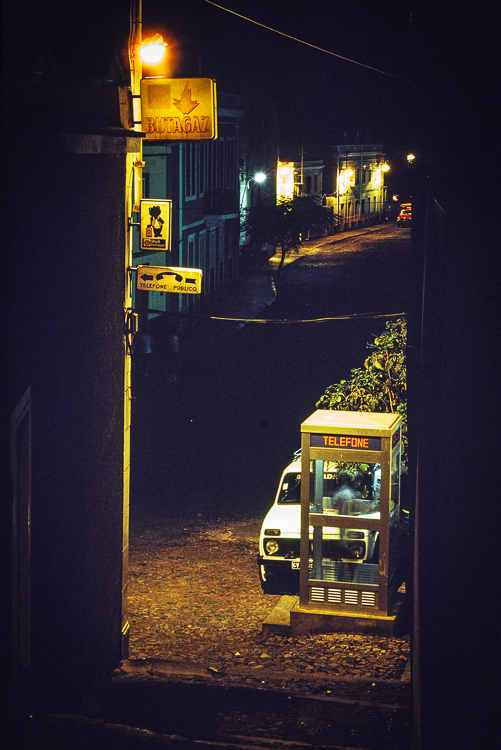
In the meantime, the sun has disappeared behind the high valley walls; only a remnant of the reddish rays is reflected by the mountains, bathing the place in a diffuse light. At this hour, human figures emerge from the shadows of the house walls and flock through the alleys and onto the squares. There they are again, the crowds of noisy children. The large number of young people is striking; according to official figures, over half of Cape Verdeans are under sixteen. Here and there, we are amazed by the imaginative toys made from waste – iron hoops, model cars made from tin cans and car tyres – which are such cherished objects precisely because of their uniqueness.
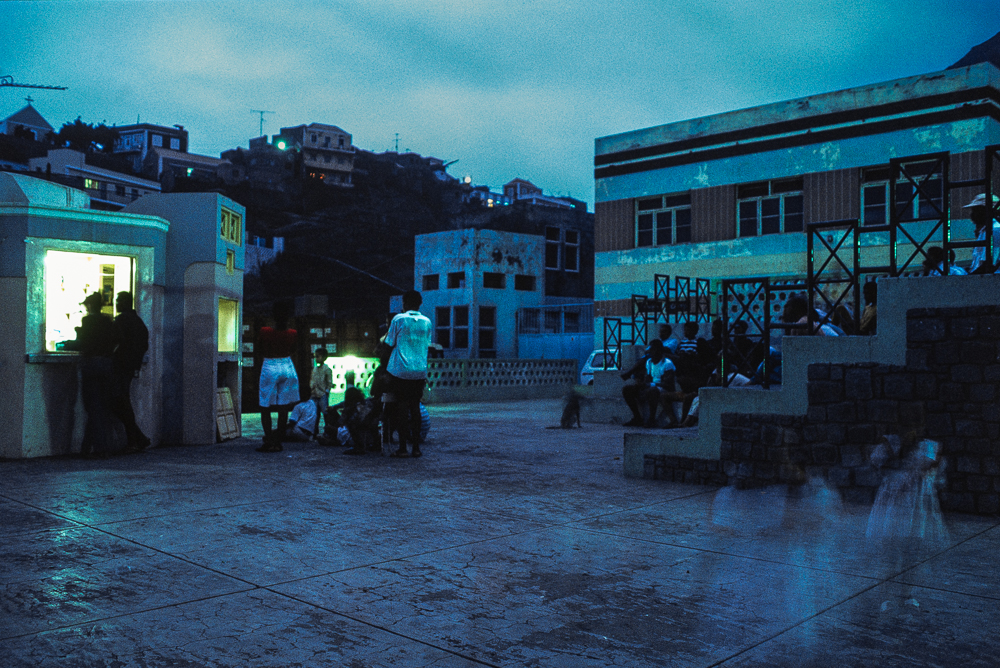
Now the small shops are all open again too. Next to grocery and general stores, craftsmen sit in the glow of flickering light bulbs. Carpenters and a shoemaker, and recently even a bicycle shop with bike hire, are lined up next to each other. On his way to evening service, we encounter the parish priest, whose rounded figure in a brilliant white robe disappears as a walking point of light in the alley. Every door appeals to our curiosity; we explore small alleys and listen to the whispering of the city, which spreads the entire life of the inhabitants, from tragedies and celebrations to bereavements and moments of happiness.
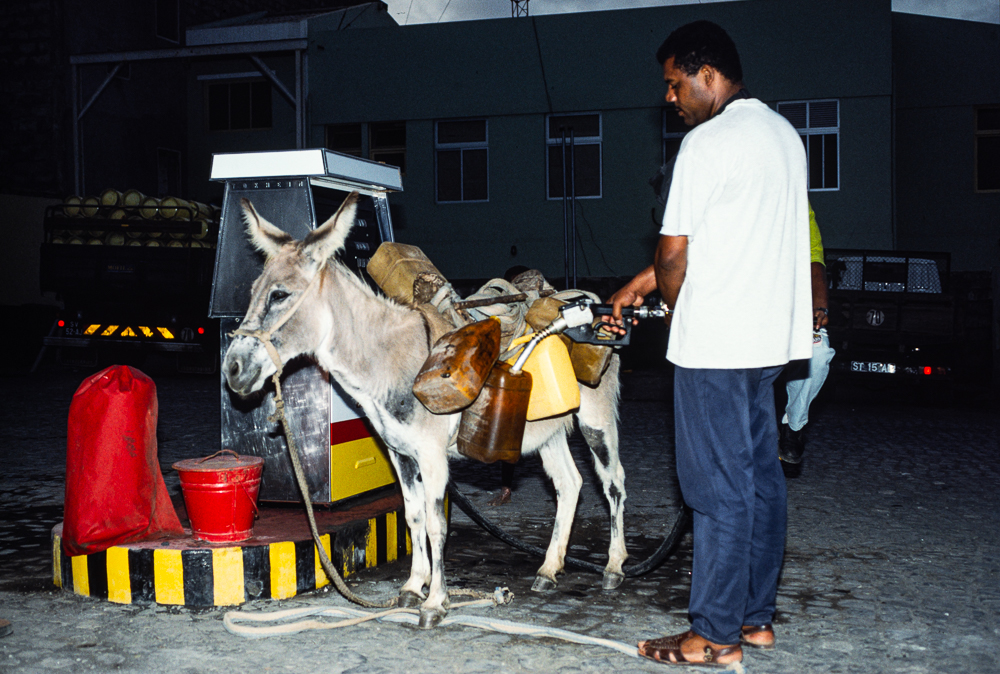
With the night falling rapidly, the now black mountain flanks initially seem threatening, so gloomy do they appear in comparison to the star-studded night sky. Immediately, I feel surrounded by a gathering of giants, grouped around the illuminated city like around a campfire, to listen to stories; when suddenly music rings out and is reflected many times by the rocks. Cape Verdean sounds; we try to locate them and come across a large gathering at the end of the town. People are crowding in front of a rusty gate. At a small window in the wall at a height of 2.00 m, tickets are being sold.
Curiously, we buy two tickets, weave through the crowd and step through the gate. On a stage, a young girl is singing, accompanied by a small band. During the chorus, the whole crowd of spectators joins in, singing and clapping. People are dancing and laughing in the open space in front of the stage. I spot Joao in the crowd and ask him about the reason for this festival. “This is the local heat in a singing competition. The winners from each island then get to sing in the capital, Praia,” he informs us. “I took part once too, a long time ago.” The songs are children’s or folk songs, and the people know and like them, of course. Accordingly, the enthusiasm quickly spreads to the parents and relatives. Above all, we were surprised by the quite self-confident appearance of the young soloists, who are not copies of an oversupply of media starlets, but rather show the signature of mother’s or father’s dance style. That Western culture is also finding its way here is shown by the deafening performance of a youth dance group, accompanied by thumping disco music.
The next day, a visit to the nearby town of Ponta do Sol is planned. The steep coast braces itself against the open Atlantic and offers hardly a protected bay for a harbour. At least here, a pier was built on rocks so that the rowing boats can come in safely. The houses are scattered on a mountain slope, which appears all the more powerful today because the peaks are shrouded in a thick blanket of clouds. The grey clouds do protect against the burning sun and bring vital moisture in the form of some drizzle, but the high humidity makes every activity difficult. Such unbearable heat and swelter is rarely visualised in a picture of a tropical region; it is often kept quiet in holiday brochures.
We look for the start of a small path located above the village. It is easy to find, and the narrow path quickly takes us up the rock faces, high above the sea. After a few twists and turns, we suddenly look across at a small mountain village that has clung to the mountain wall. A splash of colour in the midst of green bars of terraced fields. Here, too, man has created a niche for survival, similar to mountain villages in the Himalayas. How laborious and endangered the human presence seems in this bizarre environment, which only yields its fruits to fearless, industrious hands.
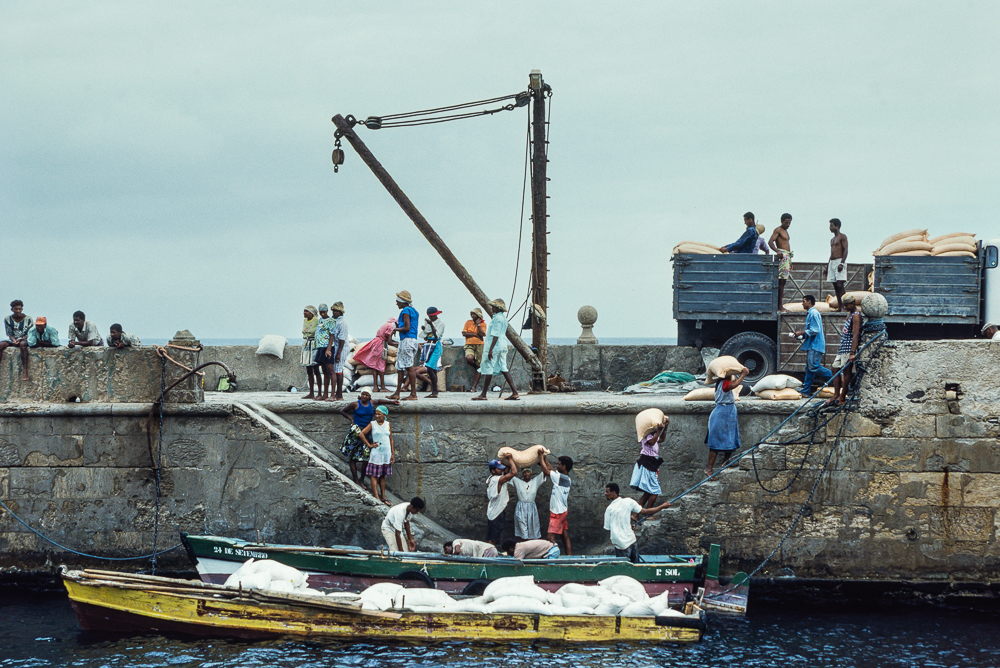
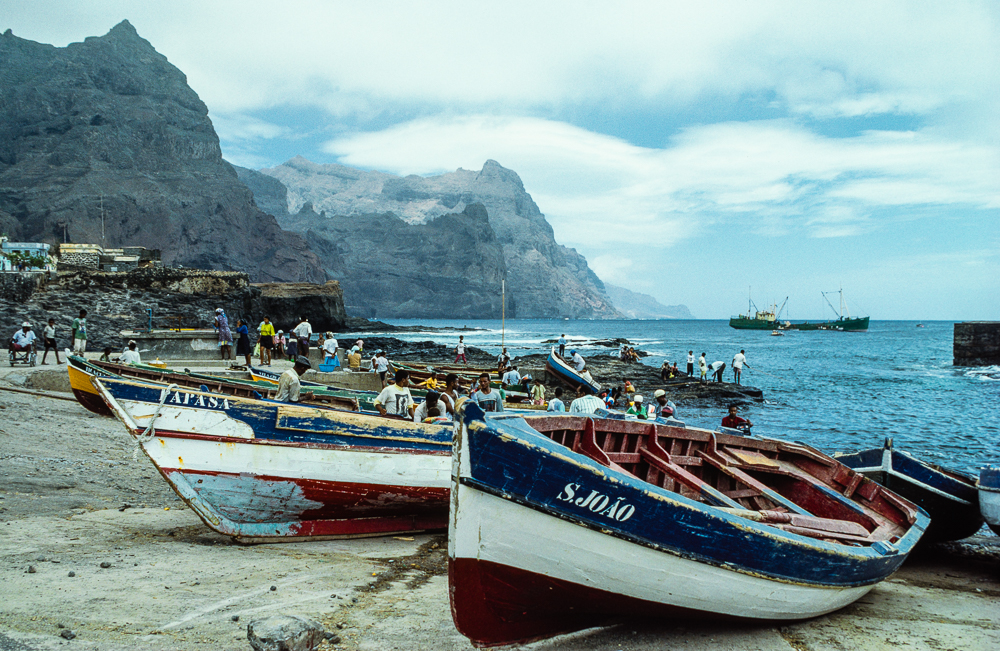
In the harbour of Ponta do Sol, too, all hands are busy; the fishermen are returning and the boats must be pulled ashore, the catch distributed and carried away. At the same time, a cargo ship from Mindelo has anchored off the coast today, because there is no harbour for large ships on the north-west side of the island. For this reason, the load of grain sacks must be transferred into small boats and rowed into the harbour. Women carry the sacks from the boat up to a waiting lorry, on which four men declare themselves responsible for the proper placement of the respective sacks. Quite obviously, the division of labour is to the detriment of the women, on whose backs, as so often, the entire community is carried. The fresh sea air makes you hungry.
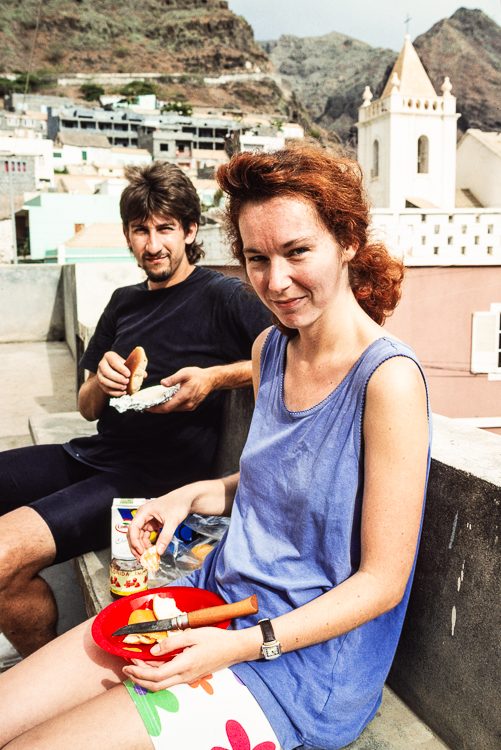
Our provisions, consisting of bananas, yeast rolls with a cinnamon flavour and fresh goat’s cheese, have long since been used up, so we make our way home. Getting food is not a problem anywhere; there are small dishes in the bars everywhere or proper meals in the few restaurants and hotel dining rooms. Today we finally want to eat fresh tuna. We are persistent about it, because for the last few days we were always directed to another dish. But this time it works.
The food in Cape Verde is simple but very tastily prepared and served in such portions that we were always full. On the menu, there are usually various types of fish in grilled, boiled or filleted variations. A large platter of rice, homemade chips or steamed potatoes is served for everyone. Every now and then, meat appears on the menu. Roast beef, which probably comes fresh from a tin. We prefer the local specialities: seafood rice, boiled bananas and sweet potatoes and, above all, the massive lobsters. At the end of such treats, there are often small desserts to choose from: puddings or sheep’s cheese.
When ordering the food, we noticed that diners should agree on a shared meal, as seems to be customary. In many cases, the waiters were mostly confused and didn’t always bring the dishes ordered if we all wanted to eat something different for once. Tonight there are no problems, and after a short time we receive the huge fillet pieces, which taste as good as they look. We stay sitting for a long time today, reflecting on the day we’ve experienced, watching life on the streets through the windows, which have since been opened to let the evening freshness flow in. With the necessary sleepiness, we sink exhausted into our bed late at night.
On Sunday mornings, we experience a unique concert on the main street. Holy Mass is celebrated in the small church. The nave is completely full; because of the heat, the doors are wide open. At the same time, there is a constant coming and going. The children romp unhindered in their Sunday best on the forecourt. Soon, however, the congregation begins the praise in chorus. As soon as the mouths fall silent, an echo rings up from the street. There lies the small chapel of the Nazarenes. Their smaller circle is supported by a harmonium and seems to want to outdo the previous singing. Almost periodically in turn, the respective denominations sing for the more beautiful praise of their Lord, and yet there can be no loser in this supposed contest.
Shortly afterwards, I hail an aluguer to get to the Cova Pass. This pass is an important path and watershed in the north of the island. Both benches on the open loading area of the aluguer are filled with children, young men and farm women. One woman, I estimate her to be middle-aged, has a basket with her containing fragrant herbs. A hearty smile beams from her weathered face. Soon she gets out and waves after the car as it roars away, until she can no longer be made out in the cloud of dust. Soon it’s my turn to give the signal to stop: either knock on the cab or give the driver a sign with your hand in the wing mirror.

I decide on the path into the wide circle of the former volcanic crater with its views all the way down to the sea. At the edges stand remnants of solidified lava flows. From here, the chain of peaks stretches south. There, the mountains and valleys are even more deserted and wilder. There is only one road to the south, but it doesn’t even reach all the villages. Thus, some coastal villages can only be reached by boat or on foot. Everywhere in the mountains of Santo Antao, the wild primal force of the volcanic origin is still tangible. The eruptive firepower hardened into stone and remains in angular features. Striking rock formations, steep gorges and crater remnants are also subject here to the gnawing forces of erosion. We experience the end result on the eastern islands, where the sand takes on sweeping forms in bays and dunes that appear gentle.
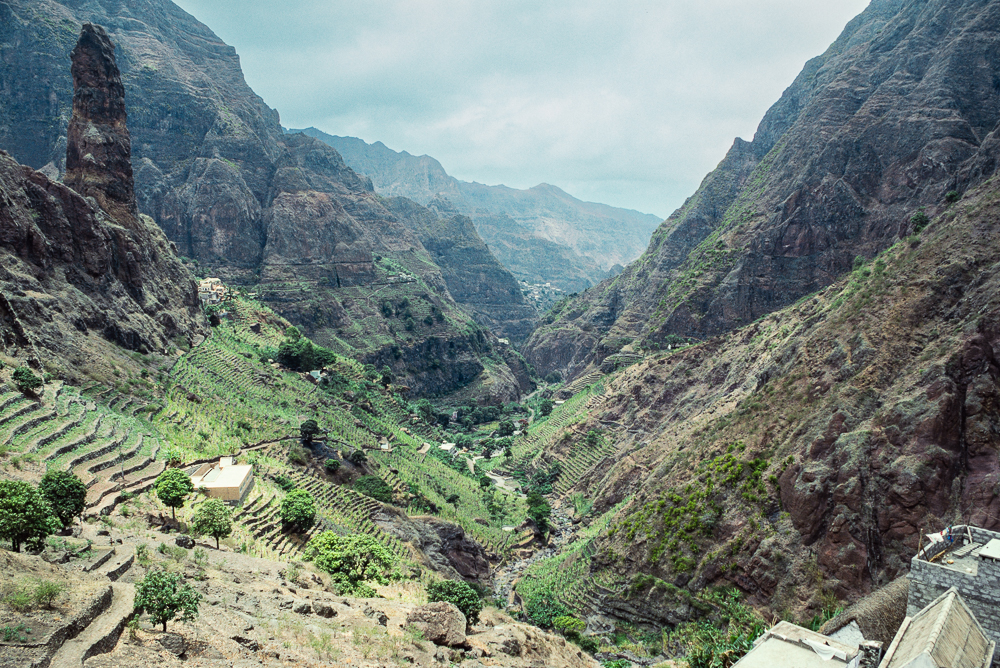
Edvard Grieg was able to express such a contrasting impression of nature at its best in “Peer Gynt” using musical means. To me, the wind seems to carry melodies that imposingly amplify the power of the mountain ranges. I am only able to weakly reproduce these sensations. But poets like Balthasar Lopes da Silva or Manuel Lopes, on the other hand, were able to put their deepest feelings into artistic words.
Continuing the journey to the volcano on Fogo.

Leave a Reply
Want to join the discussion?Feel free to contribute!