
Arrival on Sal

The first impression from the plane window of the Cape Verde Islands offers rubble and stony deserts, sand dunes, and dried-up watercourses from coast to coast, washed by a crystal-clear sea. Only a few elevations rise above the flat land. Most prominent are the airport’s radio facilities, the large tanks at the port near Palmeira, and the only asphalted road on Cape Verde, which runs like a black ribbon from Espargos past the airport to the south of the island, standing out from the palette of brown-yellow earth colours. This is how the predominant landscape of the eastern island presents itself, startling many visitors who, poorly informed, had expected more lush vegetation. Immigration formalities were surprisingly quick, and we were immediately besieged by taxi drivers with whom skilful negotiation was required. If you’re not proficient in the official language, Portuguese, or Cape Verdean Crioulo, French, Spanish, or English can help in many situations. These language skills are a testament to the emigration work of older generations, whereas for the younger ones, learning a foreign language at school is intended to open up a better future. Eventually, we agree on a price that satisfies everyone and begin our journey to Santa Maria in the south of the island, where the initial impression of the desolate landscape only intensifies.
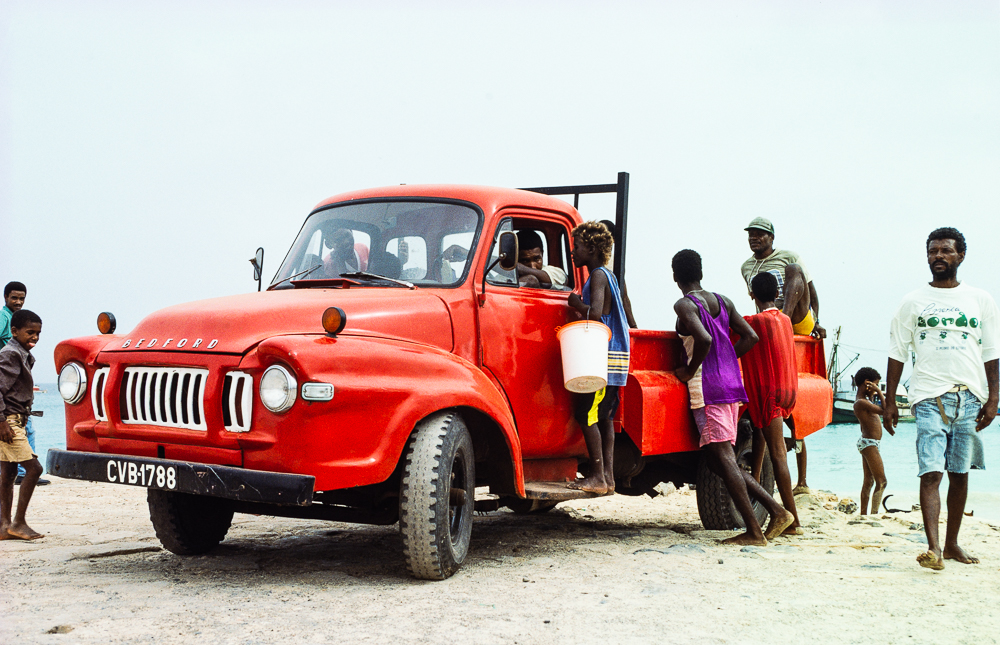
Scattered everywhere, old barrels catch the eye, rusty relics of road construction and flight operations. The village streets are lined with small, single-storey houses. Crowds of children romp over the bumpy, dusty cobblestones, women and girls balance heavy water canisters from the wells back home, and in shady spots, men stand in groups, lamenting. At the edge of the village begins the long, magnificent sandy beach, where several tourist hotels have now established themselves, showcasing European luxury to the locals. A weigh house, currently being renovated, and a wooden pier, which would benefit much more from renovation, are remnants of the former salt loading station with its small trolley railway.
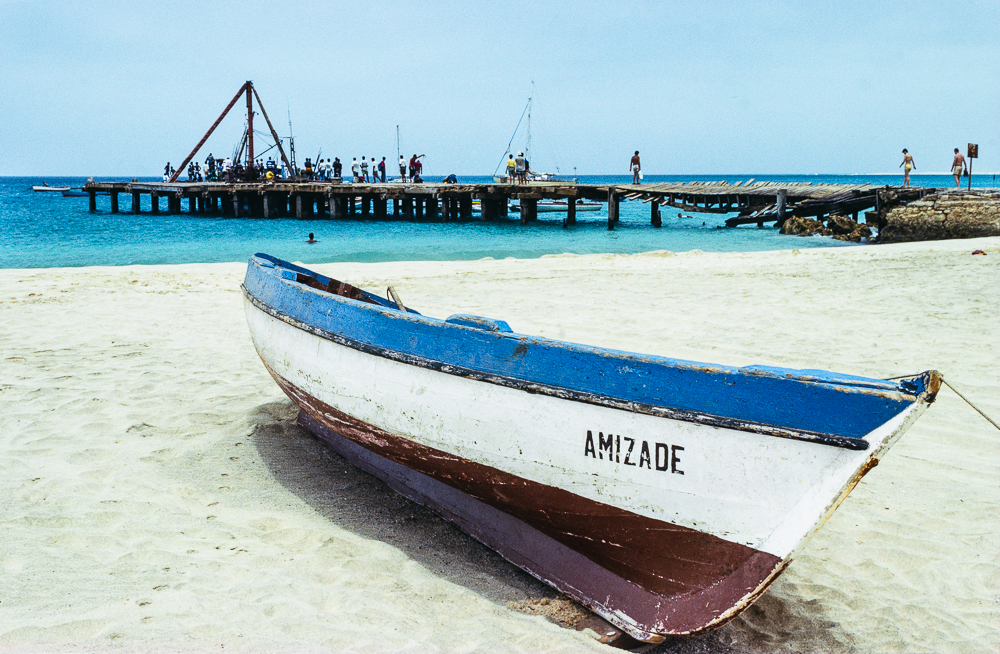
Not only near Santa Maria, but also in the large salt pan near Pedra Lume in the northeast of the island, the substance that gave the island its name was extracted: salt. The latter salt pan is breathtakingly situated in a former volcanic crater and is well worth a visit. The flooded areas lie below sea level and were filled with seawater through canals. Equally unusual is the cable car used to transport the salt. Salt was an important commodity: it was necessary and sought after for preserving meat and fish on ships and on the African continent. Nowadays, the salt pans are partly dilapidated or are only used to a minimal extent.
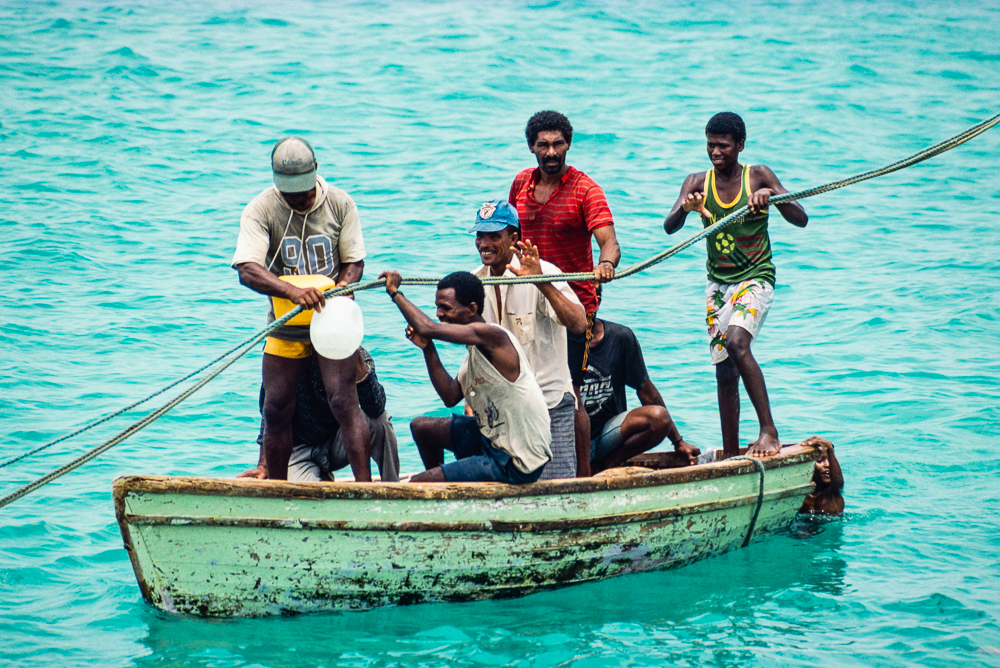
Every afternoon, there’s a lively hustle and bustle at the pier in Santa Maria, as the fishermen’s return from their fishing trips is anticipated. Old and young stand together, joking about the unusual foreigners and recounting the latest village news. Among the older ones, you sense the hopeful expectation of a rich catch, whereas the younger ones appear more carefree and use the short waiting time for a swim, accompanied by whooping shouts.
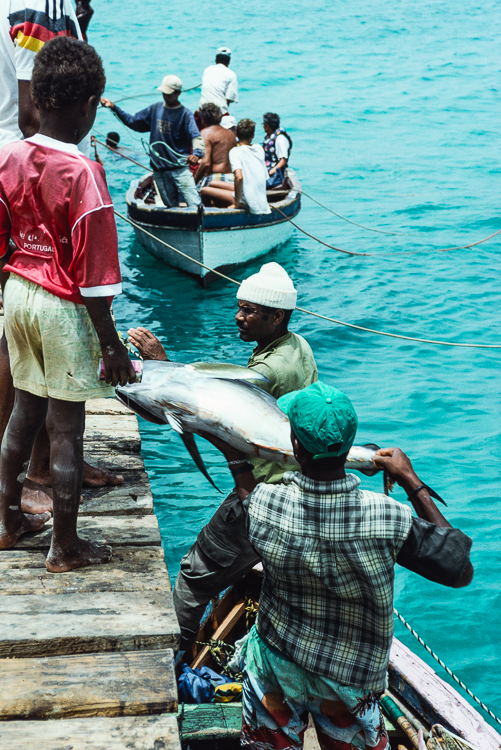
As the colourful boats now slowly chug towards the jetty, the anxious apprehension gives way to relief at the sight of the richly filled boats. The fish are hoisted onto the wooden planks, where the crowd eagerly gathers around the catch. The sometimes enormous fish are carried away on heads, in wheelbarrows, or in some ancient cars.
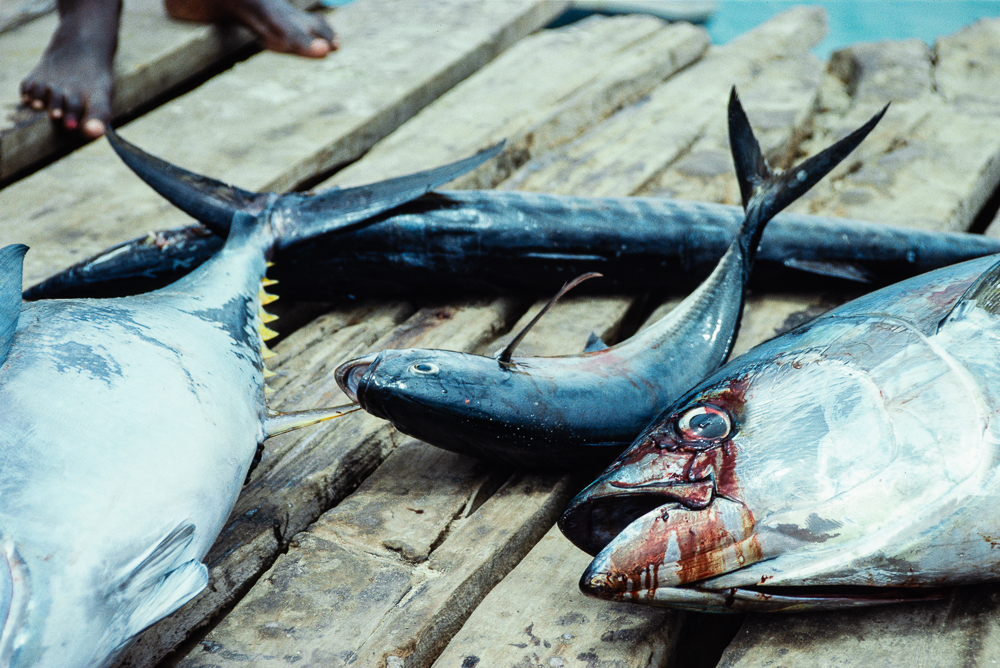
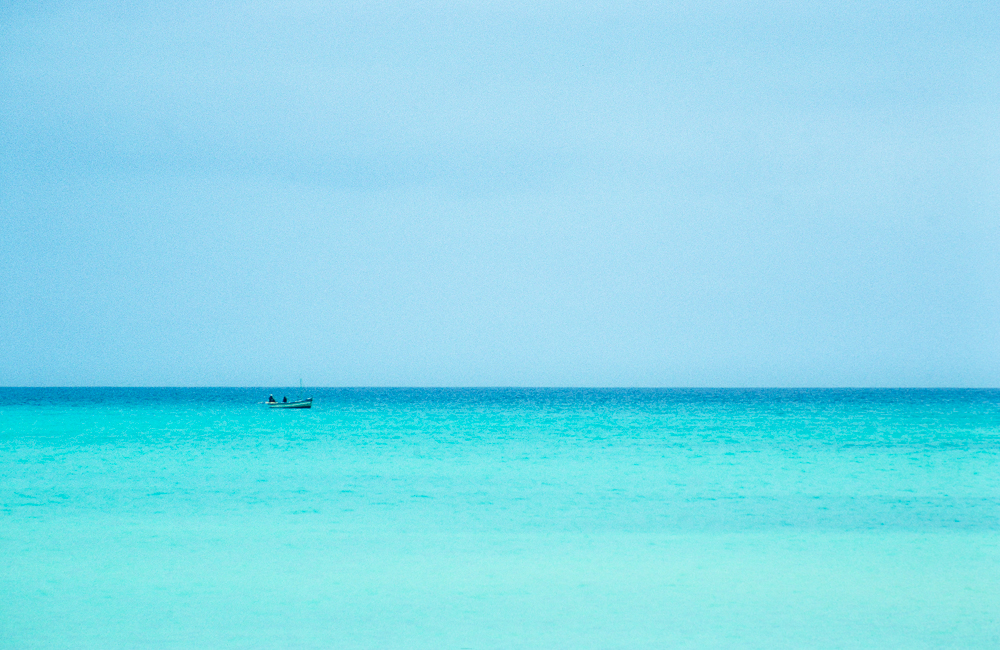
The tropical waters around the islands are very rich in fish: tuna, mackerel, flounder, and sea bream are just a few examples of the abundance of species and stocks. The sea is not yet overfished, as there are no larger fishing fleets in Cape Verde. This would also make little sense due to the steeply sloping coastal regions, which is why fishing with lines and nets on traditional small wooden boats predominates. After watching the vibrant life for a while, after a short stroll along the secluded beach, we too succumb to the urge to jump into the inviting waters and treat ourselves to a first swim in the pleasantly warm Atlantic.
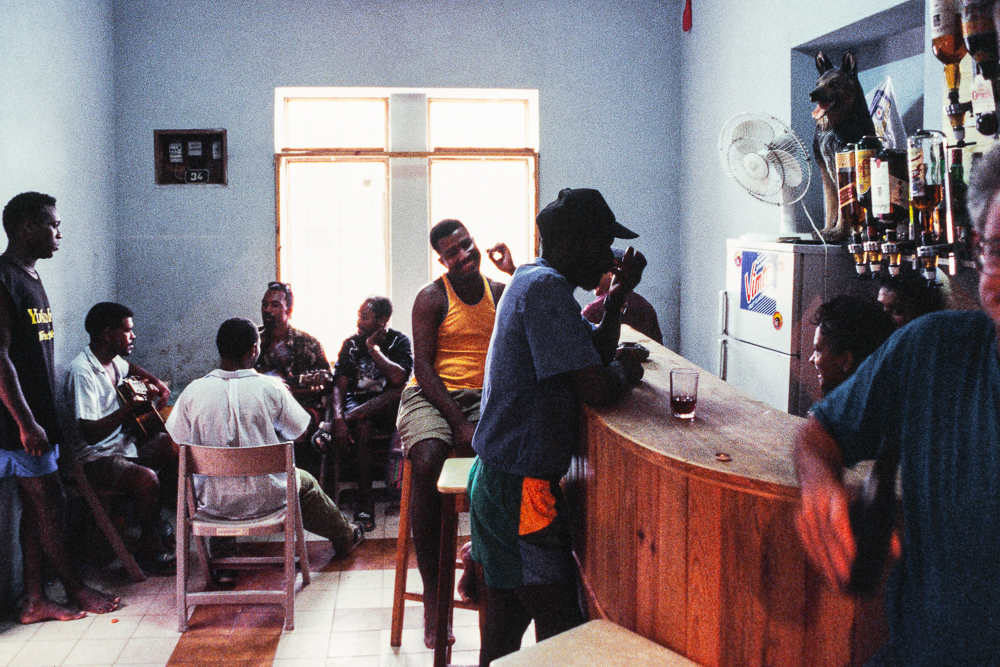
From an inconspicuous building, on which a giant painted black hand points to a half-open door, melancholic melodies drift into the stagnant yellow heat of the street. We follow the plaintive sound and arrive at a bar where a group of Cape Verdeans are making the stuffy alcoholic haze vibrate. As we learn, they play traditional Cape Verdean songs – Funaná, Coladeira, etc.. Music is a constant companion for the people. In the following weeks, we discover that much music is still made by hand and has a firm place in life at numerous festivals, even though modern recordings are preferred in many bars and from overloaded car speakers. A traditional music style deeply rooted in the hearts of Cape Verdeans, expressing their longing and love for their home islands, is Morna. Many lyrics were written by national poets and later set to music.
Mass tourism has already taken root on Sal and hopes for increasing visitor numbers. Due to its proximity to the only international airport and its beautiful beach, the operators of modern hotels hope to attract beach holidaymakers and offer a wide range of leisure and beach activities. These range from surfing in excellent conditions to diving and island tours in four-wheel-drive vehicles. On the other islands, there are at least sufficient hotels and guesthouses where you meet the few travellers and comparatively many emigrants who spend their holidays back home. However, one should not expect European standards, but the establishments have a local character and charm.

For our next destination, we had booked seats on the plane to São Vicente and arrived at the airport long before time, but here we learned the first lesson in inter-island air travel: “You have plenty of time,” we were told after not getting the booked seats on our desired flight. Along with numerous other people, we lacked the simple but important confirmation from the airline office at the airport. As inscrutable as the administrative bureaucracy, so unclear was our fate, about which the staff would not inform us, disappearing for endless minutes into restricted areas or seemingly working on useless computers. Ultimately, we were informed that a second plane would be provided and that we would indeed reach our destination, Mindelo, that day.
Leave a Reply
Want to join the discussion?Feel free to contribute!