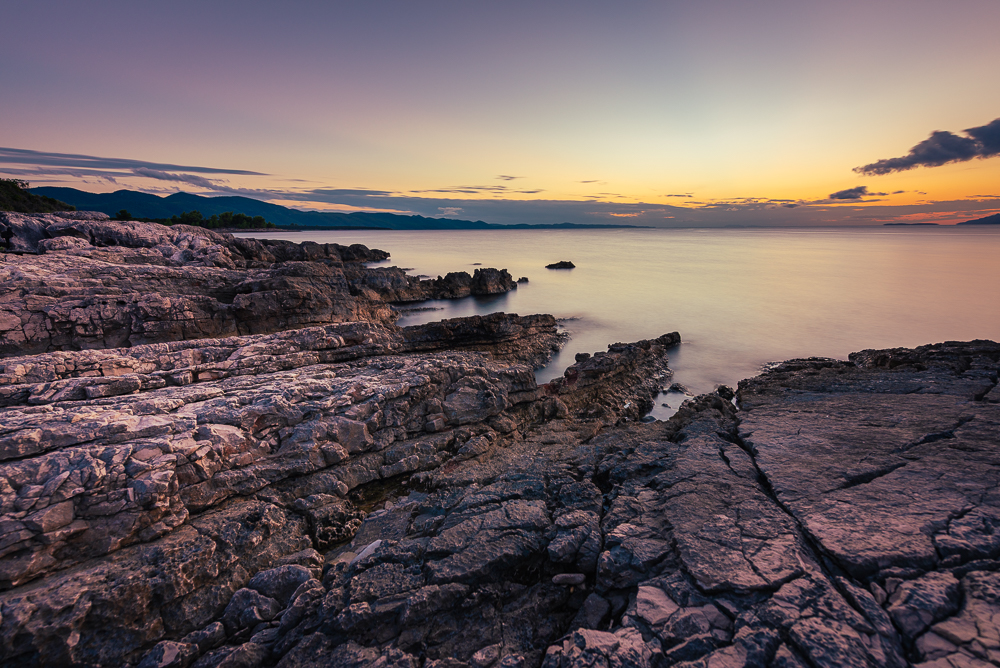
Loviste is located in a small bay, right at the western end of the elongated Peljesac peninsula in Dalmatia on the Croatian Adriatic coast. A long mountain range forms the backbone of the peninsula; on the sunny southern slopes, highly prized red wines from the indigenous grape variety Plavac Mali, such as Dingač and Postup, are grown. Read more
https://www.reisefestival.de/wp-content/uploads/2026/02/kroatien-750-1057.jpg750501Matthiashttps://www.reisefestival.de/wp-content/uploads/2015/10/reisefestival-logo-2.pngMatthias2022-09-20 09:32:392026-11-03 13:05:32Loviste – Farewell from Dalmatia
The crossing from Trpanj on the Pelješac peninsula to Ploče on the Croatian mainland is the final ferry leg of our journey along the Croatian Adriatic coast – after starting from Krk to Cres, through the Zadar archipelago, from Split to Vela Luka on Korčula and from Korčula to Orebić. Ahead of us lie several hundred kilometres of scenic coastal road on the fascinating Jadranska Magistrala. Read more
https://www.reisefestival.de/wp-content/uploads/2019/08/kroatien-750-2-7355.jpg750501Matthiashttps://www.reisefestival.de/wp-content/uploads/2015/10/reisefestival-logo-2.pngMatthias2019-08-13 20:41:472026-11-03 13:22:52Journey along the Croatian Adriatic coast – Ploče
Sv. Ilija is the dominant peak of the long mountain ranges on the Pelješac peninsula and the surrounding South Dalmatian islands of Korčula, Mljet, Brač and Hvar. The karsic rock massif forms a high-contrast backdrop for the medieval old town of Korčula on the opposite island of the same name. Even if the mountain massif with its flanks rising steeply from the sea appears wild and inaccessible from a distance, the lower slopes are covered with orchards, olive groves or vines, which are replaced by macchia, scree and rocks at higher altitudes. In shadier valleys, hollows and high plateaus, even denser pine and fir groves can be found. The mountain ranges form a massive barrier for the cool northern winds and ensure a warm climate all year round on the southern coast of Pelješac. Read more
https://www.reisefestival.de/wp-content/uploads/2019/11/kroatien-1000-7281.jpg6681000Matthiashttps://www.reisefestival.de/wp-content/uploads/2015/10/reisefestival-logo-2.pngMatthias2019-08-13 20:02:332026-11-03 13:22:46Hike to the summit of Sv. Ilija (961 m)
From the Franciscan Monastery of Gospe od Anđela, located above Orebić on the Pelješac peninsula on the coast of southern Dalmatia, you can marvel at a magnificent island panorama: with the mountain ranges of the Pelješac peninsula at your back, your gaze wanders over the islands of Korčula, Mljet and the many small islets in between. Naturally, this view is particularly popular around sunrise and sunset, when, for example, the Old Town of Korčula on the opposite island glows golden in the last rays of sunlight. Read more
https://www.reisefestival.de/wp-content/uploads/2019/11/kroatien-1000-7172.jpg5621000Matthiashttps://www.reisefestival.de/wp-content/uploads/2015/10/reisefestival-logo-2.pngMatthias2019-08-12 14:18:292026-11-03 13:20:40Korčula and Pelješac in the moonlight
We reached Orebić by ferry from Korčula on an early Sunday morning. After arriving, we took a short stroll from the harbour along the old town’s seafront promenade, admiring the large, magnificent villas with their exotic gardens. They were built during a heyday of trade and seafaring in the region in the 18th/19th century. Even during our stay in Korčula, I had repeatedly noticed the striking building of the Franciscan Monastery of Gospe od Anđela, which sits elevated above the Pelješac Strait, west of Orebić. It’s often mentioned as an excellent viewpoint, so we decided to explore this location next. Read more
The towns of Korčula and Orebić lie within sight of each other, separated only by a narrow strait. Both towns – often ruled by different powers throughout history, and today unequally famous among travellers – nevertheless form a kind of tourist binary star in the impressive coastal landscape of southern Dalmatia. Where Korčula delights with its medieval old town, Orebić boasts magnificent 18th and 19th-century captains’ villas. Opposite Korčula’s gentle, wooded hills and sandy beaches, the karst, rocky mountain ranges of the Pelješac peninsula with the peak of Sv. Iljia rise steeply from the sea, inviting you on scenic hikes. Read more
https://www.reisefestival.de/wp-content/uploads/2019/11/kroatien-750-7162.jpg750750Matthiashttps://www.reisefestival.de/wp-content/uploads/2015/10/reisefestival-logo-2.pngMatthias2019-08-11 19:39:122026-11-03 13:21:11Korčula and Orebić – Dalmatia’s binary star
Whichever way you approach the town of Korčula, whether by boat across the sea or coming down the mountain on the road from Vela Luka, Korčula offers a breathtaking sight from every angle. The Old Town of Korčula, well-preserved with its medieval buildings, is situated – once strategically favourable – on the hill of a small peninsula. The narrow alleys fan out across the compactly built-up area like the veins of a leaf, appearing to have grown organically. As if that weren’t impressive enough, the karst mountain massif of Sv. Ilija rises 961 m above the strait between the two islands on the nearby Pelješac peninsula. Read more
https://www.reisefestival.de/wp-content/uploads/2019/11/kroatien-750-7091.jpg750750Matthiashttps://www.reisefestival.de/wp-content/uploads/2015/10/reisefestival-logo-2.pngMatthias2019-08-10 12:14:252026-11-03 13:23:06The medieval Old Town of Korčula



Last Comments