
Wine Tasting at Ktima Roussos Winery
On Paros, wine doesn’t just flow into glasses; it runs through the island’s very history. Over 3,000 years ago, people here planted the first vines – archaeological finds from the Mycenaean era prove that wine shaped culture, trade, and social life then just as it does today. Ancient amphorae tell tales of exports to neighbouring islands, while local festivals celebrated the grape juice. Even today, winemakers rely on old grape varieties like Monemvasia and Mandilaria, combining traditional methods with modern techniques to bring the island’s heritage to life in every bottle.
Among the most renowned producers of recognised high-quality wines on Paros is the name Moraitis from Naoussa. The winery was founded in 1910 and is family-run. Their white wine “PDO Paros” made from 100% Monemvasia grapes, and the red wine “PDO Paros” made from Mandilaria & Monemvasia grapes, are highly regarded by connoisseurs and are also available in many restaurants. This winery is considered an institution on Paros.
The Louridis winery in Marpissa, however, was only founded in 2008. Their specialities include a dry white wine from Monemvasia grapes and a dry red wine from Mandilaria & Monemvasia grapes.
As we were visiting the villages of Lefkes, Prodromos and Marpissa in the island’s interior, the Ktima Roussos Winery was conveniently located for a wine tasting. The Roussos family produces their wines from their own vines. The owner and producer of the winery, Konstantinos Roussos, expanded the family’s existing vineyards. Today, indigenous varieties are cultivated on 150 hectares of private land, both as house wine and, increasingly, as higher-quality premium wines. There are now several varieties of white wine, e.g., with Malagousia 40% / Assyrtiko 40% / Monemvasia 20%, rosé, and red wine (Mandilaria / Mavro Aedani). The family calls them “traditional varieties in modern interpretations.”
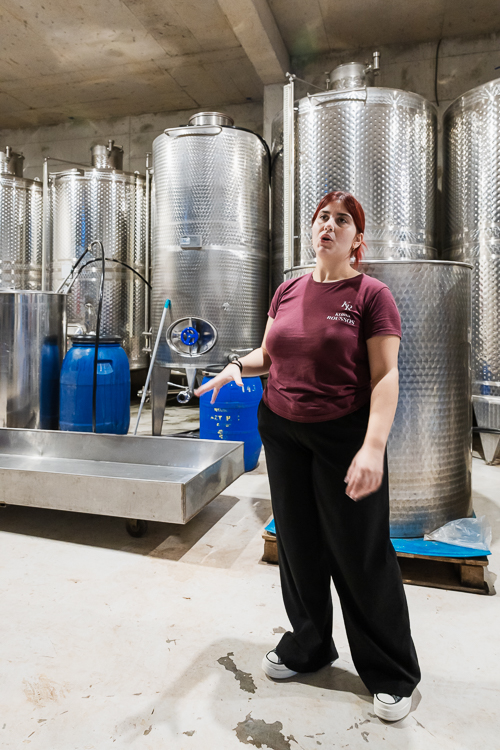
The tasting took place on the terrace of the new building, overlooking the vineyards. Upon request, we even spontaneously received a tour of the production facilities downstairs.
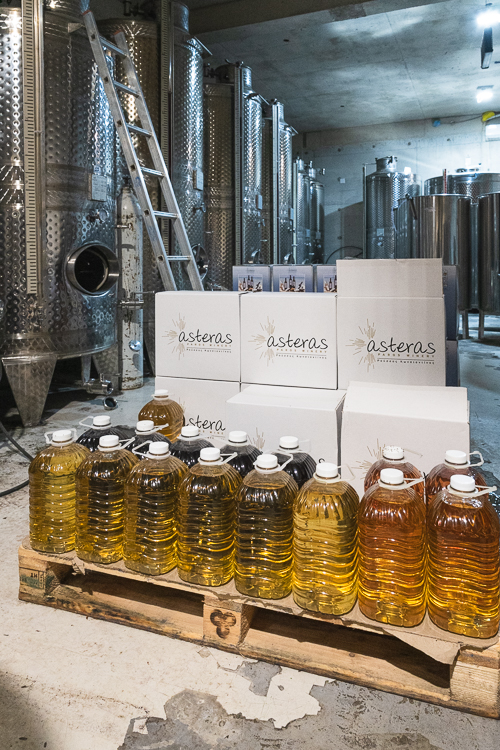
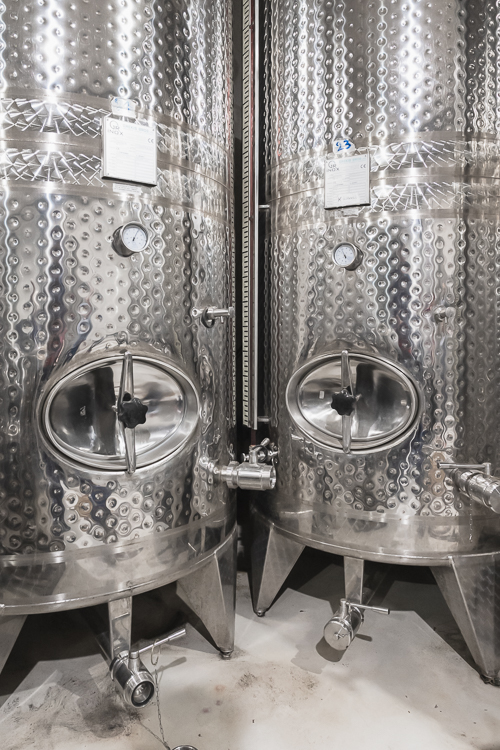
The harvest was already over, the grapes pressed, and the grape juice pumped into the large tanks for fermentation and maturation. Therefore, it looked very tidy. In the hall, we also saw containers with the name for their house wine: Asteras.
Most wineries also produce the wine offered as local house wine in restaurants and bars. This doesn’t mean it’s of poor quality, but it usually doesn’t reach the level of the exquisite and more elaborately produced quality wines.
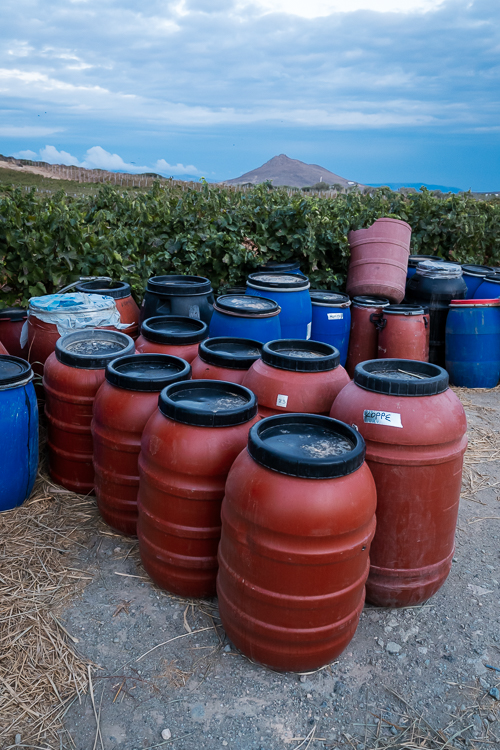
During the winery tour, we saw barrels containing the grape pomace. We were told that this is used to distil the local spirit, which on Paros – as on many Cycladic islands – is called Souma. Souma is a clear pomace brandy, similar to Tsipouro from mainland Greece or Raki. It is produced after the grape harvest from the residues of pressed grapes (pomace), which are fermented again and then distilled. The alcohol content is usually 40–45%, and the taste is mild, slightly fruity, and sometimes flavoured with anise depending on the production (similar to Ouzo). Souma is offered as a digestif in many tavernas.
On our next visit to Paros, we definitely want to go to the Paros Farming Community (PFC), a cooperative winery on Paros with a new tasting room, near Parikia Port. Their specialities are marketed under the brand name “SEIRADI” – as white wine with 100% Monemvasia grapes and PDO Paros rosé and red with Mandilaria/Monemvasia grapes.


Leave a Reply
Want to join the discussion?Feel free to contribute!