

The cliffs and bays of Porteils

In the south of France, just before the Spanish border, the eastern foothills of the Pyrenees meet the Mediterranean. This is where the extensive sandy beaches of Occitania end at Argelès-sur-Mer and transition into the rocky and bay-filled Côte Vermeille. In the hinterland, the peaks of the Massif des Albères reach over 1,200 metres in altitude, a paradise for hiking and cycling. Even the first stretch of coast at Porteils, between Argelès-sur-Mer and Collioure, offers a beautiful hike. The coastal path runs in a constant series of ups and downs, past spectacular rocks and bays, to one of the most picturesque seaside resorts in Roussillion.
Read more
Roussillon – a part of Catalonia

The destination of the trip was Languedoc-Roussillon. This area in Southern France, within the Occitanie region (which was formed by the merger of the former Languedoc-Roussillon and Midi-Pyrénées regions), stretches along the Mediterranean from the Rhône Delta to the Spanish border. It’s also where the Pyrenees mountain range meets the Mediterranean, and the coast becomes rocky and full of coves. This coast is often called Côte Vermeille.
due to the predominant reddish colour of its rocks.
A short detour to Spain, southwards along the coast, was also planned. We really wanted to visit the three ‘Cs’: Collioure, Cadaqués, Céret. These are all places that have attracted, hosted, and influenced numerous artists since the 19th century: Matisse and the ‘Fauves’, Picasso, Dalí and other representatives of Surrealism and Cubism, Pointillists, and other art movements of the 19th and 20th centuries.
Right at the start of the trip, we noticed the Catalan flag – five yellow and four red stripes – and unfamiliar spellings of place names in many French towns in this border region.
Read more
Wasigenstein Castle Ruins

In the Wasgau, medieval castle ruins aren’t always found on mountain peaks. Their builders often found strategically located, free-standing rock formations on hillsides or in valleys to be sufficient. The fortresses seem to literally grow out of these rock structures, with the Fleckenstein ruins being an outstanding example. Some of these rock castles, however, are hidden in what is now mature forest. Read more
The Citadel of Bitche
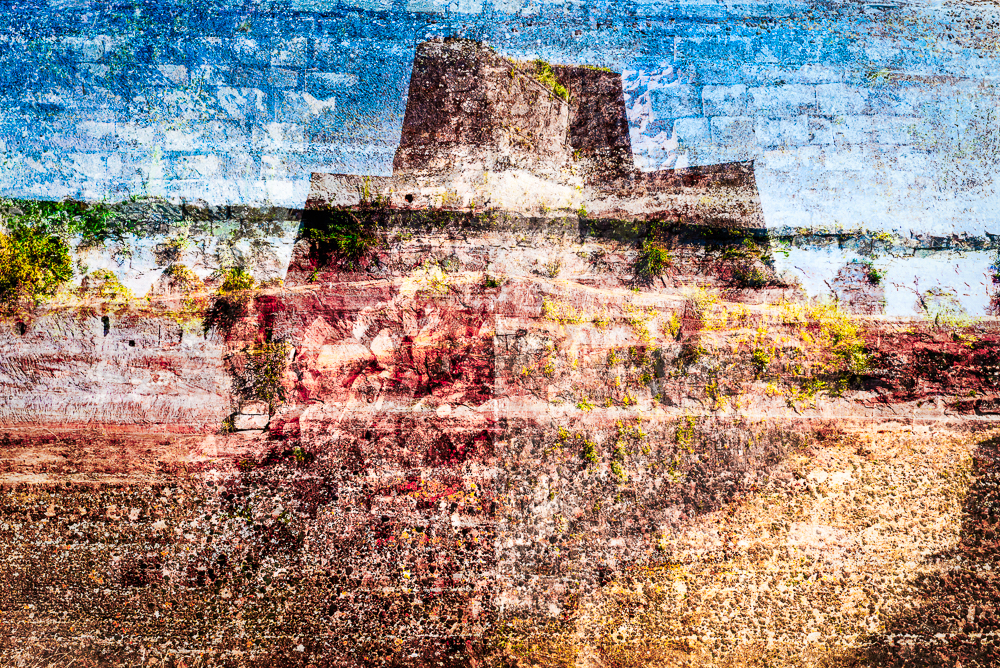
Many castles and castle ruins in the Wasgau, the border region between Alsace, Lorraine and the Palatinate, have preserved their medieval appearance, e.g. the Wasigenstein, Fleckenstein or the Wegelnburg. In Bitche, however, stands a mighty citadel, which was extended in the 17th and 18th centuries on the ruins of the medieval castle to form the fortress complex still present today. Read more
Last Comments