
Scrub Clearance on the Roßalm

During my last visit to the Bavarian Alps, I learned an old word: Schwenden. Schwenden is an old method of maintaining alpine pastures. It involves the laborious manual removal of unwanted bushes, shrubs, or young trees, especially mountain pines and alpine roses. This keeps the alpine meadows open as grazing areas for livestock.

For the hard work on the sometimes steep slopes, friends, family members, and alpine farmers from neighbouring pastures gathered on the Roßalm in the Chiemgau Alps to help out that day; people here help each other in a large community and lend a hand.

Branches are cut just above the turf with chainsaws, piled into large heaps, and burned on site. Thicker branches are collected and transported to the alpine hut as firewood for the kitchen stove and oven. The remaining stumps are left as they protect the slopes from erosion for a long time with their root systems and eventually rot.

Passing hikers are surprised by the rising smoke clouds in a nature reserve. Yet, this work is also nature conservation: alpine pastures are a centuries-old cultural landscape. Grazing livestock on the pastures throughout the summer continues to ensure a great biodiversity on the alpine meadows.

The Geigelstein nature reserve is also home to an endangered population of black grouse. By cutting back the mountain pines, a mixture of open meadows and protective shrubs is created, which is vital for the survival of the black grouse.

Once an overgrown area is declared a protective forest, it is completely lost as grazing land. Such restoration and maintenance measures on alpine pastures are also supported by subsidies from the Bavarian Mountain Farmers Programme (BBP) – these, in turn, depend on the size of the cleared grazing area.

The fires must be reported. You can register the location on an online platform at least one hour before work begins, so that the fire brigade and mountain rescue don’t turn out unnecessarily. This isn’t always easy when you live on an alpine pasture with poor mobile phone coverage.

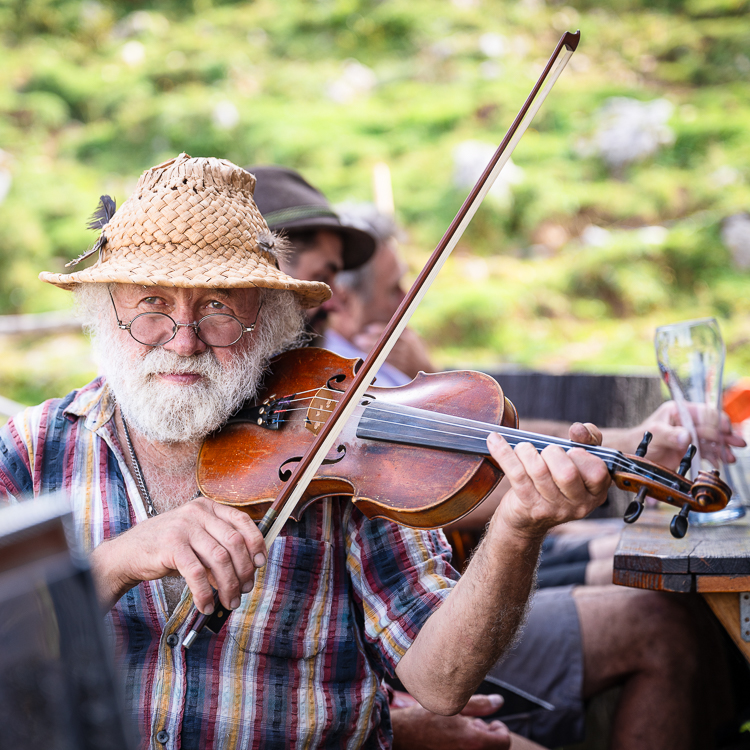
After the work is done, everyone is invited to the alpine hut for a shared meal and a cosy end to the day. Roast, dumplings, and cabbage with a good beer, accompanied by traditional music with a traditional accordion (diatonic button accordion), guitar, and violin, make for a hearty and cheerful snack.
Just a few more weeks and this lush alpine season will be over again. The cattle drive down from the mountains is just around the corner, and there’s still a lot of work left to prepare the herd and then winterise the stable and hut. In the worst case, a calf with a leg injury might even need to be transported to the valley by helicopter.

I was grateful and happy to have been able to contribute that day. It gave me a rare insight into the demanding work on an alpine pasture – here, on Bavaria’s highest-lying pasture – and I met interesting and warm-hearted people. God bless you.


Leave a Reply
Want to join the discussion?Feel free to contribute!