
Rosenholm Castle – Inspiration for Shakespeare

In western Jutland, North Denmark, Rosenholm Castle (Rosenholm Slot) is an excellently preserved, architecturally outstanding ensemble of buildings, nestled in a magnificent water and park landscape. Today’s complex dates back to the 16th century and combines architectural elements from the Italian Renaissance, e.g. the round towers in the east wing, and the French Renaissance with the three rectangular towers in the west wing. The castle is also a historically and literarily interesting place when the name of the builder’s family and previous owners is mentioned: Rosenkrantz.
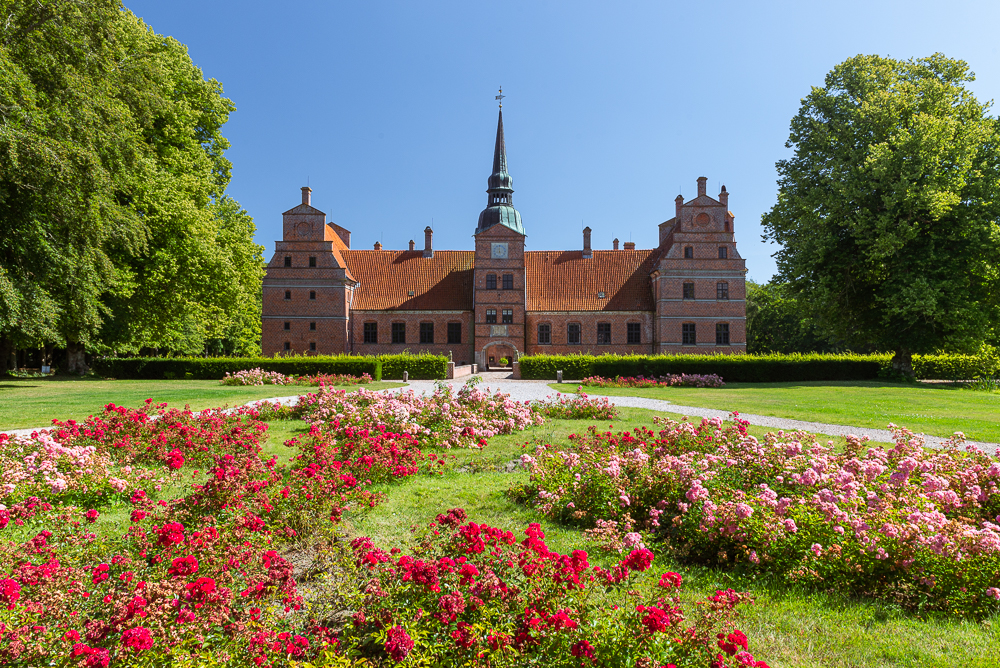
The Rosenkrantz family is demonstrably one of Denmark’s oldest and most noble aristocratic families. The Guildensterns (Gyldenstjerne) live nearby, and both families are also related by marriage. They were an inspiration for William Shakespeare to use these two names for supporting roles in his tragedy of the Danish Prince, Hamlet. On my way from the Thy region to Djursland, I almost drove past the complex hidden behind large avenue trees, and only came across these connections once I was there. Since I hadn’t done my cultural homework properly while preparing for the trip, I was all the happier about this unexpected and accidental experience – just as things happen when travelling.

The family has opened Rosenholm Castle to visitors. The building, furnished with historical furniture, paintings and tapestries, can be visited on guided tours. Rooms can be rented for corporate events and weddings. During a walk through the large, freely accessible garden with its symmetrical avenues and hedges, you also pass the pretty pavilion called Pirkentavl. The former stables in the park now house a cafe and shop with flowers and home accessories, where you can finally linger in the shade under the old, spreading trees.


Leave a Reply
Want to join the discussion?Feel free to contribute!