
Bavaria Statue and Hall of Fame Munich
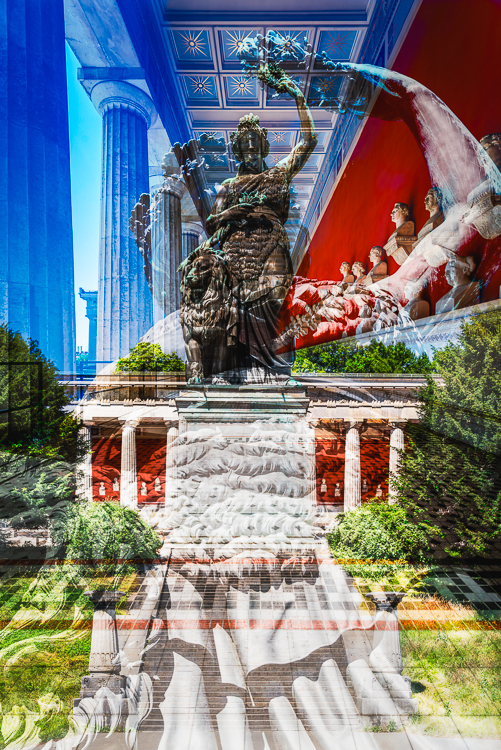
During my trips to Munich, I visited another of the city’s sights: the Bavaria statue in front of the Hall of Fame (Ruhmeshalle) at the Theresienwiese. With its construction in the mid-19th century, King Ludwig I wanted to convey a confident self-portrayal of the Bavarian “tribes” and create a monument to famous figures from Bavaria. Following an architectural competition in 1833, the design by Leo von Klenze—an ensemble consisting of a neoclassical colonnade and a romantic, Germanised statue—was implemented from 1843 to 1850.
The Bavaria in Munich is considered one of the models for the Statue of Liberty in New York. It was completed before the Statue of Liberty (1886) and is regarded as a pioneering example of monumental casting in the 19th century. Both figures are monumental allegories (Liberty vs Bavaria) and wear robes while holding symbols: an oak wreath versus the torch. Just like with the Bavaria, visitors to the Statue of Liberty can also climb into the head via a spiral staircase.
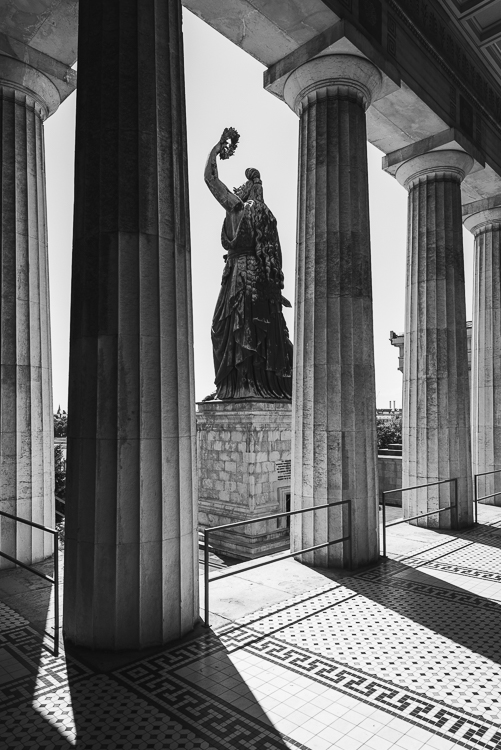
As the patroness of Bavaria, the colossal cast-bronze statue represents the secular counterpart to the religious Patrona Bavariae (the Virgin Mary). The Royal Ore Foundry on Nymphenburger Straße was built specifically for the bronze casting of the statue, which is around 18 metres high and weighs 156 tonnes. In today’s cityscape, numerous names recall the circumstances of its creation: “Erzgiessereistraße” (where I actually worked for several years), “Stiglmaierplatz” (after the master caster Johann Baptist Stiglmaier) and “Schwanthalerhöhe” or “Schwanthalerstrasse” (after the sculptor Ludwig Schwanthaler).
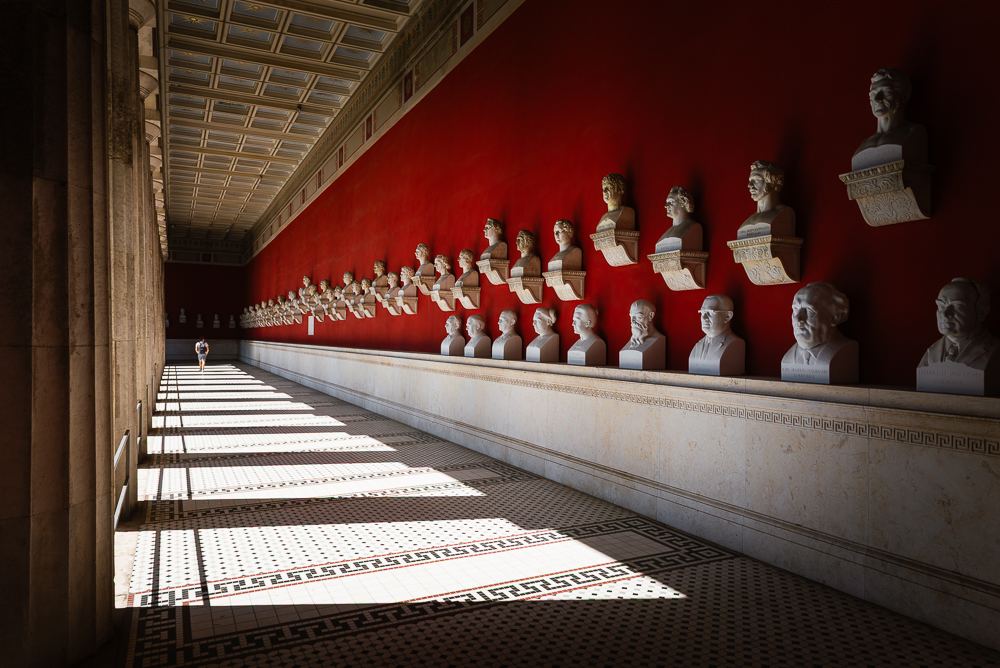
The 68-metre-wide and 16-metre-high Hall of Fame, built in a neoclassical style, encloses the statue in a U-shape and features a facade with Doric columns at the front. In the long corridor, around 100 marble busts of significant people from Bavaria are currently lined up along the closed rear wall.
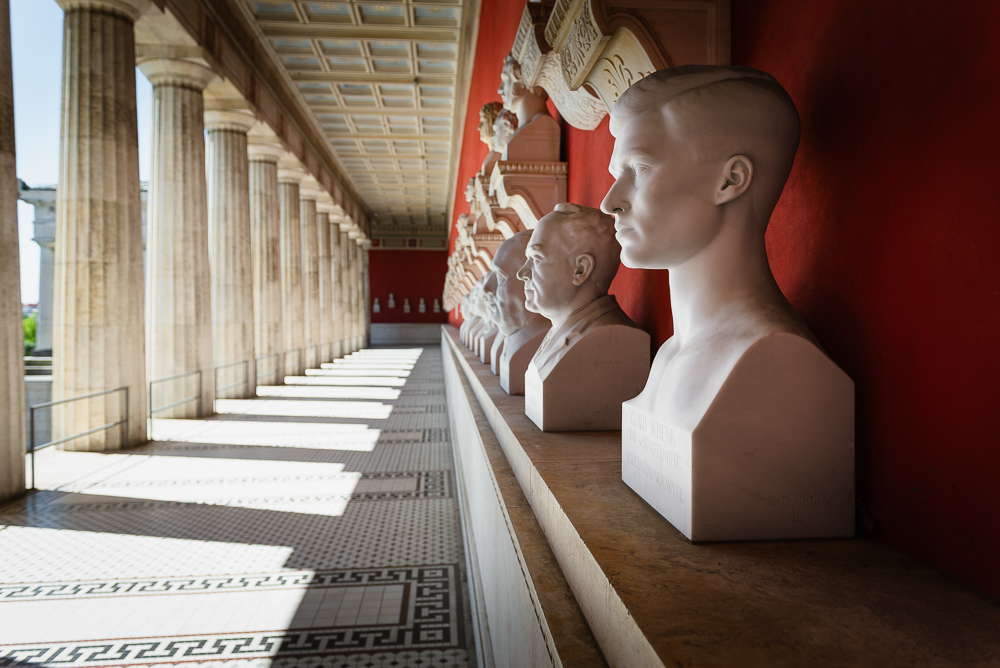
Among them are names I recognise, though they are almost exclusively men (two women and 98 men). In 2007, as an art intervention, a student from the Academy of Fine Arts placed her own bust among them, which no one noticed for several months.
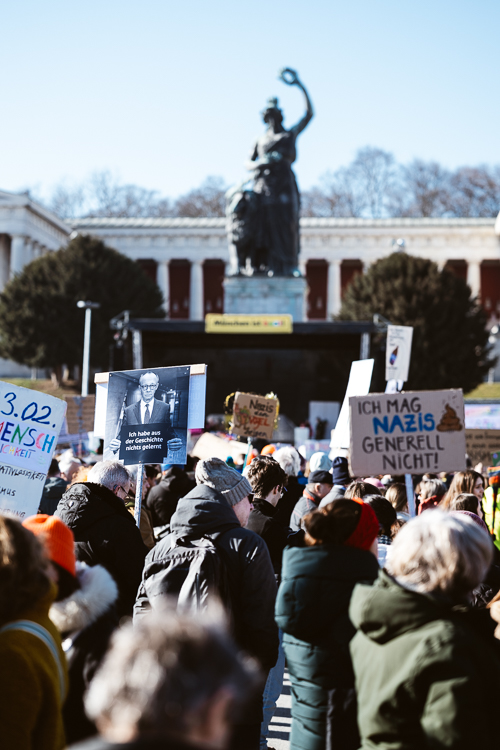
When visiting the Oktoberfest, the colossal statue and the building at the edge of the “Wiesn” fade into the background despite their elevated position on the slope behind the large tents. Its impact is only truly felt when the open space is empty. Due to its symbolism, the location is also frequently used for political events.
The collage of the Bavaria belongs to the Multiperspectives series.


Leave a Reply
Want to join the discussion?Feel free to contribute!