
Homemade fresh alpine cheese

After almost a year, I was once again a guest at the Rossalm, the highest alpine pasture in the Chiemgau. Today, Conny, the dairymaid from the neighbouring Haidenholzalm, was also visiting to make fresh alpine cheese. She had once spent three summers “apprenticing with Sepp” on the Rossalm, as she put it. This gave me the opportunity to follow and learn about the entire cheese-making process, from milking the cows to the start of the ageing process.
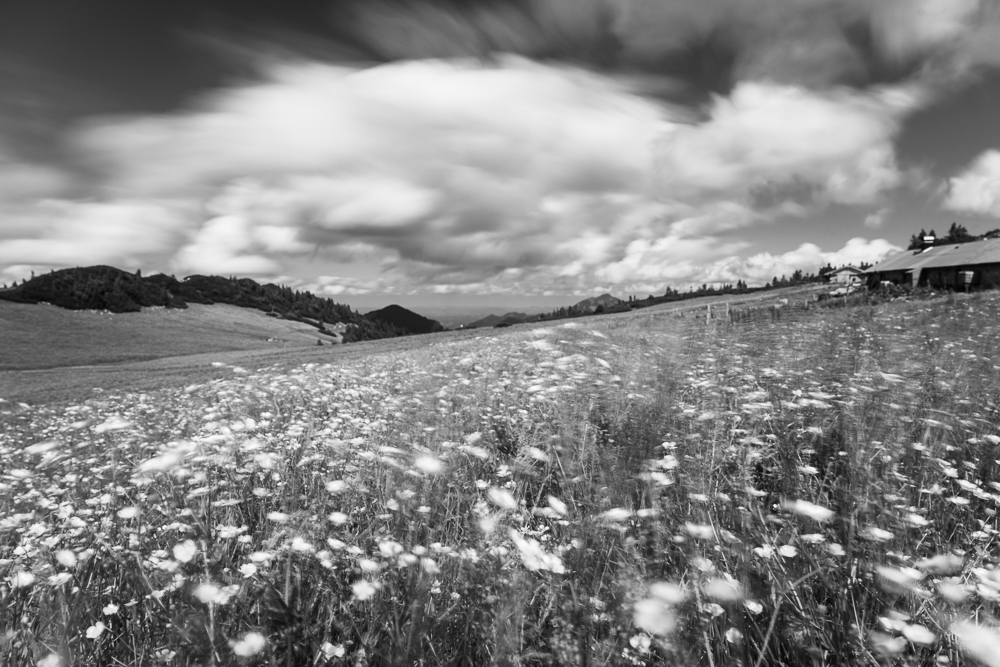
In summer, the cows on the Rossalm graze on lush pastures full of herbs, mountain flowers and grasses, which produce a special flavour. This summer, besides many cattle, there were only two dairy cows on the alp. Their milk is mainly used to make butter, as cheese production is a bit more involved.
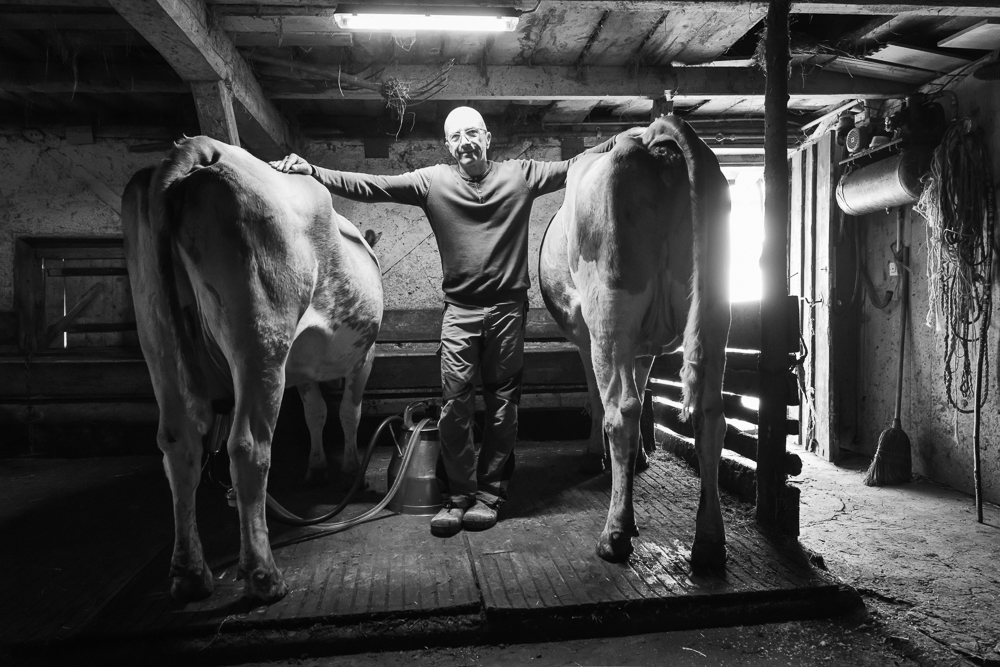
Milking is done in the stable with a venerable milking machine. Today, the cows gave around 30 litres of raw milk, which can be used to make about 2-3 kg of soft cheese. The milk is pumped into a churn in the stable and carried next door to the milk kitchen for further processing.
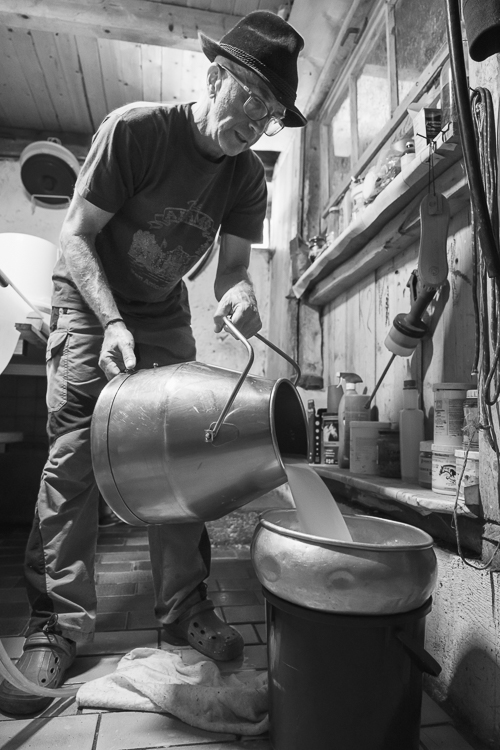
Depending on the type of cheese being made, the raw milk is separated into cream and so-called skimmed milk according to its fat content in a milk centrifuge after milking.
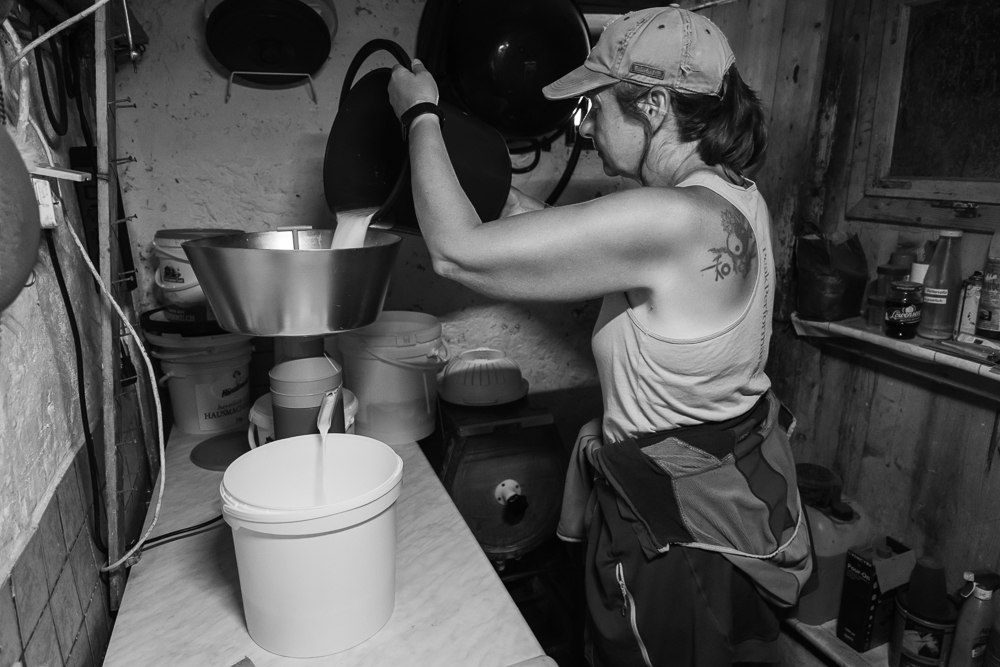
The low-fat milk serves as a base for making low-fat quark, low-fat yoghurt and low-fat cheese varieties, while the cream is processed into whipping cream or butter.
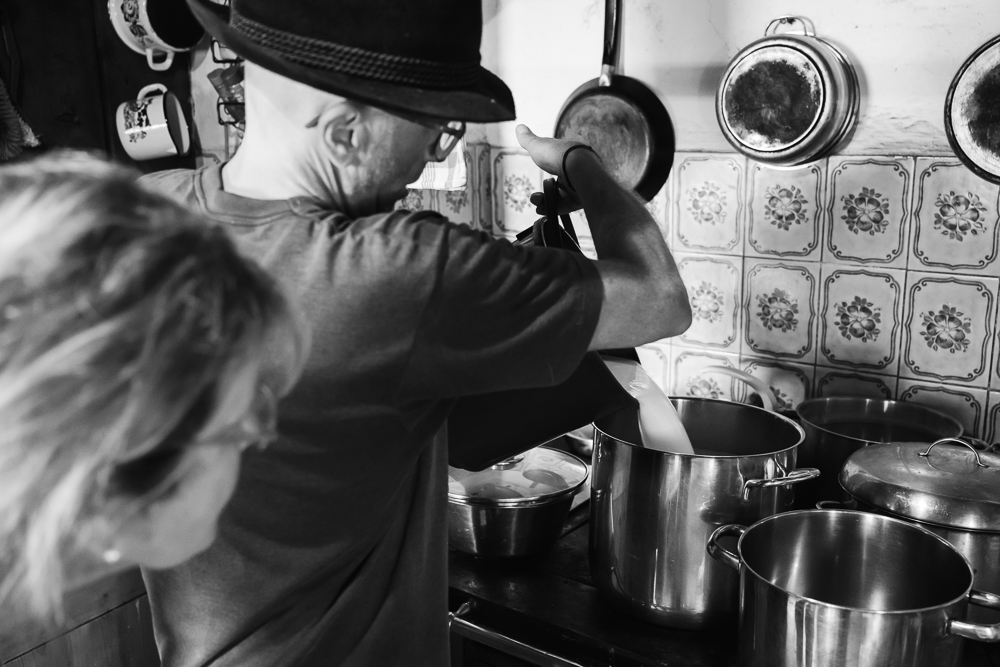
The raw milk was then poured into large pots on the wood-burning stove in the alp’s central parlour. There, it was heated to about 32 degrees. For acidification, Conny added yoghurt and then let the milk stand for 50 minutes. The lactic acid bacteria contained in the yoghurt help convert lactose into lactic acid, which helps the milk protein coagulate better.
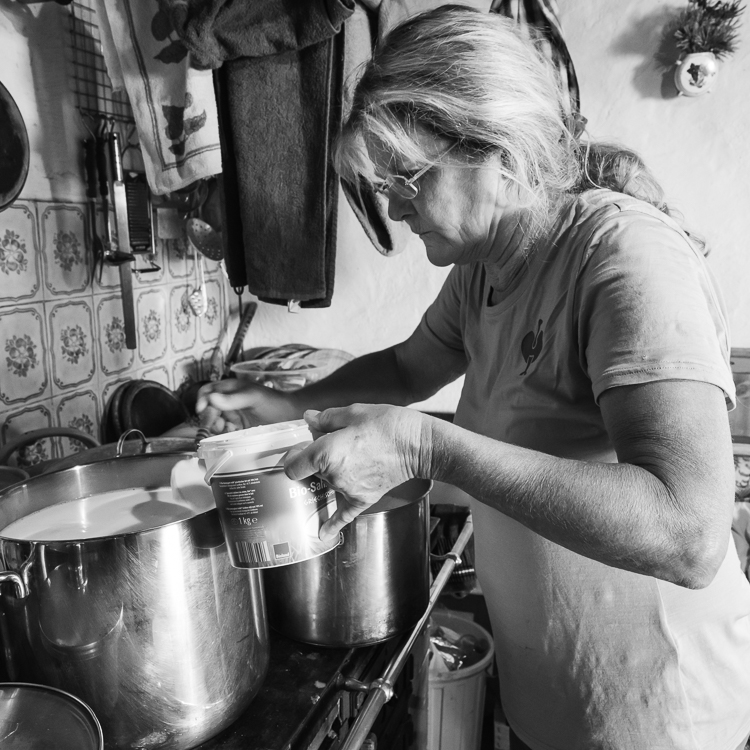
Only lactic acid bacteria are needed for making fresh cheese, e.g. for Ricotta, Harzer and Mainzer cheese. For hard and semi-hard cheese, rennet is also required. Animal rennet is a mixture of the enzymes chymosin and pepsin, which occurs in the stomachs of young calves, sheep or goats. Vegetarian rennet can be used instead of animal rennet. This is obtained from a mould ferment.
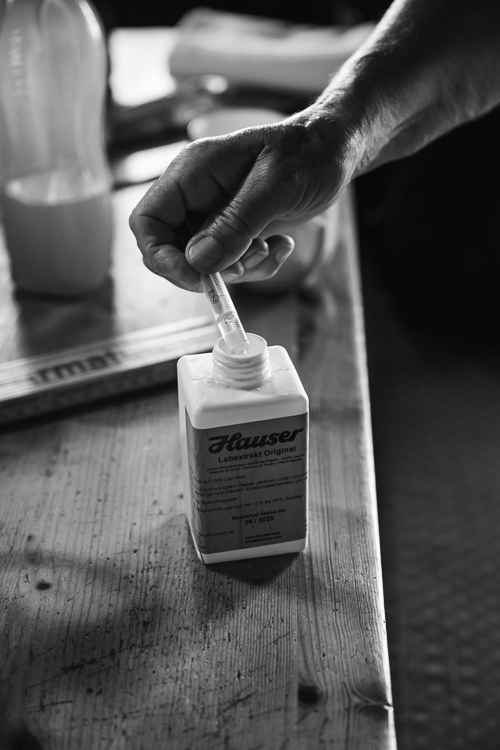
As a coagulating ferment, rennet breaks down the protein casein contained in the milk. This thickens the milk without it becoming sour. Therefore, in the next step, rennet was added by dissolving a rennet preparation in lukewarm water and adding the appropriate amount to the milk.
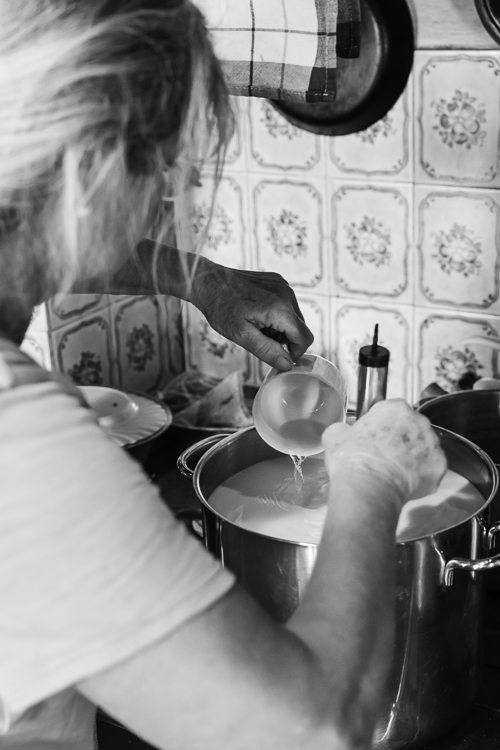
For this curdling, the milk now stood on the stove for about another hour at around 32 degrees. When the desired consistency was reached, Conny cut the milk mass into small chunks, the so-called curd. This made it easier to separate the whey from the cheese mass.
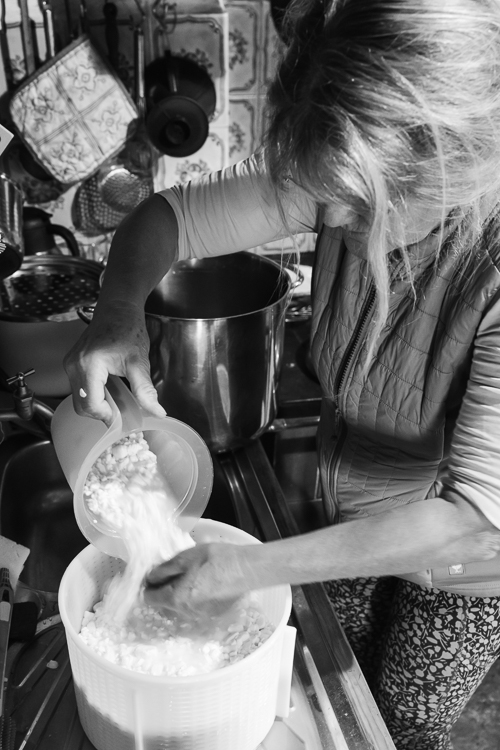
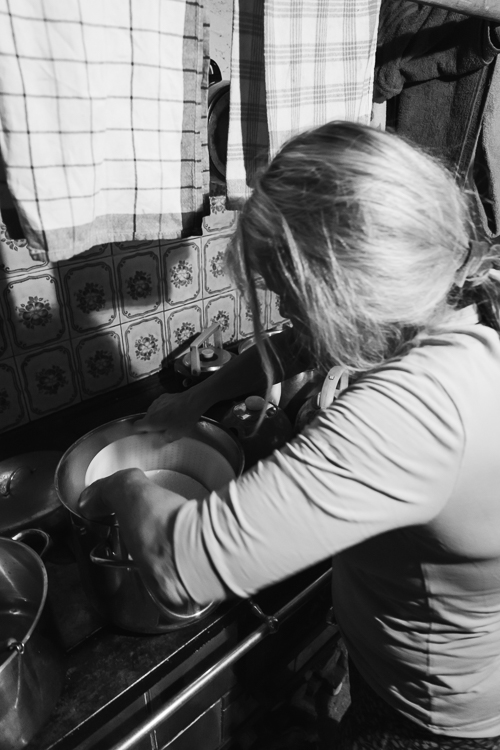
This was done by ladling the cheese mass from the pots into a mould. The wheel of cheese then had to drain in this mould for several hours. Finally, wrapped in a cloth, it was stored in the cool and damp cellar for ageing. There, the typical alpine cheese flavour developed.
Many alpine pastures in the Alps offer special cheese-making courses where you can learn the process under guidance in an authentic alpine setting.
After a long day’s work, the whole group of alpine farmers, dairymaids and dairymen sat together with me as their guest in the large parlour of the alpine hut and had plenty to talk about. It was a short night, because the next morning I still wanted to get up early to finally experience the sunrise on the Geigelstein.


Leave a Reply
Want to join the discussion?Feel free to contribute!